






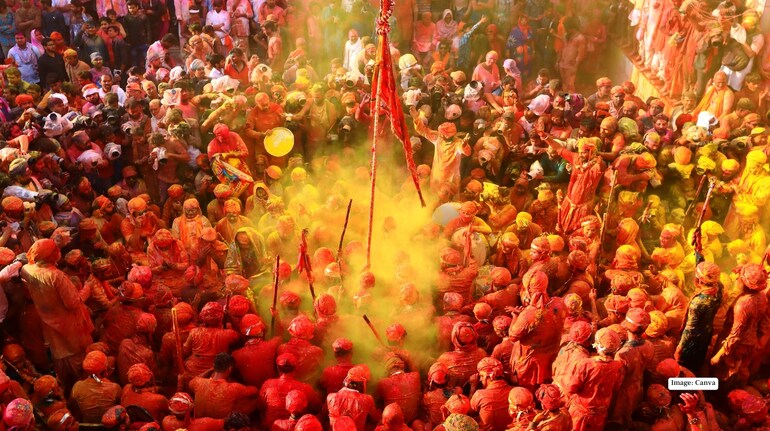

Holi, widely known as the festival of colours, is among India’s most celebrated and culturally significant festivals. Observed on the last full moon day of the Hindu month of Phalguna, it marks the arrival of spring and symbolises the triumph of good over evil. The day is typically characterised by communities coming together to smear gulal, splash coloured water and celebrate with music and festive gatherings that continue through the day.
The evening before Holi is marked by Holika Dahan, when bonfires are lit in neighbourhoods and temple courtyards across the country. The ritual commemorates the victory of devotion and righteousness, with families gathering around the fire to offer prayers and seek blessings.
While Holi is popularly associated with colour play, its traditions vary widely across India. In some regions, the festival is rooted in devotional temple rituals; in others, it takes the form of martial displays, cultural performances or even unusual local customs that have evolved over centuries.
This year, Holi will be celebrated on March 4. For travellers planning a festive getaway, the occasion offers an opportunity to experience India’s regional diversity firsthand. From vibrant street celebrations to royal ceremonies and spiritual observances, here are 10 unique Holi traditions across India that go far beyond the usual splash of colours.
1. Lathmar Holi, Uttar Pradesh
The towns of Barsana and Nandgaon host one of India’s most dramatic Holi traditions — Lathmar Holi. Rooted in mythology linked to Radha and Krishna, the celebration sees women playfully striking men with sticks (lathis), while the men defend themselves with shields. The event unfolds days before the main Holi date and draws thousands of domestic and international visitors.
2. Hola Mohalla, Punjab
Celebrated primarily at Anandpur Sahib, Hola Mohalla is a Sikh festival established by Guru Gobind Singh. Unlike traditional colour-centric Holi events, Hola Mohalla features martial arts displays, mock battles, horseback riding and community meals (langars). It reflects valour and discipline while coinciding with the Holi period.
3. Kumaoni Holi, Uttarakhand
In the Kumaon region of Uttarakhand, Holi unfolds as a musical celebration rather than a boisterous colour fight. Classical ragas, devotional songs and community gatherings define Kumaoni Holi, particularly in towns like Almora and Nainital. The festivities stretch over several weeks, blending spirituality with cultural heritage.
4. Dola Purnima, Odisha and Assam
Known as Dola Purnima in eastern India, the festival is marked by temple processions and devotional rituals. In Odisha and Assam, idols of Lord Krishna are placed in decorated palanquins and taken in procession. Cities like Puri and Guwahati witness a more temple-centric celebration compared to North India’s street festivities.
5. Basant Utsav, West Bengal
Inspired by the teachings of Rabindranath Tagore, Basant Utsav in Shantiniketan offers a cultural interpretation of Holi. Students dressed in yellow welcome spring through songs, poetry and dance performances. The atmosphere is artistic and graceful, making it a preferred choice for travellers seeking a refined celebration.
6. Ukuli or Manjal Kuli, Kerala
In Kerala, Holi is celebrated in select regions under the name Ukuli or Manjal Kuli. Observed mainly in temples in districts such as Kozhikode, the celebration involves turmeric water instead of coloured powders. The rituals are deeply rooted in local temple traditions and differ significantly from North Indian Holi customs.
7. Rang Panchami, West Coast and Madhya Pradesh
Celebrated five days after Holi, Rang Panchami holds particular significance in parts of Maharashtra and Madhya Pradesh. Cities such as Indore are known for grand street processions featuring water tankers spraying coloured water over crowds. The festival extends the Holi spirit beyond the main date and attracts large gatherings.
8. Phoolon Wali Holi, Uttar Pradesh
In Vrindavan, Phoolon Wali Holi replaces synthetic colours with flower petals. Celebrated at temples like Banke Bihari Temple, priests shower devotees with flowers while devotional songs fill the air. The event is especially popular among pilgrims and elderly travellers seeking a spiritual experience.
9. Royal Holi, Rajasthan
Rajasthan adds regal grandeur to Holi celebrations. In Udaipur and Jaipur, royal families and heritage properties host ceremonial processions, traditional performances and controlled Holika Dahan events. Palace courtyards and luxury hotels curate structured celebrations that combine culture with hospitality.
10. Masan Holi, Varanasi
Perhaps one of the most unconventional forms of Holi is Masan Holi in Varanasi. Celebrated near the Manikarnika Ghat, this ritual involves ash from funeral pyres rather than coloured powder. The observance reflects Varanasi’s deep spiritual philosophy — celebrating life and death as interconnected cycles.

Discover the latest Business News, Sensex, and Nifty updates. Obtain Personal Finance insights, tax queries, and expert opinions on Moneycontrol or download the Moneycontrol App to stay updated!
Find the best of Al News in one place, specially curated for you every weekend.
Stay on top of the latest tech trends and biggest startup news.





