- My Alerts
- Go Ad-Free
-
My Account















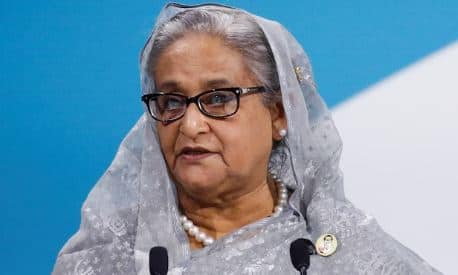
Sheikh Hasina
Sheikh Hasina (born September 28, 1947) is a seasoned Bangladeshi politician and the daughter of Bangladesh’s founding father, Sheikh Mujibur Rahman. She served as Prime Minister from 1996–2001 and
...Read more- Sheikh Hasina’s unfinished exit story: Why Bangladesh President’s Yunus offensive has triggered Jamaat pushback
Rahman launched a sharp attack on Shahabuddin through a Facebook post, questioning the President’s credibility and accusing him of suppressing crucial details related to the political upheaval of August 5, 2024.
- The long road home: Tarique Rahman takes Bangladesh’s top job after two decades in the wilderness
Tarique left Bangladesh in 2008 after being released from detention under a military-backed caretaker administration, saying he required medical treatment. What followed was a 17-year period of self-exile in London.
- ‘No way India will extradite her’: Why Hasina issue won’t shake ties with Bangladesh
India’s stance on Sheikh Hasina’s extradition remains firm, and despite occasional political noise, BNP’s majority is unlikely to disrupt bilateral ties, says former Indian foreign secretary Kanwal Sibal.
- Was Bangladesh’s election really ‘free and fair’? Watchdog flags irregularities in 40% of seats
TIB’s findings go beyond isolated violations. They point to systemic weaknesses in the institutions meant to protect democratic credibility, most notably the Election Commission of Bangladesh.
- Sheikh Hasina, ‘Chicken’s Neck’, attacks on Hindus and more: What Bangladesh’s power shift means for India | Explained
The BNP’s sweeping mandate, coupled with the strongest parliamentary showing ever by Jamaat-e-Islami, has placed India-Bangladesh relations at a delicate crossroads.
- What next for Yunus as Tarique Rahman takes over? What the ‘man of peace’ leaves behind and what he may seek next
Social media chatter and political circles are abuzz with suggestions that Yunus could be accommodated in a constitutional role, possibly with the backing of the incoming government.
- 'Illegal and unconstitutional': Sheikh Hasina rejects election results as Tarique Rahman’s BNP secures majority
Sheikh Hasina rejected Bangladesh’s parliamentary election as illegal and fraudulent, accusing authorities of manipulation, while unofficial results showed Tarique Rahman’s BNP winning a landslide amid political upheaval after 2024 protests.
- 'We will urge Indian govt to send Sheikh Hasina back to face trial': BNP leader after party sweeps Bangladesh polls
The BNP, led by Tarique Rahman -- the son of former prime minister Khaleda Zia -- secured a decisive mandate in Thursday’s polls, which marked the first general election since the upheaval that forced Hasina from office.
- Sheikh Hasina: What Bangladesh poll results mean for an isolated leader living in exile in Delhi
The BNP has been vocal in demanding Hasina’s return. Senior party leaders have described the matter as both a legal obligation and a question of national sovereignty.
- Bangladesh polls: ‘Will reach out to BNP’ — Hasina’s son signals next steps, vows Awami League comeback
Sajeeb Wazed signals possible outreach to the BNP during Bangladesh’s 13th parliamentary elections, criticises Jamaat-e-Islami, and insists the barred Awami League remains politically relevant despite its absence.
- Bangladesh: Last-minute factors that could shape BNP–Jamaat fortunes in high-stakes post-Hasina election
Bangladesh’s February 12 election, held without the Awami League, is shaping into a tight BNP–Jamaat contest, with undecided voters and turnout levels likely to determine the country’s political future.
- The election Yunus promised is here: What his ‘man of peace’ image hides and what Bangladesh inherits next
Bangladesh Elections 2026: While Yunus promised a fair election and institutional reform, his tenure has also been marked by serious governance failures, rising political violence and repeated attacks on religious minorities, especially Hindus.
- Bangladesh elections on February 12: Why stakes are higher than ever before
Bangladesh heads into its February 12 general election amid political upheaval, with the BNP leading the race, Jamaat mounting a strong challenge, and the post-Hasina transition, economic concerns and youth influence shaping a high-stakes contest.
- Posters of Khaleda Zia, deserted Awami League office, BNP-Jamaat clashes: How Bangladesh is gearing up for elections
With just days to go before Bangladesh’s 13th Parliamentary Election, violence, disinformation, and a starkly divided political landscape highlight a tense and unpredictable poll.
- Bangladesh votes in world's first Gen Z-inspired election
The Bangladesh Nationalist Party (BNP) is widely expected to win, although a coalition led by the Islamist Jamaat-e-Islami is putting up a strong challenge
- 'Colourful': Is Jamaat chief Shafiqur Rahman hinting at a new tone in Bangladesh–India ties?
Jamaat-e-Islami chief Shafiqur Rahman sparked curiosity by calling future Bangladesh–India relations “colourful” if his party comes to power, as Dhaka acknowledges current ties with New Delhi remain strained.
- Bangladesh votes without Awami League: Why Jamaat is talking up India as Yunus govt faces legitimacy questions
This will be the first national election in decades in which the Awami League, Bangladesh’s dominant political force for more than 30 years, is not contesting.
- 127 million voters, 300 seats and three possible outcomes: All about Bangladesh’s most crucial vote since 1971
Bangaldesh Elections 2026: The political field looks very different from past elections. The Awami League remains suspended from the electoral process, dramatically reshaping competition.
- Bangladesh: Hasina's son Sajeeb Wazed Joy alleges ‘rigged election’, calls for poll boycott
Sajeeb Wazed Joy, son of former prime minister Sheikh Hasina, alleged Bangladesh’s upcoming election would be rigged, accused extremist influence, and urged citizens to boycott the February 12 polls.
- After Sheikh Hasina’s fiery speech, son Joy prepares first public address from India: Why timing matters
Joy will address an audience in Kolkata on Monday through a live video link, marking his first direct participation in a public event outside Bangladesh.



