






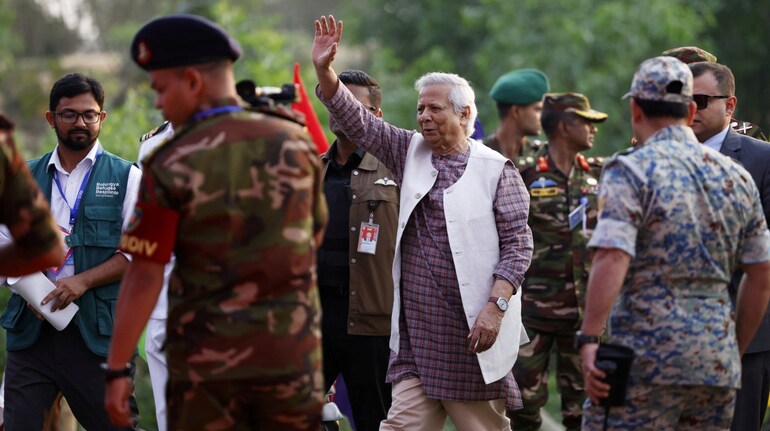

Bangladesh will go to the polls on Thursday in a high-stakes national election that many see as a test of whether the country can truly move beyond years of political repression, disputed mandates and shrinking democratic space. The vote comes after a mass uprising ended the 15-year rule of former prime minister Sheikh Hasina, forcing her to flee the country in August 2024.
The transition since then has been overseen by an interim administration led by Nobel Peace Prize laureate Muhammad Yunus, who positioned himself as a neutral caretaker tasked with restoring democratic norms. While Yunus promised a fair election and institutional reform, his tenure has also been marked by serious governance failures, rising political violence and repeated attacks on religious minorities, especially Hindus. As Bangladesh votes, a key question looms. What happens next to Yunus and how will history judge his role.
Yunus’s stated exit plan after the elections
Following the February 12, 2026 general elections, Yunus has said his priority is a swift and peaceful transfer of power to the newly elected government. He has repeatedly described himself as a temporary “guardian of the transition” and ruled out seeking a permanent political role.
Appointed in August 2024, Yunus has stated that he will step aside once election results are finalised and a new administration is in place. His office has emphasised that the interim government will focus on maintaining order during the immediate post-election period, especially as the Bangladesh Nationalist Party and a Jamaat-e-Islami-led alliance compete for power.
However, critics argue that Yunus has struggled to enforce authority even during the transition, raising questions about how effectively he can manage a smooth handover.
The July National Charter and forced reforms
A central pillar of Yunus’s legacy is the July National Charter-2025, which was put to a referendum on election day. If approved by a “Yes” vote, the incoming government will be legally bound to implement Yunus’s reform package.
The proposals include creating a bicameral legislature, imposing prime ministerial term limits of two terms or 10 years, and granting constitutional recognition to the 2024 uprising. Supporters describe the charter as a safeguard against future authoritarianism. Critics see it as an attempt to lock in Yunus’s vision without an electoral mandate.
What Yunus plans to do next
Reports suggest that after relinquishing power, Yunus plans to return to his work at the Yunus Centre and Grameen Bank, focusing on social business and poverty alleviation.
Although Yunus has dismissed speculation about becoming President, some political analysts and proponents of a proposed “National Consensus” formula have floated his name for the role. The presidency is largely ceremonial but could provide symbolic continuity and international reassurance during a volatile political phase.
Yunus has also highlighted his economic diplomacy. During his tenure, Bangladesh secured a 2026 trade pact with the United States and $2.1 billion in Chinese infrastructure funding. These agreements, however, will be managed by the incoming government, not Yunus himself.
Violence, minorities and the failures of governance
While Yunus has projected himself internationally as a stabilising figure, his record at home tells a more troubling story. His administration faced sustained criticism for failing to curb mob violence, with nearly 300 deaths reported by late 2025. Law and order deteriorated in several regions, exposing the limits of the interim government’s authority.
More seriously, attacks on religious minorities intensified during the transition. Hindu homes, temples and businesses were targeted in multiple incidents, often with little accountability. Rights groups and civil society activists accused the interim administration of responding slowly or weakly, reinforcing a sense of insecurity among Bangladesh’s Hindu population.
For India and other regional observers, this failure has raised red flags about Bangladesh’s internal stability and the political forces empowered during the transition.
How history may judge Yunus
Yunus’s supporters argue that he prevented state collapse after the August 2024 uprising and brought moral legitimacy to a chaotic moment. He is credited with acknowledging “Aynaghor” secret detention centres and initiating accountability processes against officials from the Hasina era.
But critics point to what they describe as “adhoc governance,” an inability to control street violence, and a widening gap between reform rhetoric and ground reality. High youth unemployment, a struggling manufacturing sector and continued minority persecution left many Bangladeshis unconvinced that the promised “New Bangladesh” had arrived.
Ultimately, Yunus’s place in history hinges on what follows this election. If Bangladesh achieves lasting democratic stability, he may be remembered as a transitional figure who helped reset the system. If the country slides back into political chaos and sectarian violence, his tenure is likely to be seen as a missed opportunity that failed to protect the most vulnerable.
Discover the latest Business News, Sensex, and Nifty updates. Obtain Personal Finance insights, tax queries, and expert opinions on Moneycontrol or download the Moneycontrol App to stay updated!
Find the best of Al News in one place, specially curated for you every weekend.
Stay on top of the latest tech trends and biggest startup news.





