






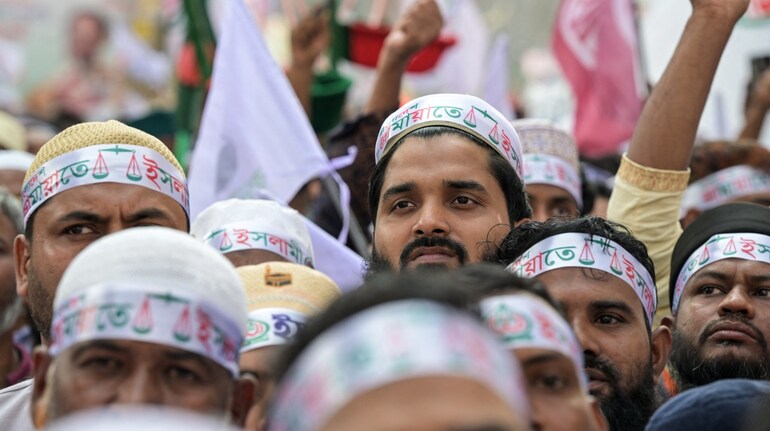

Bangladesh is days away from one of the most consequential elections in its history, as voters prepare to elect a new parliament and prime minister on February 12, 2026. The election comes in the shadow of the August 2024 mass uprising, led largely by students, which led to the collapse of the long-ruling Awami League government under Sheikh Hasina and the installation of an interim administration.
Often described within Bangladesh as the country’s “Second Independence”, the movement has reshaped the political landscape. It has raised deep questions about governance, accountability and democratic legitimacy, making the upcoming vote a crucial test of whether the transition can deliver stability and public trust.
When and how voting will take place
The Election Commission of Bangladesh has confirmed February 12, 2026, as polling day. Campaigning officially began on January 22 and will end at 4:30 pm on February 10, followed by a mandatory 48 hour cooling off period.
Polling will run from 7:30 am to 4:30 pm, an hour longer than in previous elections. The extended hours are meant to manage a complex process in which voters will cast two ballots on the same day.
Voters will elect members of parliament using the First Past The Post system and will also vote in a nationwide constitutional referendum. Counting of votes will take place on the same day, while voting for reserved seats will follow on February 13.
Why the 2026 election is so large
Bangladesh’s election is one of the biggest democratic exercises anywhere in the world this year. The final voter list includes 127,695,183 registered voters.
A total of 1,981 candidates are contesting for 300 general seats in the Jatiya Sangsad. Another 50 seats reserved for women will be filled later through proportional allocation based on party performance.
Voting will take place across 42,761 polling centres and nearly 245,000 polling booths. To maintain order, the government has authorised the deployment of 92,500 military personnel, the largest such deployment since 1971. The army has been granted magisterial powers and will operate alongside police and the Rapid Action Battalion.
The process is being overseen by Chief Election Commissioner Dr AMM Nasir Uddin, widely seen as holding one of the most difficult positions in Bangladesh’s history.
The dual ballot and the July Charter referendum
What makes this election unique is the introduction of a dual ballot system.
Alongside voting for parliament, citizens will vote on constitutional reforms under the July Charter, a reform framework introduced by the interim government led by Muhammad Yunus.
The charter proposes major changes, including limiting any individual to two terms as prime minister, establishing a permanent judicial appointments commission, creating an upper house of parliament for proportional representation, and reviving the constitutional office of the Ombudsman.
Election officials say managing a referendum alongside a general election is challenging but argue that these reforms are central to the democratic transition that began in 2024.
Parties and alliances in the race
The political field looks very different from past elections. The Awami League remains suspended from the electoral process, dramatically reshaping competition.
Bangladesh Nationalist Party
The Bangladesh Nationalist Party enters the race as the most established contender. It is led by acting chairman Tarique Rahman, who returned to Bangladesh in December 2025 after 18 years in exile.
The BNP campaign focuses on economic recovery and stability under the slogan “Bangladesh First”. Its key promises include a Family Card programme to support low income households and the continuation of the First Past The Post system.
11-party alliance led by NCP and Jamaat
Challenging the BNP is an 11-party alliance that includes the National Citizen Party and Bangladesh Jamaat-e-Islami.
The NCP emerged from the 2024 student movement and is led by young leaders including Nahid Islam, Sarjis Alam and Hasnat Abdullah. The alliance supports proportional representation and aims to break what it calls the cycle of power between the BNP and Awami League.
Other members include Bangladesh Khelafat Majlis, Bangladesh Khilafat Andolan, the Liberal Democratic Party, Amar Bangladesh Party and several smaller groups.
Other contenders
The Jatiya Party led National Democratic Front, leftist coalitions such as the Democratic United Front, and parties like Islami Andolan Bangladesh and Gono Odhikar Parishad are also contesting seats.
New features in the 2026 election
For the first time, Bangladesh has introduced postal voting for expatriates. About 300,000 overseas Bangladeshis have registered to vote by mail.
The “No Vote” option has also been reintroduced. In constituencies with a single candidate, voters can reject the candidate. If No Vote wins, a fresh election must be held.
Environmental rules have changed as well. Plastic campaign posters have been banned, with candidates required to use digital or biodegradable materials.
The European Union has deployed a 150 member observation mission. The Carter Center is providing technical assistance. India has also been invited to observe the polls.
Women’s participation remains limited
A total of 78 women are contesting the election, the highest number in a competitive poll in Bangladesh. Still, they make up less than four percent of all candidates.
Most women candidates have family ties to senior political figures. The BNP has nominated 10 women, all with direct connections to party leadership.
While law requires parties to reserve 33 percent of committee positions for women, compliance remains limited and the deadline has been extended to 2030.
Key issues for voters
Economic stress dominates voter concerns. Inflation remains high, unemployment among educated youth is rising, and corruption remains a major issue. Bangladesh ranked 151st on the Corruption Perception Index in 2024.
Relations with India have also entered campaign debates. While the BNP promotes a pragmatic approach, the 11 party alliance runs on a strongly anti hegemonic platform.
This tension was evident during a December visit by Indian External Affairs Minister S Jaishankar to Dhaka, where he attended the funeral of former prime minister Khaleda Zia and conveyed condolences from Prime Minister Narendra Modi.
What outcomes are possible
Analysts outline three scenarios. A BNP majority that allows single party rule. A hung parliament requiring coalitions. Or a stronger than expected showing by the NCP Jamaat alliance driven by youth mobilisation.
Beyond who wins, credibility is the key issue. A widely accepted result could stabilise institutions and support Bangladesh’s economic ambitions. A disputed outcome could undermine the transition that began in 2024.
In an email to the Associated Press, Hasina, who is in self exile in New Delhi, criticised the process, writing, “A government born of exclusion cannot unite a divided nation.”
For Bangladesh, February 12 is not just about electing a government. It is a test of whether the promise of change born on the streets in 2024 can be translated into a credible democratic future.
Discover the latest Business News, Sensex, and Nifty updates. Obtain Personal Finance insights, tax queries, and expert opinions on Moneycontrol or download the Moneycontrol App to stay updated!
Find the best of Al News in one place, specially curated for you every weekend.
Stay on top of the latest tech trends and biggest startup news.





