






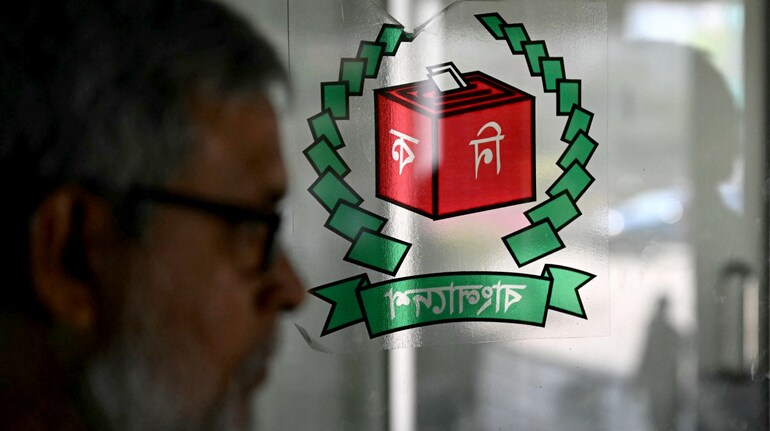

Bangladesh’s claim of conducting a free and fair national election has come under serious strain after a new assessment by Transparency International Bangladesh raised troubling questions about the integrity of the entire process.
In its post-election report, TIB found irregularities in 40 percent of parliamentary seats reviewed. More damaging is the fact that in 28.6 percent of those constituencies, candidates themselves filed formal complaints. This suggests that the disputes were not opposition rhetoric or media speculation but grievances raised by contestants directly involved in the election.
TIB’s findings go beyond isolated violations. They point to systemic weaknesses in the institutions meant to protect democratic credibility, most notably the Election Commission of Bangladesh.
Election observers and neutrality concerns
One of the most serious criticisms in the report relates to the accreditation of election observers. According to TIB, individuals and institutions with known political affiliations were approved as observers, including people previously nominated by political parties.
This, the watchdog warned, undermines the very purpose of election observation. A process meant to ensure transparency risks becoming performative if neutrality is compromised at the entry point.
The report also flagged allegations of government influence in observer registration. TIB noted that an experienced institution was denied registration despite repeated applications. At the same time, two institutions reportedly linked to advisers were granted approval.
The contrasting treatment has fuelled accusations of selective clearance and raised questions about whether observer accreditation was guided by political convenience rather than objective standards.
Foreign observers and echoes of the Hasina era
TIB also criticised the Election Commission’s decision to bear the costs of foreign observers. Critics have argued that this mirrors practices seen during Sheikh Hasina’s tenure, where financial dependence risked creating conflicts of interest.
When the body being scrutinised pays for the scrutiny, the independence of that scrutiny becomes questionable. Observers, the report suggests, may feel constrained in offering critical assessments.
Political party registration under a cloud
The watchdog raised concerns over the transparency of political party registration. For some newly registered parties, field-level verification of required information was reportedly weak or inadequate.
Questions have emerged in the media about whether registration conditions and eligibility criteria were properly followed. These doubts have already triggered public debate about whether the playing field was level for all political actors.
TIB’s report also noted dissatisfaction among parties regarding the Election Commission’s neutrality in allocating electoral symbols. In Bangladesh’s electoral system, symbols play a critical role in voter recognition, especially in rural and semi-literate constituencies.
Candidate affidavits and verification gaps
Another key area of concern involves candidate affidavits. These documents are meant to disclose income, expenditure, asset holdings including foreign assets, loan liabilities, debts, and dual citizenship status.
Despite extensive media scrutiny and data analysis by TIB, questions remain over whether these affidavits were rigorously verified.
The report asks whether income and asset sources were lawfully obtained and whether discrepancies, if identified, would lead to meaningful accountability. The absence of visible enforcement has deepened scepticism about the seriousness of oversight.
Why this matters for India
For India, the credibility of Bangladesh’s electoral process is not just a domestic issue for Dhaka. It has direct regional implications.
India shares a long and sensitive border with Bangladesh, and political stability there affects cross-border security, migration, and counter-terrorism cooperation. Weak electoral legitimacy increases the risk of internal unrest, radicalisation, and governance drift.
New Delhi also watches closely how democratic institutions function in its neighbourhood, especially after the political transition following Sheikh Hasina’s exit. Allegations of manipulated processes and compromised institutions make engagement with Dhaka’s leadership more complex.
If public confidence in elections erodes, policy unpredictability rises. That uncertainty directly impacts India’s strategic, economic, and security interests in eastern South Asia.
A credibility test Bangladesh cannot ignore
Taken together, TIB’s findings paint a disturbing picture. The absence of large-scale violence or high voter turnout alone cannot compensate for structural flaws in oversight, verification, and neutrality.
With irregularities flagged in nearly half the seats examined and formal complaints lodged in more than a quarter of them, the debate has shifted decisively. The question is no longer whether the election was peaceful, but whether it was credible.
As TIB’s report makes clear, restoring trust now rests squarely with the Election Commission. Whether it acts or deflects will determine not just Bangladesh’s democratic standing, but how its neighbours and the wider world view the legitimacy of its political order.
Discover the latest Business News, Sensex, and Nifty updates. Obtain Personal Finance insights, tax queries, and expert opinions on Moneycontrol or download the Moneycontrol App to stay updated!
Find the best of Al News in one place, specially curated for you every weekend.
Stay on top of the latest tech trends and biggest startup news.





