






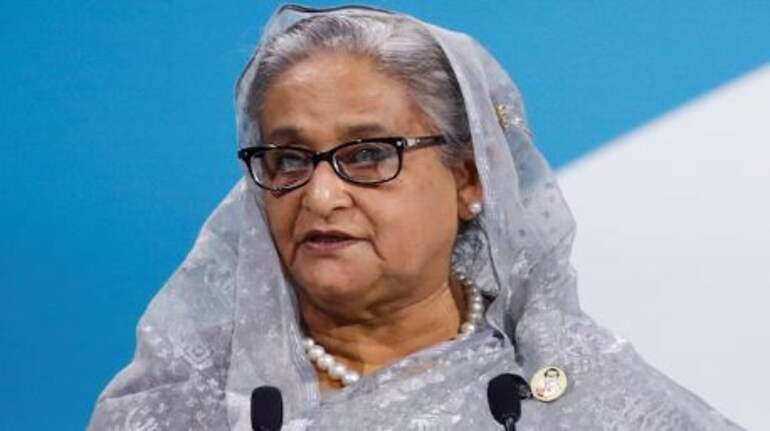

The Bangladesh Nationalist Party (BNP) is set to form the government as vote counting continues for the country’s 13th parliamentary elections. Meanwhile, living thousands of miles away from Dhaka, Bangladesh’s former prime minister Sheikh Hasina remains in exile in New Delhi.
With BNP winning over 200 seats in the 300-member Jatiya Sangsad or House of the Nation, party chairman Tarique Rahman is said to assume the office of Prime Minister.
Rahman, born on November 20, 1965, in Dhaka, is the son of BNP supremo and former Bangladesh Prime Minister Khaleda Zia.
For decades, Bangladesh’s political landscape revolved around two Khaleda Zia, the country’s first woman prime minister, and Sheikh Hasina, its longest-serving premier and Zia’s fiercest rival.
Though the two briefly united in 1990 to oust military ruler Hussain Muhammad Ershad, their relationship soon devolved into an intense political rivalry that came to be known as the “Battle of the Begums”.
Bangladesh has been telling India that it wants Hasina, who fled to New Delhi in August 2024, back in the country for “judicial process”.
In the run-up to the Bangladesh elections, the has also called on India to return Hasina to Dhaka, especially after the former PM was sentenced to death for the violent crackdown on student protestors during the July uprising.
Why Hasina fled?
The unrest in June 2024 was triggered by students protesting against the reinstatement of a 30% job quota for descendants of veterans of the 1971 Liberation War. As demonstrations intensified, the government launched a sweeping crackdown that reportedly left more than 1,400 people dead.
Matters escalated further after Hasina likened the protesters to “Razakars,” a term associated with collaborators during the Liberation War — a remark that fuelled public anger. As protests spread nationwide, the military declined to deploy lethal force against the demonstrators. Hasina was ultimately compelled to leave the country.
In January 2026, delivered an address from Delhi, urging Bangladesh citizens to rise up against the interim government headed by Muhammad Yunus.
Hasina on Thursday demanded the cancellation of the "voterless, illegal and unconstitutional" election in Bangladesh in her first statement after the polls concluded.
Labelling the elections "deceptive", Hasina said that they were arranged without her party, the Awami League, and without voters.
What does BNP’s win mean for Hasina?
The BNP has been vocal in demanding Hasina’s return. Senior party leaders have described the matter as both a legal obligation and a question of national sovereignty. They argue that Bangladesh’s bilateral ties with India must move forward “beyond Sheikh Hasina.”
With the BNP returning to Parliament, the party led by Tarique Rahman is expected to formally intensify calls for her extradition.
What is India's view?
Dhaka said New Delhi was obliged to do so under an extradition treaty.
India's Ministry of External Affairs (MEA) has taken note of the statement and promised to “engage constructively with all stakeholders”. "As a close neighbour, India remains commited to the best interests of the people of Bangladesh, including in peace, democracy, inclusion and stability in that country," MEA said. "We will always engage constructively with all stakeholders to that end."
Discover the latest Business News, Sensex, and Nifty updates. Obtain Personal Finance insights, tax queries, and expert opinions on Moneycontrol or download the Moneycontrol App to stay updated!
Find the best of Al News in one place, specially curated for you every weekend.
Stay on top of the latest tech trends and biggest startup news.





