






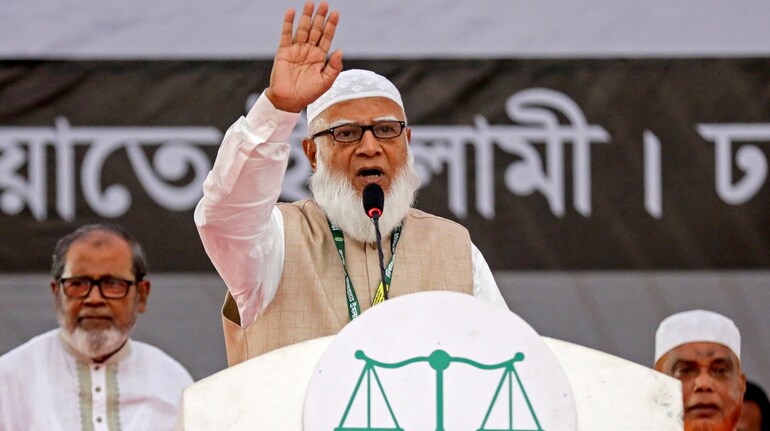

As Bangladesh heads into a deeply polarised election shaped by the absence of its largest political party, Jamaat-e-Islami has made a calibrated pitch on foreign policy, offering reassurances on ties with India even as concerns grow over the legitimacy of the interim Yunus administration overseeing the vote.
In its election manifesto released ahead of the February 12 polls, Jamaat-e-Islami said it was committed to maintaining “constructive and cooperative relations” with India, stressing that engagement with New Delhi would be based on mutual respect, fairness and peaceful coexistence. The party also pledged cordial relations with other neighbours including Bhutan, Nepal, Myanmar, Sri Lanka, the Maldives and Thailand.
The statement comes at a time when India has emerged as a rare anchor of stability in the region, even as Bangladesh navigates political uncertainty following the August 2024 upheaval that led to the ouster of former prime minister Sheikh Hasina. The interim government led by Muhammad Yunus has faced sustained criticism for presiding over an election widely viewed as exclusionary, following the ban on the Awami League.
This will be the first national election in decades in which the Awami League, Bangladesh’s dominant political force for more than 30 years, is not contesting. Hasina fled to India after a violent crackdown on protests and was later sentenced to death in absentia by a Dhaka court. Thousands of cases have since been filed against her supporters, raising alarm among rights groups and political observers.
The impact of the ban is especially visible in regions such as Gopalganj, long considered the heartland of the Awami League and the birthplace of Sheikh Mujibur Rahman. With the party’s symbol removed from the ballot, voters in these strongholds are confronting an unfamiliar political landscape, fuelling fears of disengagement and low turnout.
Against this backdrop, Jamaat-e-Islami and the Bangladesh Nationalist Party have emerged as the principal contenders, reshaping Bangladesh’s political map under an interim regime that critics say lacks both a popular mandate and transparency.
While Jamaat’s manifesto language on India signals recognition of New Delhi’s regional importance, analysts note that the broader election remains overshadowed by questions about democratic legitimacy under the Yunus administration. For India, however, the emphasis on cooperation reflects its continued role as a key regional stabiliser at a time when Bangladesh’s internal politics remain unsettled.
Discover the latest Business News, Sensex, and Nifty updates. Obtain Personal Finance insights, tax queries, and expert opinions on Moneycontrol or download the Moneycontrol App to stay updated!
Find the best of Al News in one place, specially curated for you every weekend.
Stay on top of the latest tech trends and biggest startup news.





