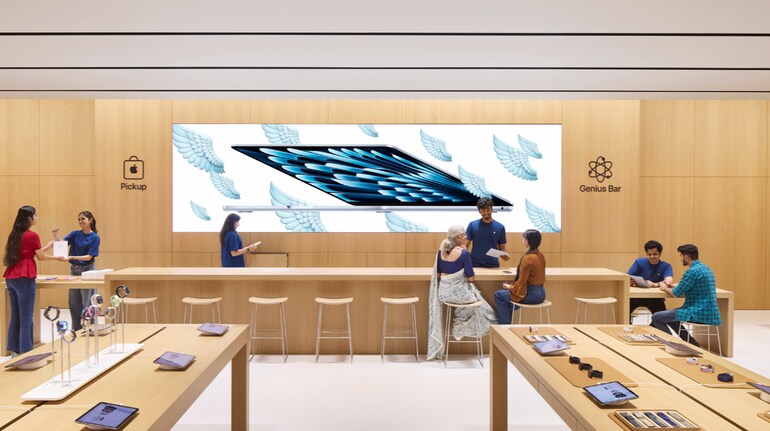
Apple’s decision to run two retail stores each in Mumbai and Delhi-NCR goes far beyond brand visibility. The move is rooted in the rapid expansion of India’s premium smartphone market and the outsized performance of these two metros, which are increasingly driving high-value device sales for the company.
Apple will launch its new Noida store at DLF Mall of India on December 11—its third outlet this year—solidifying its position among the top five smartphone brands by volume in the country. A second Mumbai store is set to open next year as part of an aggressive retail expansion in the world’s second-largest smartphone market.
The Indian premium smartphone segment, priced above Rs 30,000, posted strong double-digit growth in 2025 through September, signalling a decisive shift toward high-end devices. Within this trend, Delhi-NCR has emerged as a powerhouse, contributing over 9% of premium smartphone sales and attracting high-value customers from neighbouring states, according to Counterpoint Research.
This surge forms the strategic basis for Apple’s two-store presence in the capital region. The Saket store, opened in 2023, has become a key destination for buyers from Delhi, Gurugram and nearby catchments. But Apple’s traction extends well beyond these pockets. Apple’s first two India stores—Mumbai’s BKC and Delhi’s Saket—together generated about Rs 800 crore in revenue in their debut year, as earlier reported by Moneycontrol, making them among the company’s top-performing outlets globally, with nearly 60% of sales coming from the smaller Saket store.
“Delhi-NCR delivered nearly 30% year-on-year growth in the first nine months of 2025—making it one of the brand’s fastest-growing metro markets,” Tarun Pathak, research director at Counterpoint, told Moneycontrol.
Growth has been even sharper in the eastern and southern parts of the NCR. Noida, Ghaziabad and Faridabad clocked over 50% growth for Apple during the same period, fuelled by rising incomes, dense working-professional populations and a fast-expanding premium upgrade cycle, Pathak added.
The new Apple Noida store is designed to capture this wave of demand. Strategically located to serve Noida’s large residential and corporate clusters—as well as Ghaziabad, Faridabad and parts of East Delhi—the outlet aims to deepen Apple’s footprint in the region while distributing footfall more evenly between the two NCR stores.
Together, the Saket and Noida stores give Apple comprehensive coverage across the capital region, reinforcing premium conversions and boosting engagement through Today at Apple sessions, personalised product support and in-store services.
A similar rationale underpins Apple’s Mumbai strategy, where the BKC store and the upcoming second outlet will cater to distinct customer clusters across the city’s wide, high-density metro spread. Analysts note that large Indian metros are no longer single-store markets for premium brands, and Apple’s dual-store approach reflects the scale, purchasing power and dispersed catchments of these cities.
As premiumisation accelerates and metro demand deepens, Apple’s two-store strategy in Delhi-NCR and Mumbai marks a new phase in its India expansion—bringing the company closer to its most influential, fastest-growing and highest-value customers.
Analysts and industry sources also point out that beyond its own retail stores, Apple is widening its premium reseller network to ride the offline growth wave. “We’re seeing rising iPhone sales in Tier-2, Tier-3 and smaller markets. To sustain this trend, Apple will need to target smaller retailers that currently have limited product availability,” Pathak added.



Discover the latest Business News, Sensex, and Nifty updates. Obtain Personal Finance insights, tax queries, and expert opinions on Moneycontrol or download the Moneycontrol App to stay updated!
Find the best of Al News in one place, specially curated for you every weekend.
Stay on top of the latest tech trends and biggest startup news.