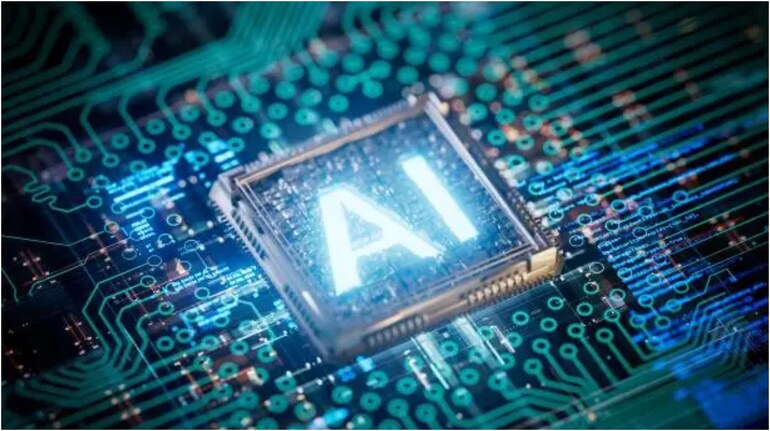
The match between AlphaGo, an artificial intelligence program developed by DeepMind, and Lee Sedol, a professional Go player, was a significant moment in the history of AI and board games. This five-game series, held in March 2016, demonstrated the capabilities of machine learning in a game known for its complexity.
Background of Go and challenges for AI
Go is an ancient board game that originated in China over 2,500 years ago. The game is played on a 19x19 grid, where two players place black and white stones to control territory alternately. Unlike chess, where computers had already achieved dominance over human players, Go remained a challenge for AI due to its vast number of possible board configurations and the reliance on intuition rather than fixed strategies. Traditional AI approaches struggled to evaluate positions effectively, making human expertise critical in high-level play.
Development of AlphaGo
AlphaGo was developed by DeepMind, a company owned by Google, using deep neural networks and reinforcement learning. The system was trained on thousands of professional and amateur games, improving its strategies through self-play. It combined two neural networks: the policy network, which predicted the best moves, and the value network, which assessed board positions. This approach allowed AlphaGo to develop unconventional strategies that differed from human playstyles.
The give-game series between AI and human
The match between AlphaGo and Lee Sedol took place in Seoul, South Korea. Lee Sedol was one of the strongest Go players in the world, having won multiple international titles. The structure of the match was a best-of-five format, with AlphaGo and Lee competing under standard tournament rules.
Game 1: AlphaGo won by playing moves that disrupted traditional human strategies. Lee Sedol struggled to predict the AI’s unconventional patterns.
Game 2: AlphaGo secured another victory by demonstrating a precise reading of board positions.
Game 3: AlphaGo won again, ensuring its overall match victory. The AI displayed strategic depth and adaptability.
Game 4: Lee Sedol achieved a breakthrough, winning his first and only game. A creative move in the middle match forced AlphaGo into mistakes.
Game 5: AlphaGo adjusted its approach and won, closing the series with a 4-1 result.
Impact on AI and Go
The match had lasting effects on both AI research and the Go community. For AI, AlphaGo’s victory showed that deep learning and reinforcement learning could solve problems previously considered too complex for computers. The techniques used in AlphaGo were later applied to other domains, including healthcare and scientific research.
In the Go community, AlphaGo’s strategies introduced new possibilities for professional players. The AI’s approach to the game led to a reevaluation of established techniques, influencing modern playstyles.


Discover the latest Business News, Sensex, and Nifty updates. Obtain Personal Finance insights, tax queries, and expert opinions on Moneycontrol or download the Moneycontrol App to stay updated!
Find the best of Al News in one place, specially curated for you every weekend.
Stay on top of the latest tech trends and biggest startup news.