






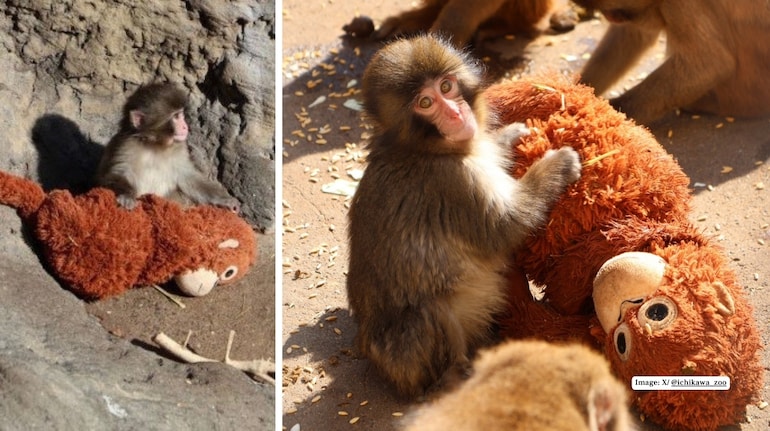

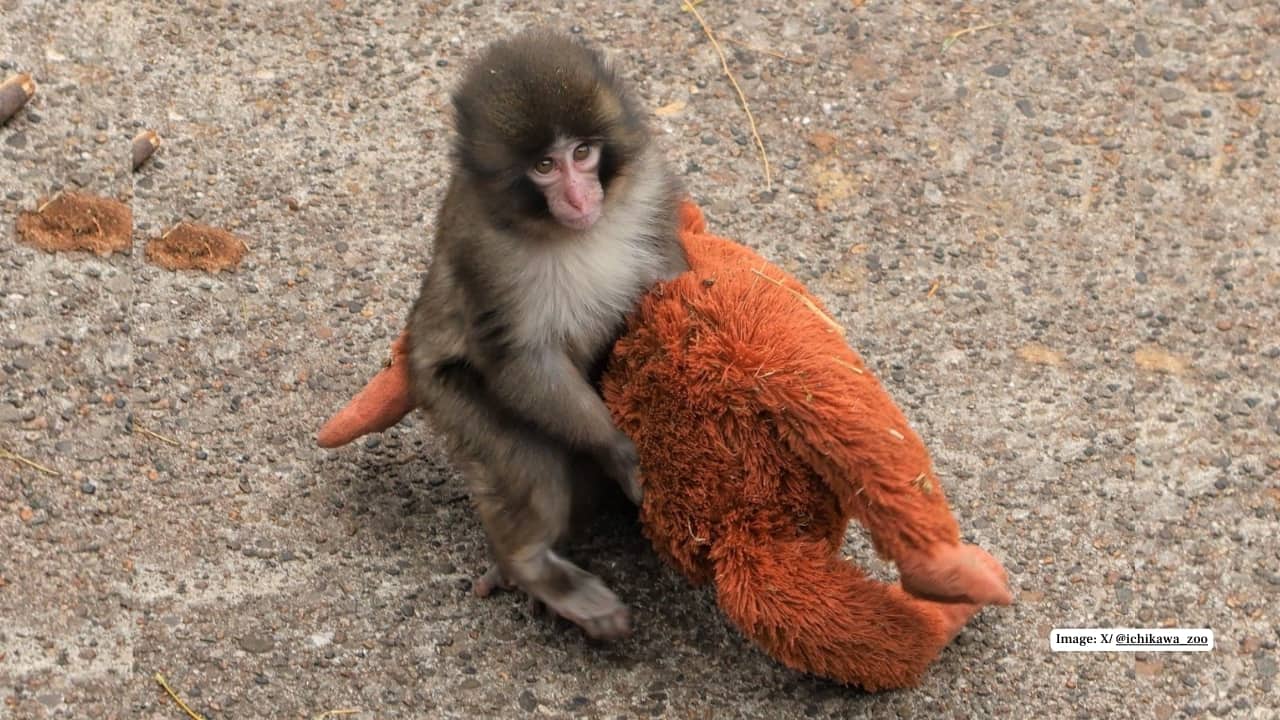
If your social media feed has felt unusually emotional lately, chances are you’ve seen Punch — the baby monkey clutching a bright orange stuffed toy as if it were his entire world.
Born in July 2025 at the Ichikawa City Zoological and Botanical Gardens, Punch — fondly called Panchi-kun in Japan — was abandoned by his first-time mother shortly after birth. What followed has become one of the internet’s most shared animal stories of the year, driving a noticeable surge in visitors to the zoo from across Japan and overseas.
Clips of the tiny macaque dragging around his plush orangutan companion have racked up millions of views online. But beyond the cuteness, Punch’s story highlights something deeper: how young primates cope when deprived of maternal bonding.
This baby Japanese macaque named Punch at Ichikawa City Zoo is breaking hearts worldwide 🐒💔Abandoned by his mom right after birth → hand-raised by kind zookeepers Tried joining the monkey troop? Instant outcast 😢 Now he clings to his giant orangutan plushie like it's… pic.twitter.com/iTTcQumpJd — サト (@satoshi1014max) February 15, 2026
The story behind the viral videos
Punch is a Japanese macaque, a species often nicknamed “snow monkeys” for their thick fur and ability to survive harsh winters. While he was born physically healthy, being rejected at birth disrupted a crucial stage of emotional development.
In primates, early maternal bonding provides warmth, protection, and psychological stability. Without it, infant monkeys can experience stress and behavioural challenges.
Zookeepers Kosuke Shikano and Shumpei Miyakoshi stepped in immediately, hand-rearing Punch around the clock. To help meet his instinctive need to cling to a caregiver, they introduced rolled blankets and soft toys — a method sometimes used in primate care when separation from the mother occurs.
Out of several options, Punch chose one: a bright orange plush orangutan, now affectionately called “oran-mama” by online fans.
He carries it everywhere. He sleeps holding it tightly. When he feels unsure around other monkeys, he presses it close, almost like a shield.
According to zoo officials, providing surrogate comfort objects can help reduce anxiety and support emotional adjustment in young primates. In Punch’s case, that stuffed toy has become both coping mechanism and constant companion.
Where is Ichikawa City Zoo?
The zoo is located in Ichikawa, in Chiba Prefecture — just east of Tokyo and part of the greater Tokyo metropolitan area. Set amid greenery and pear orchards, the facility is modest but well-maintained, housing animals such as red pandas, orangutans, birds, and small mammals — alongside its now-famous resident.
Address: 284-1 Omachi, Ichikawa City, Chiba 272-0801, Japan
Opening hours:
Tuesday to Sunday, 9:30 am to 4:30 pm (last entry at 4 pm)
Closed on Mondays and select public holidays
Ticket prices:
Adults: 440 yen (approximately Rs 257)
Children: 110 yen (approximately Rs 64)
Preschoolers: Free
For international travellers, the entry fee makes it one of the more affordable wildlife attractions in the Tokyo region.
How to get there from Tokyo
Ichikawa is well connected through Tokyo’s extensive public transport network, making it an easy half-day trip.
If you are flying into Tokyo, you will likely land at either:
From Haneda Airport, take the Tokyo Monorail to Hamamatsuchō Station or the Keikyu Airport Line to Shinagawa Station. From there, transfer to JR lines and board the JR Sōbu Line toward Ichikawa.
From Narita International Airport, you can take the Keisei Main Line or a JR train toward central Tokyo, then transfer to the JR Sōbu Line and get off at Ichikawa Station.
From Ichikawa Station, local buses or taxis can take you to the zoo in around 15–20 minutes.
Japan’s public transport is punctual, clearly signposted, and tourist-friendly, making the journey manageable even for first-time visitors.
Where to find Punch inside the zoo
Punch lives in the Japanese macaque enclosure, often referred to as “Monkey Mountain.” He is gradually being introduced to other macaques under supervision.
Visitors may see him interacting cautiously with the group — but almost always with his plush orangutan in tow.
As the zoo is operated by Ichikawa City, its emphasis remains on animal welfare, conservation, and education. Staff have reminded visitors that while Punch’s story is touching, respectful behaviour is essential.
That means:
Young primates are particularly sensitive to stress, and the zoo has urged guests not to let viral fame translate into disturbance.
 The baby monkey 'Punch'
Why Punch’s story resonates globally
Punch’s popularity is not just about cuteness. It reflects something deeply relatable — the need for attachment and security.
Behavioural experts note that transitional objects, similar to comfort toys in humans, can play an important role in emotional regulation when early bonding is disrupted.
In Punch’s case, the bright orange orangutan is more than fabric and stuffing. It is a stabilising presence during a vulnerable stage of life.
And it has undeniably boosted footfall at the zoo.
Local families are making day trips. International travellers are adding Ichikawa to Tokyo itineraries. Many simply want to see whether Punch is still clutching “oran-mama.”
He usually is.
Planning your visit
If you are already visiting Tokyo, Ichikawa makes for a meaningful and manageable excursion — particularly for animal lovers and families.
The zoo may be smaller than Japan’s major metropolitan parks, but that intimacy is part of its charm. Visitors often find the experience quieter and more personal.
If you do go, observe quietly and respectfully.
Punch did not choose internet fame.
He simply chose the one thing that made him feel safe.

Discover the latest Business News, Sensex, and Nifty updates. Obtain Personal Finance insights, tax queries, and expert opinions on Moneycontrol or download the Moneycontrol App to stay updated!
Find the best of Al News in one place, specially curated for you every weekend.
Stay on top of the latest tech trends and biggest startup news.





