-
Cornell researchers mimic riflebird feathers to make ultrablack cloth
Cornell researchers have created the darkest fabric yet, inspired by the ultrablack plumage of the riflebird. Their new textile traps light from multiple angles and stays consistently black.
-

Evening Grosbeaks make remarkable return across Northeastern United States
After decades of decline, Evening Grosbeaks are returning to parts of North America, offering hope for species recovery and insights into conservation strategies and resilience.
-
Hot dust persists near star 'Kappa Tucanae A' despite extreme heat
Astronomers discovered a companion star in Kappa Tucanae A, explaining the persistence of hot dust and creating a natural laboratory for exoplanetary research.
-
Dusty clouds survived extreme tidal forces close to Sagittarius A star
Unexpectedly resilient dusty structures circling Sagittarius A* are now confirmed to contain stars, overturning theories about object survival in extreme black hole environments.
-
When Mars was not a desert: White kaolinite fragments trace a humid planetary past
New kaolinite-rich rocks uncovered by NASA’s Perseverance rover suggest Mars once hosted warm, rainy environments that may have supported early microbial life in ancient wet climates.
-
Researchers reveal targeted cannibalism of Neandertal women and children at Goyet
The study places these findings within the late Middle Palaeolithic, a time marked by wide cultural diversity among Neandertal groups.
-
When two hot stars brushed by: Ancient stellar flyby left its mark near our Solar System
For decades, astronomers have detected an unusual mix of ionised gas in the local clouds. Roughly 20% of hydrogen and 40% of helium appear ionised.
-
First-ever mapping of large river systems on planet 'Mars' by scientists
Scientists mapped ancient Martian rivers and drainage basins, revealing past water flows and habitable environments of Mars’s climate and geological history.
-
Scientists detect massive Helium from exoplanet WASP-107b
Astronomers observed giant helium clouds escaping exoplanet WASP-107b, revealing atmospheric loss and offering key insight into the evolution of super-puff planets in space.
-
Red Planet clock unlocked: NIST physicists crack what time it is on Mars and the answer is here
Einstein explained that gravity affects each passing second. Clocks slow down where gravity grows stronger. Clocks speed up where gravity becomes weaker.
-
Humpback whales are making a comeback – here’s one reason why
Humpback whale populations have surged from 10,000 to nearly 80,000, thanks to conservation efforts and their incredible ability to adapt and switch food sources. A new study reveals how this flexibility—and changing habitats—are shaping their success.
-
New study reveals how did Antarctic deep waters end the last Ice Age?
Ancient Antarctic Bottom Water expansion triggered carbon release and ended the last Ice Age, offering critical insight into ocean circulation’s role in global climate change.
-
Bat besties match voices: Study shows vampires copy close companions
Bats communicate in high ultrasonic frequencies. Humans cannot hear these contact calls naturally. Special audio equipment captured each call clearly.
-
What happens to sunscreen, mayonnaise and medicines in space? New study reveals...
A new ISS experiment reveals how everyday products like sunscreen, mayonnaise and medicines age and change in space—unlocking insights to improve materials on Earth.
-
This threatened eagle had a baby boom during the COVID lockdown; the reason is fascinating
A 31-year study by the University of Granada shows that the COVID lockdown led to the highest-ever recorded breeding success for the endangered Bonelli’s eagle. With human activity reduced, the rare raptor thrived—revealing how much human presence impacts wildlife.
-
'Wisdom' the Albatross returns to Midway Atoll to nests again at the age of 75
Wisdom, the world’s oldest known wild bird, has returned to Midway Atoll to lay another egg at 75, reshaping scientific understanding of avian longevity.
-
Bamboo Shrimp rediscovered in India after 72 years
Scientists rediscovered bamboo shrimp in India after seventy-two years, revealing hidden freshwater biodiversity, correcting taxonomic confusion and highlighting urgent conservation needs for vulnerable river ecosystems.
-
Miners discover 37.4-carat half-pink, half-colourless diamond in Botswana
Most pinks gain colour from lattice distortion. The crystal then absorbs light differently. Too much strain shifts the tone brown. Too little strain leaves the diamond clear.
-
Teen unearths 150-million-year-old dinosaur fossil on first day of Montana dig
A teenager’s summer dig in Montana led to an unexpected scientific moment, offering a rare glimpse into ancient history and highlighting a student’s growing passion for discovery.
-
NASA wants to send your name around the Moon: Here's how to sign up for Artemis II Mission 2026
Submit your name to fly around the Moon with NASA’s Artemis II mission in 2026. Over 9 lakh people have already claimed their digital boarding passes. Learn how to register, meet the astronaut crew, and explore mission details.
-
Science behind how furry animals prepare for cold seasons?
Learn the science behind how furry animals survive winter through thick fur, fat layers, hibernation and behavioural strategies, revealing remarkable adaptations.
-
This newly discovered 'Fire Amoeba' survives extreme heat limits
A newly discovered fire amoeba survives temperatures up to 63°C, challenging biological limits and reshaping understanding of complex life in extreme environments.
-
Scientists discover first oxygen-free parasite living inside Salmon
A tiny salmon parasite has become the first animal proven to survive without oxygen, overturning long-held biology assumptions and reshaping how scientists define life.
-
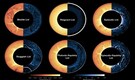
Earth’s ‘Episodic Squishy Lid’ could redefine habitable worlds, here is what study says
Scientists discovered Earth’s episodic squishy lid, showing intermittent tectonic activity, revealing new insights into planetary evolution, habitability and the search for life beyond Earth.
-
Astronomers reveal surprising shape of exploding star SN 2024ggi
Astronomers mapped supernova SN 2024ggi for the first time, revealing an elongated shockwave, challenging old stellar explosion models and reshaping astrophysics understanding globally.
-
14-year-old wins $25,000 STEM prize for origami structure that holds 10,000× its weight
A 14-year-old innovator designed a Miura-ori origami structure strong enough to support 10,000× its weight, earning him the top $25,000 STEM prize.
-
India’s first solar observatory, Aditya-l1 set to observe Sun’s maximum activity in 2026
India’s Aditya-L1 solar mission will observe the Sun’s peak activity in 2026, studying coronal mass ejections and protecting satellites from potential damage.
-
India’s first ISS astronaut Shubhanshu Shukla shares insights from his ISS mission
India’s first ISS resident Shubhanshu Shukla describes modular engineering brilliance, global crew cooperation, scientific breakthroughs and crucial insights guiding India’s upcoming orbital space station plans.
-
Scientists predict Africa’s Afar region could become Earth’s next ocean basin
The Afar region in northeastern Africa could split over millions of years, forming a new ocean. Scientists monitor rifts, magma and tectonic activity closely.
-
Neon-blue wild pigs highlight dangers of toxic rodent baits in California
Wild pigs in California turned neon blue after consuming rodenticide. Authorities warn hunters and public against eating affected meat due to serious health risks.
-
India–US NISAR mission enters crucial stage, enhancing global earth monitoring
The joint India–US NISAR satellite has entered its final science operations phase, promising unprecedented Earth data to improve climate research, resource monitoring and disaster response.
-
Scientists warn centre against accepting ‘Compromise Formula’ at Peru plant treaty meet
Scientists warn India against accepting a global plant treaty compromise that may weaken seed sovereignty, reduce farmer rights and expose vital genetic resources internationally.
-
New study shows Africa’s rainforests now release more CO₂ than they absorb
A recent study finds Africa’s forests now emit more carbon than they absorb, signalling alarming consequences for climate change and global carbon balance.
-
NASA's Cassini detects fresh organic molecules from Saturn's Moon
Cassini detected fresh organic compounds in ice plumes from Enceladus’s subsurface ocean, strengthening the moon’s potential as a habitable environment beyond Earth.
-
Near-Earth asteroid Eros to pass close to Andromeda galaxy on 30th November
Near-Earth asteroid Eros will appear near the Andromeda Galaxy on 30 November, offering a rare sky alignment livestream for global astronomy enthusiasts.
-
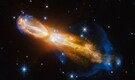
Nasa’s Hubble captures image of a fiercely glowing Calabash Nebula
Hubble’s new image shows the Calabash Nebula’s dying star blasting gas at immense speeds, revealing dramatic lobes, shockwaves and crucial insights into stellar death stages.
-
Scientists revisit old theory: Are tiny ancient black holes passing through our bodies unseen?
A provocative theory is gaining new support today. Scientists suggest atom-sized black holes may move through Earth. These primordial black holes likely formed after the Big Bang.
-
From Titan to Europa: 8 most stunning Moons of the Solar System
Eight distant worlds hold secrets that still puzzle scientists and spark endless curiosity. Each moon offers a strange allure, inviting questions about what lies beneath, beyond, and waiting to be discovered.
-
Lightning detected on Mars for the first time by NASA’s Perseverance Rover; here’s what it is
The rover has explored Jezero Crater since 2021. Its SuperCam instrument recorded audio and electromagnetic signals. These signals revealed tiny electrical discharges on Mars.
-
World’s oldest little penguin, Lazzie, turns 25 at Cincinnati Zoo
Lazzie hatched at Cincinnati Zoo in 2000. She became the first little penguin born there. The zoo now holds North America’s largest colony.
-
ISRO satellite captures Cyclone Ditwah barrelling towards Sri Lanka in high-precision view from space
ISRO released clear images showing strong bands building. The satellite followed Ditwah as it moved northwest. Its sensors mapped rain clusters reaching nearby coasts.
-
World’s most expensive satellite Nisar sends first sharp look at India as science phase begins
Nisar’s S-Band radar captured the Godavari River Delta with striking detail, showing mangroves, fields, arecanut crops and aquaculture ponds.
-
Russian launch pad damaged during Soyuz liftoff to Space Station
Roscosmos confirmed damage at the Baikonur Cosmodrome after launch. The Soyuz MS 28 mission reached the International Space Station safely.
-
Kerala on Mars: Periyar, Thumba and Varkala claim new cosmic addresses on the Red Planet
Kerala now joins earlier Indian names found on Mars. Ganga and craters named after Devendra Lal remain important examples.
-
Earth on alert: 3I/Atlas raises big questions over interstellar object dangers
We have seen three interstellar objects in recent years. Oumuamua appeared first during 2017. The comet 2I/Borisov arrived during 2019. The interstellar comet 3I/Atlas is passing now. Many more may have crossed our skies before.
-
400-year-old Greenland shark spotted 4,000 miles from home
A 400-year-old Greenland shark, the world’s longest-living vertebrate, was spotted 4,000 miles from its Arctic home, offering new insights into deep-sea mysteries.
-
From Red to Violet: How our eyes spot every colour?
Do you know how our eyes and brain work together to see millions of colours? Well, here is all you need to know about colours and their role in our everyday life.
-
How do volcanoes erupt? Science explained for kids
Discover why volcanoes erupt, how magma and gases cause eruptions and why volcanoes are essential for life on Earth.
-
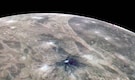
Mysterious dark-rayed crater spotted on Jupiter's Moon, Ganymede's icy surface
NASA’s Juno spacecraft captured a rare dark-rayed crater on Ganymede, offering fresh clues about the moon’s icy surface, impact history and future exploration prospects.
-
Moss spores survived nearly a year in harsh space conditions, scientists confirm
Scientists report moss spores stayed viable after nearly 1 year in space, showing remarkable resilience to radiation, temperature shifts and microgravity.