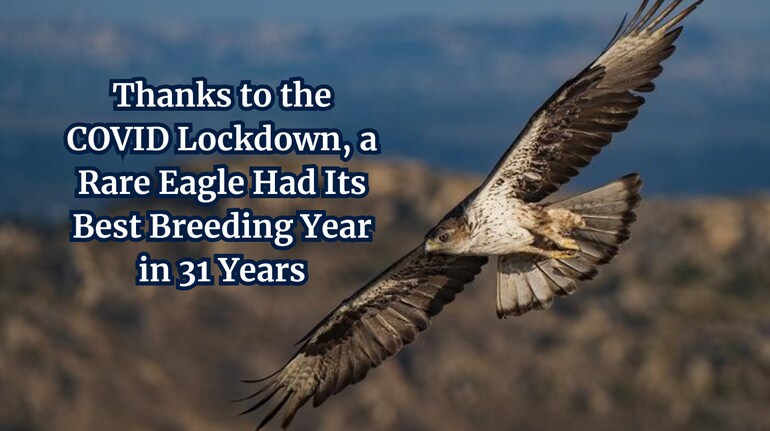
When humans vanished from the outdoors during the 2020 COVID lockdown, something extraordinary happened in the mountains of southern Spain. A threatened raptor, the Bonelli’s eagle, quietly celebrated one of its most successful breeding seasons in decades.
A new study from the University of Granada reveals that the sudden pause in human activity didn’t just change our world, it transformed the natural world too. And for this endangered eagle, the absence of people was nothing short of a breath of freedom.
A Baby Boom in the Year We Stayed Home
Researchers analyzed more than 1,200 Bonelli’s eagle reproduction records collected over 31 years. The results were astonishing - 2020 showed the highest number of chicks per pair ever recorded.
The scientists behind the study, José María Gil and Marcos Moleón, say the timing was perfect—almost eerily so.
“The lockdown coincided with critical stages of reproduction,” they explain. “The end of incubation and the entire nestling period occurred without any human disturbance. This exceptional success likely reflects what was once normal before human pressure increased.”
Without hikers, cyclists, hunters, or curious visitors roaming the mountains, the eagles finally experienced a world free of interruptions, and they thrived.
Humans: The Real Threat Behind the Decline
The research makes one thing crystal clear - human activity poses a greater threat to Bonelli’s eagles than natural factors like weather or prey availability.
Two activities were identified as the most damaging:
1. Decoy Partridge Hunting: A practice that is culturally rooted but dangerous. It increases:
And despite its tradition, researchers note it is illegal under European law.
2. Traffic and Outdoor Recreation: Vehicles bring people, and people bring disturbance. Hiking, mountain biking, and climbing near nests cause stress, abandonment, and reduced breeding success. In short, human presence, not nature, is the problem.
A Once-in-a-Lifetime “Natural Experiment”
Studying wildlife without human interference is almost impossible. Normally, there’s no control group, humans are everywhere. But the pandemic’s global pause offered scientists a unique, unrepeatable opportunity.
The study compared three periods:
Thanks to a special research permit, University of Granada scientists could continue monitoring the birds even during restrictions, one of the few long-term wildlife datasets that captures the effect of a world suddenly gone quiet.
What Must Change to Protect These Eagles
The researchers outline two major steps to safeguard the Bonelli’s eagle in southeastern Iberia:
1. Ban Decoy Partridge Hunting: Not only harmful, but already illegal. Enforcing this ban is essential to preventing preventable deaths.
2. Control Human Access Near Nests (December–May): Regulating hikers, bikers, climbers, and visitors during breeding season can give the species the space it desperately needs. And, the researchers emphasize, this isn’t just a task for conservation authorities, society must rethink how it uses natural spaces.
“Now that we know which actions work, it’s time to put them into practice,” the authors say. “We all share responsibility in protecting our wildlife.”

Discover the latest Business News, Sensex, and Nifty updates. Obtain Personal Finance insights, tax queries, and expert opinions on Moneycontrol or download the Moneycontrol App to stay updated!
Find the best of Al News in one place, specially curated for you every weekend.
Stay on top of the latest tech trends and biggest startup news.