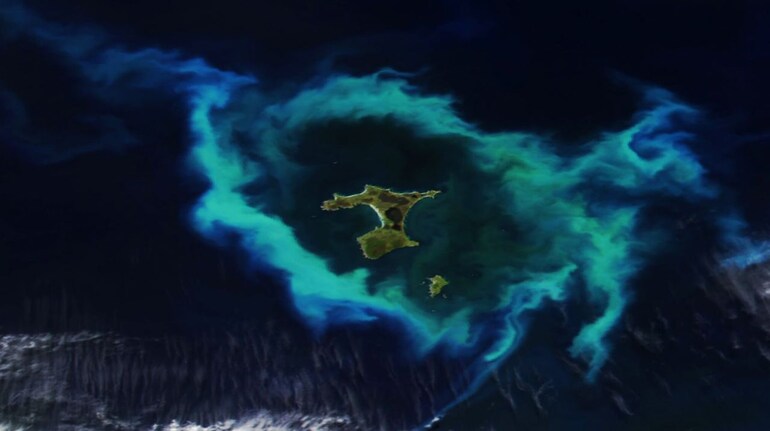

NASA satellite detected a spectacular oceanic colour ring. The ring appeared around New Zealand’s remote Chatham Islands region. Its swirling green and blue patterns were visible from orbit. Scientists quickly linked it to a natural marine phenomenon. Such vivid ocean colours are rarely captured at this scale. The Chatham Rise beneath the water fueled this bloom. Cold Southern Ocean currents mix with warmer subtropical waters.
What are Phytoplankton Bloom?
Phytoplankton are microscopic, plant-like organisms floating in oceans. They absorb sunlight and nutrients to produce energy efficiently. Large populations reflect light, making oceans appear vividly green-blue. The bloom near Chatham Islands reached remarkable size and density. These blooms form the base of the marine food chain.
One ring to rule them all…This ring of green and blue is from phytoplankton—tiny photosynthetic organisms that can be seen from space when their numbers explode. Such blooms are common near New Zealand’s Chatham Islands because of the shape of the seafloor in that area. pic.twitter.com/bOOkN6BqbH — NASA Earth (@NASAEarth) January 21, 2026
Which Satellite Captured This Bloom?
NASA’s VIIRS sensor aboard the NOAA‑20 satellite captured the bloom. VIIRS stands for Visible Infrared Imaging Radiometer Suite, a key tool. It detects subtle differences in ocean colour and chlorophyll concentration. These instruments allow real-time observation of ocean productivity from space. NASA released high-resolution imagery to illustrate bloom size and patterns.
How Big Was the Bloom?
The bloom covered an area larger than New Zealand’s South Island. Swirls of green and blue extended for hundreds of kilometres. Chlorophyll concentration in surface waters was extremely high during peak bloom. Satellite imagery clearly showed the distinct ring and swirling patterns. Its size and intensity surprised both marine and space scientists.
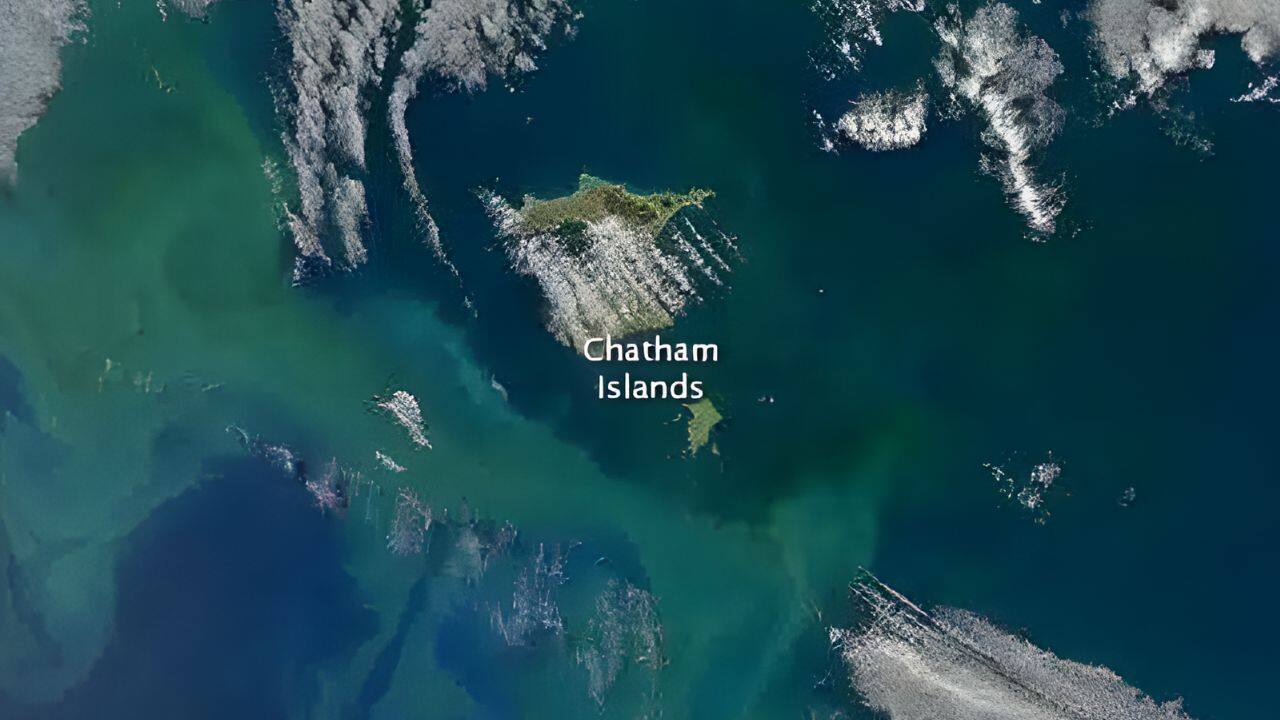 The bloom covered an area larger than New Zealand’s South Island. (Image: NASA)
Seasonal Pattern and Timing
Phytoplankton Blooms occur mainly during the austral summer months each year. Warm surface waters combined with cold nutrient-rich currents trigger growth. Sunlight penetration allows photosynthesis to power explosive phytoplankton reproduction. These blooms typically last several weeks before dispersing into open ocean. NASA’s imagery helps track seasonal timing and bloom intensity accurately.
Does This Attract Wildlife?
Phytoplankton blooms feed small fish and krill near the surface. This, in turn, attracts larger predators like seals and whales. Dolphins and seabirds are drawn to these nutrient-rich waters quickly. Local fisheries benefit from increased populations of blue cod and lobster.
Why “Rings of Colour in the Ocean” was visible?
NASA’s VIIRS satellite sensors detect light reflected by chlorophyll in water. High phytoplankton concentration makes water appear vivid green and blue. Swirling currents create the circular “ring” patterns around the islands. Rings of colour are not rare but unusually visible this time. The combination of nutrient-rich currents and sunlight made it striking.
Discover the latest Business News, Sensex, and Nifty updates. Obtain Personal Finance insights, tax queries, and expert opinions on Moneycontrol or download the Moneycontrol App to stay updated!
Find the best of Al News in one place, specially curated for you every weekend.
Stay on top of the latest tech trends and biggest startup news.