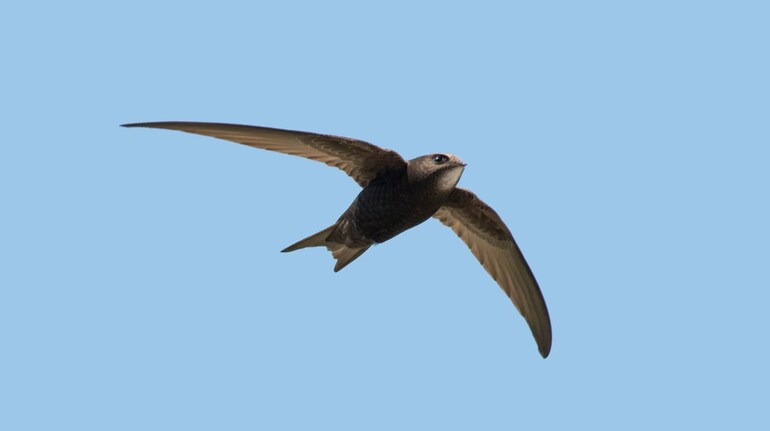

Scientists have confirmed that the common swift, a small migratory bird found across Europe, can remain airborne for up to ten months, redefining scientific understanding of sustained flight and animal endurance.
How common swifts spend life almost entirely airborne
New research from Lund University in Sweden shows common swifts spend nearly their entire lives flying. Using miniature tracking devices, scientists followed nineteen swifts breeding in Sweden over extended periods. The devices recorded movement, wingbeats, altitude changes, and light levels continuously. The data revealed birds remained airborne for around 99% of the year. Some individuals landed only a few hours annually. One swift paused flight for four nights one year. The following year, that bird landed for only two hours. Researchers found no consistent roosting sites in sub Saharan Africa. This strongly suggests many swifts never land outside breeding seasons.
What makes the swift such an extreme flyer
The common swift has long narrow wings built for efficiency. Its body is streamlined for constant motion through air. Swifts feed exclusively on flying insects gathered midair. They eat while travelling across vast distances. Mating also occurs during flight without landing. Nesting materials are collected while airborne. Researchers observed twilight ascents during dawn and dusk periods. During these ascents, birds climb nearly two miles high. Wingbeats reduce sharply during long glides. Scientists believe this allows brief rest periods. Evidence suggests swifts may sleep while gliding. This behaviour enables continuous flight lasting several months.
Why the discovery also raises conservation concerns
Juvenile swifts show similar endurance after fledging from nests. Young birds disperse widely and remain airborne for months. They return to breeding colonies after two or three years. While continuous multi year flight remains unconfirmed, ten month flights are documented. Despite extraordinary abilities, swifts face growing threats worldwide. Their survival depends on healthy insect populations. Climate change disrupts insect emergence cycles. Pesticide use reduces food availability across landscapes. Nesting sites in buildings are also disappearing. Conservationists warn that human activity below directly affects life above. Protecting insect rich habitats remains essential for swifts.
Researchers say the common swift represents extreme biological adaptation. Its entire existence is shaped by aerial survival. The study highlights both nature’s resilience and vulnerability. Scientists stress that protecting habitats is now critical. Without action, one of Earth’s most specialised flyers could decline.
Discover the latest Business News, Sensex, and Nifty updates. Obtain Personal Finance insights, tax queries, and expert opinions on Moneycontrol or download the Moneycontrol App to stay updated!
Find the best of Al News in one place, specially curated for you every weekend.
Stay on top of the latest tech trends and biggest startup news.