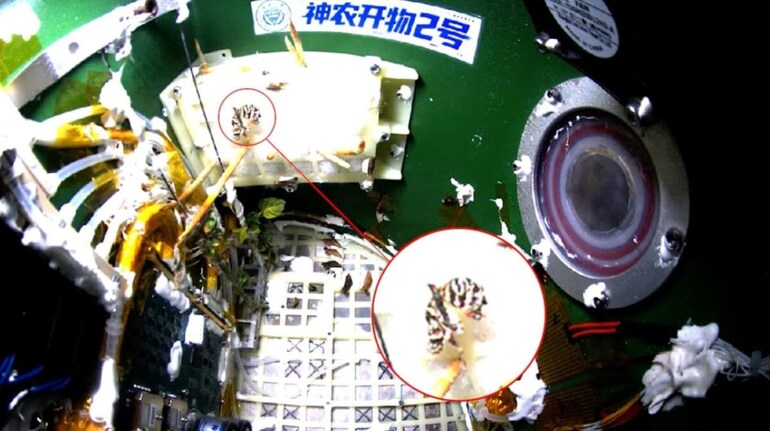

A butterfly completed metamorphosis about 400 kilometres above Earth’s surface. The chrysalis was inside a sealed biological experiment in orbit. This marks one of the first complete animal transformations in space. Researchers watched as the butterfly unfurled wings in microgravity conditions. The event took place aboard China’s experimental space station Tiangong.
What happened 400 km above Earth?
The experiment orbited Earth aboard China’s Tiangong space station. Inside, a sealed biological chamber supported multiple living organisms. Plants produced oxygen while microorganisms recycled waste materials continuously. Scientists monitored temperature, pressure and humidity using remote sensors. No astronauts interfered with the habitat during development stages.
The Space Biology Experiment
The experiment was developed by Chongqing University researchers in China. A sealed capsule contained plants, microorganisms and the chrysalis. The habitat-maintained oxygen, humidity and temperature for living organisms. It mimicked Earth-like conditions without any human intervention on board. The capsule launched aboard a Kuaizhou-11 Y8 rocket in December.
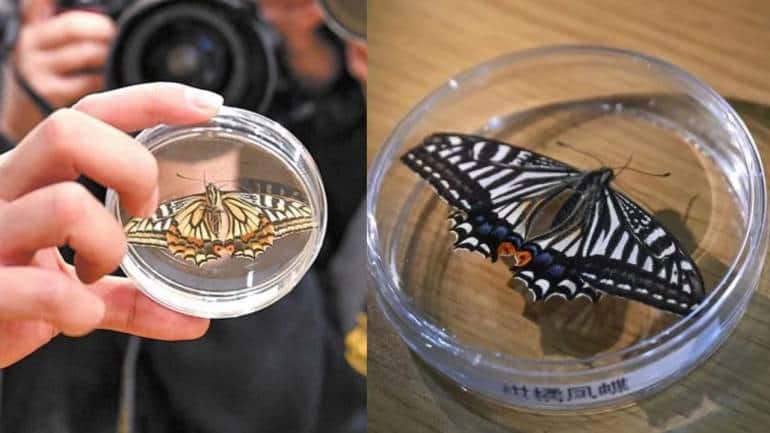 A sealed capsule contained plants, microorganisms and the chrysalis. (Image: Chongqing University / Xinhua)
Why Butterflies in Space?
Scientists wanted to test complex life cycles in microgravity. Microgravity affects fluid behaviour and biological processes unpredictably. They did not know if metamorphosis could complete successfully there. Larvae and pupae undergo hormonal and cellular changes during transformation. These processes can be sensitive to environmental stresses and gravity shifts.
A Breakthrough for Closed Ecosystems
Closed ecosystems recycle air, water and nutrients without outside input. They are key to long-duration space missions far from Earth. NASA and other space agencies have experimented with plants before. But complete animal life cycles in closed habitats remain rare. The butterfly event expands understanding of space-borne biological resilience.
What Scientists Plan Next?
Researchers want to test long-term sealed ecosystems in orbit. They will observe how plants and animals interact over time. Future tests may involve longer missions and varied species. Experiments will also test radiation exposure impacts on development. The goal is to build ecosystems that support human crews someday.
Discover the latest Business News, Sensex, and Nifty updates. Obtain Personal Finance insights, tax queries, and expert opinions on Moneycontrol or download the Moneycontrol App to stay updated!
Find the best of Al News in one place, specially curated for you every weekend.
Stay on top of the latest tech trends and biggest startup news.