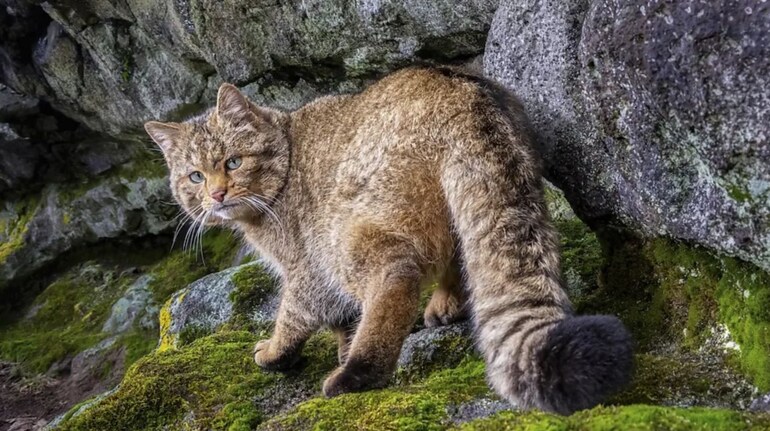

Europe hides a mysterious predator that few humans ever see. The European wildcat is nicknamed the “ghost cat” for a reason. Solitary, secretive and stealthy, it slips through forests almost unnoticed. For decades, some believed it had vanished from parts of Europe. Now, these rare images reveal that it is still surviving quietly.
Who Is This Ghost Cat?
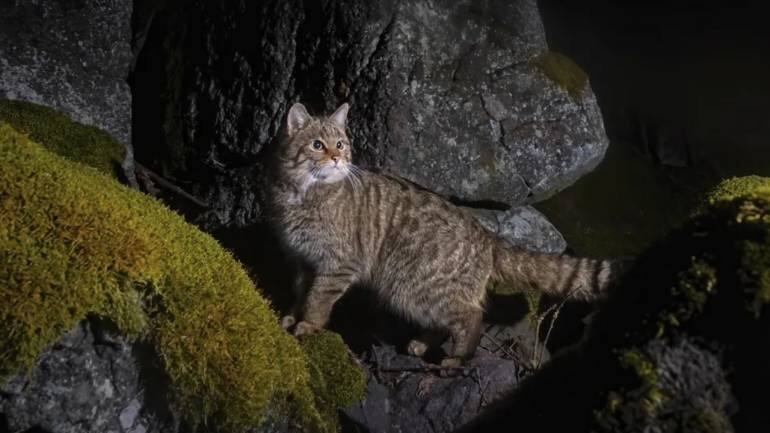
The “ghost cat” is actually the European wildcat (Felis silvestris silvestris). It is native to forests across continental Europe, including France, Germany and Scotland. Also spotted in remote parts of the Balkans, the Caucasus, and Turkey. This elusive feline is larger and wilder than domestic cats, with a striped coat. It survives quietly in dense forests, avoiding human contact whenever possible.
 The “ghost cat” is actually the European wildcat. (Image: BBC/ Vladimír Čech Jr)
Who Discovered This Mysterious Cat?
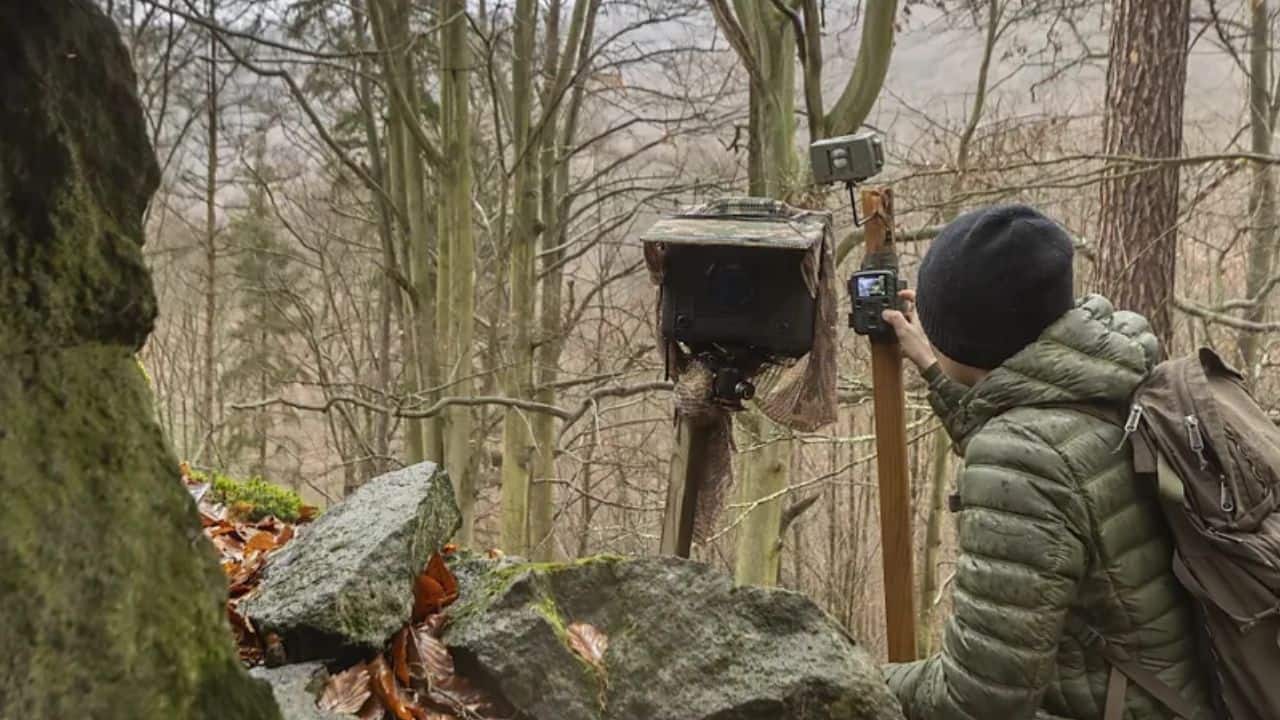
In 2020, wildlife photographer Vladimír Čech Jr was trudging through the snow in a military zone in the Doupov Mountains when he captured the images of this wildcat. The experts set up cameras in areas where wildcats were historically thought extinct. Their goal was to document rare species and track biodiversity in forests.
Why Does It Go by the Name “Ghost Cat”?
The nickname comes from its extremely elusive nature. It moves silently, hides in dense foliage and avoids humans entirely. Sightings are so rare that many believed it had disappeared from Europe. The wildcat’s secretive behaviour makes it almost invisible in its habitat. Hence, “ghost cat” perfectly describes this shy, forest-dwelling feline.
From 2020 to 2026: How is the Ghost Cat Thriving?
The European wildcat was rediscovered in 2020 in some forests of Europe. Since then, camera traps and field surveys have confirmed more sightings. In 2026, rare photographs show that the species is surviving but still rare.
 In 2026, rare photographs show that the species is surviving but still rare. (Image: BBC/Vladimír Čech Jr)
Populations remain small and fragmented, often threatened by habitat loss and hybridisation with domestic cats. While not extinct, the ghost cat’s survival remains precarious and fragile.
What Does This Finding Mean for Science?
This rediscovery is hugely significant for European wildlife conservation. It shows that even rare, elusive species can persist despite human pressures. Scientists can now study the wildcat’s behaviour, genetics and ecological role.
What to Expect in the Future for this species?
Conservationists hope populations will stabilize and expand in protected forests. Continued monitoring using cameras and genetic studies will guide protection efforts. It strengthens efforts to restore forests and protect biodiversity across Europe. With careful conservation, the ghost cat could once again roam Europe’s forests widely.
Discover the latest Business News, Sensex, and Nifty updates. Obtain Personal Finance insights, tax queries, and expert opinions on Moneycontrol or download the Moneycontrol App to stay updated!
Find the best of Al News in one place, specially curated for you every weekend.
Stay on top of the latest tech trends and biggest startup news.