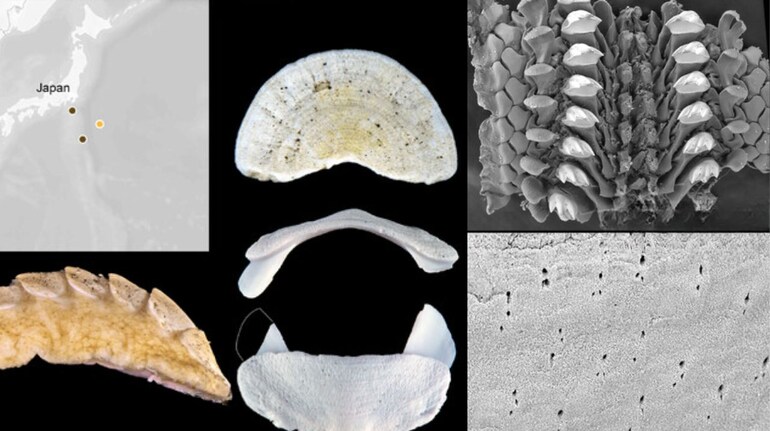

Scientists have discovered a remarkable mollusk in darkness. It lives nearly 18,045 feet beneath ocean waves. The discovery occurred inside the Izu-Ogasawara Trench. This trench lies deep beneath the Pacific Ocean.
Pressure here crushes most life without mercy. Yet this small creature survives astonishing extremes. This deep-sea mollusk's tongue was coated in iron when scientists found it.
What Did Scientists Find?
The creature belongs to a group called chitons. Chitons usually possess eight overlapping armored shell plates. However, this species revealed a remarkable adaptation.
Its feeding organ contains an iron-coated surface. This tongue-like structure is known as a radula. The iron reinforcement makes it exceptionally durable.
Who is Behind this Study?
Dr. Julia Sigwart of the Senckenberg Research Institute and Natural History Museum Frankfurt (SMF) confirmed the iron-coated tongue of Mollusk. Deep-sea expeditions collected samples using robotic submersibles.
Scientists later analysed specimens inside specialised laboratories. The findings were formally documented in scientific literature. Researchers described the mollusk as a new species.
Life on Sunken Wood
Researchers found it clinging to submerged wood. Sunken timber becomes islands of life underwater. Microbes and fungi slowly break wood apart.
These processes create feeding grounds for deep creatures. The chiton grazes on this microbial buffet. Even in darkness, ecosystems quietly flourish.
Why would a mollusk need an iron tongue?
Scientists solved the mystery behind the iron-coated tongue of this mollusk. Deep-sea environments offer limited and stubborn food sources. The radula scrapes microbes from hardened surfaces efficiently.
Iron minerals prevent the structure from eroding quickly. Scientists believe this adaptation evolved for extreme survival. Nature engineered metal strength within living tissue.
How This Discovery Changes Science?
The discovery expands knowledge of deep-sea biodiversity. This tiny mollusk challenges assumptions about ocean limits. It highlights evolution’s ability to innovate under pressure. Studying iron reinforcement may influence engineering design. It also proves unexplored trenches hold biological surprises.
Discover the latest Business News, Sensex, and Nifty updates. Obtain Personal Finance insights, tax queries, and expert opinions on Moneycontrol or download the Moneycontrol App to stay updated!
Find the best of Al News in one place, specially curated for you every weekend.
Stay on top of the latest tech trends and biggest startup news.