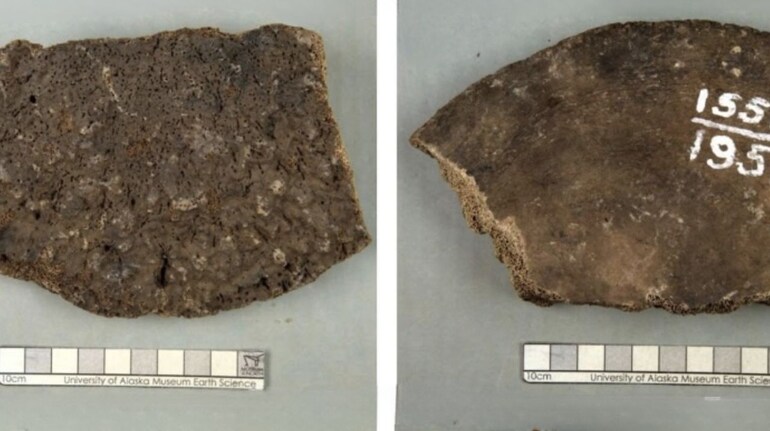

For 70 years, fossils were labelled as mammoth bones in Alaska. They were kept in a museum without proper scientific re-examination. Recent testing revealed the bones actually belong to ancient whales. This surprising discovery challenges decades of assumptions in palaeontology. The findings were announced by scientists studying museum fossil collections.
Discovery of Fossils From Alaska
The bones were originally discovered in Alaska’s interior in 1951. Archaeologist Otto Geist assumed they belonged to woolly mammoths immediately. They were carefully preserved at the University of Alaska Museum of the North. No detailed testing had been done on the fossils for decades. For seventy years, these bones quietly misled generations of researchers.
Scientific Tools Unveil the Truth
Radiocarbon dating revealed the fossils are only two to three thousand years old. This age is far too recent for extinct woolly mammoths worldwide. Stable isotope analysis suggested the animals lived in ocean environments. DNA tests confirmed the bones came from two whale species. The remains belonged to a Northern Pacific right whale and minke whale.
Unexpected Whales in an Unlikely Place
The fossils were discovered hundreds of kilometres from the nearest ocean. Discovery of whale bones so far inland astonished researchers and local scientists. Ancient waterways may have carried these long distances inland of such animals. Humans could have transported the bones for cultural or practical reasons. Museum mislabelling over decades may also explain part of the mystery.
Correcting a Long-Standing Mistake
Modern science has the power to correct historical fossil errors effectively. Radiocarbon dating and DNA analysis are revealing surprising truths. What seemed obvious in the past may now be entirely incorrect. Museums are updating collections to reflect these new scientific discoveries. Even old specimens can become extraordinary stories when tested carefully.
Broad Implications for Science
The discovery reshapes understanding of prehistoric ecosystems in interior Alaska. It raises new questions about whale movements and environmental changes. Researchers gain insight into how species interacted with ancient landscapes. Students and scientists benefit from learning how assumptions can be challenged. Curiosity-driven research continues to unlock mysteries hidden for decades.
Discover the latest Business News, Sensex, and Nifty updates. Obtain Personal Finance insights, tax queries, and expert opinions on Moneycontrol or download the Moneycontrol App to stay updated!
Find the best of Al News in one place, specially curated for you every weekend.
Stay on top of the latest tech trends and biggest startup news.