Moneycontrol PRO
Black Friday Sale
Black Friday Sale
HomeNewscoronavirusOxford University vaccine may offer 'double protection' against COVID-19

Oxford University vaccine may offer 'double protection' against COVID-19

The vaccine development, by the university's Jenner Institute, is being supported by the UK government and AstraZeneca, which will support the production phase.

July 17, 2020 / 15:52 IST

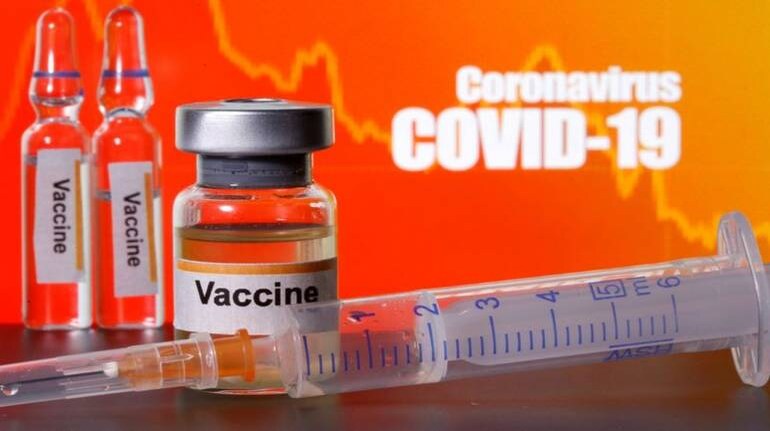
The COVID-19 vaccine being developed by Oxford University may provide "double protection" against the novel coronavirus, researchers have discovered in the early stages of human trials.

According to several media reports in the UK, blood samples taken from a group of volunteers who were given a dose of the vaccine showed that it stimulated the body to produce both antibodies and killer T-cells.

The discovery seems promising because separate studies have suggested that antibodies may fade away within months while T-cells can stay in circulation for years.

However, reports cautioned that the results, while "extremely promising", did not yet prove that the Oxford vaccine provides long-lasting immunity against the deadly virus.

"I can tell you that we now know the Oxford vaccine covers both bases – it produces both a T cell and an antibody response. It's the combination of these two that will hopefully keep people safe. So far, so good. It's an important moment. But we still have a long way to go," a senior source from the trial was quoted by The Daily Telegraph as saying.

COVID-19 Vaccine

Frequently Asked Questions

View more
How does a vaccine work?

A vaccine works by mimicking a natural infection. A vaccine not only induces immune response to protect people from any future COVID-19 infection, but also helps quickly build herd immunity to put an end to the pandemic. Herd immunity occurs when a sufficient percentage of a population becomes immune to a disease, making the spread of disease from person to person unlikely. The good news is that SARS-CoV-2 virus has been fairly stable, which increases the viability of a vaccine.

How many types of vaccines are there?

There are broadly four types of vaccine — one, a vaccine based on the whole virus (this could be either inactivated, or an attenuated [weakened] virus vaccine); two, a non-replicating viral vector vaccine that uses a benign virus as vector that carries the antigen of SARS-CoV; three, nucleic-acid vaccines that have genetic material like DNA and RNA of antigens like spike protein given to a person, helping human cells decode genetic material and produce the vaccine; and four, protein subunit vaccine wherein the recombinant proteins of SARS-COV-2 along with an adjuvant (booster) is given as a vaccine.

What does it take to develop a vaccine of this kind?

Vaccine development is a long, complex process. Unlike drugs that are given to people with a diseased, vaccines are given to healthy people and also vulnerable sections such as children, pregnant women and the elderly. So rigorous tests are compulsory. History says that the fastest time it took to develop a vaccine is five years, but it usually takes double or sometimes triple that time.

View more
Show

Another source close to the team described the presence of both antibodies and T-cells as a "double defence" against COVID-19.

The Lancet medical journal has confirmed that it will be publishing early-stage human trial data from the Oxford team on July 20.

David Carpenter, chairman of the Berkshire Research Ethics Committee, which approved the Oxford trial, said the vaccine team was "absolutely on track".

"Nobody can put final dates... things might go wrong but the reality is that by working with a big pharma company, that vaccine could be fairly widely available around September and that is the sort of target they are working on," he said.

The vaccine development, by the university's Jenner Institute, is being supported by the UK government and AstraZeneca, which will support the production phase.

The pharmaceutical company said in June that phase one trials were due to finish and a phase three trial had begun during which the vaccine would be given to thousands of people to test its efficacy and safety.

The Oxford University vaccine is one of more than 100 in the works as the novel coronavirus continues to spread, infecting more than 13 million people and killing at least 582,000 worldwide.

Moneycontrol News
first published: Jul 17, 2020 03:52 pm

Discover the latest Business News, Sensex, and Nifty updates. Obtain Personal Finance insights, tax queries, and expert opinions on Moneycontrol or download the Moneycontrol App to stay updated!

Subscribe to Tech Newsletters

  • On Saturdays

    Find the best of Al News in one place, specially curated for you every weekend.

  • Daily-Weekdays

    Stay on top of the latest tech trends and biggest startup news.

Advisory Alert: It has come to our attention that certain individuals are representing themselves as affiliates of Moneycontrol and soliciting funds on the false promise of assured returns on their investments. We wish to reiterate that Moneycontrol does not solicit funds from investors and neither does it promise any assured returns. In case you are approached by anyone making such claims, please write to us at grievanceofficer@nw18.com or call on 02268882347