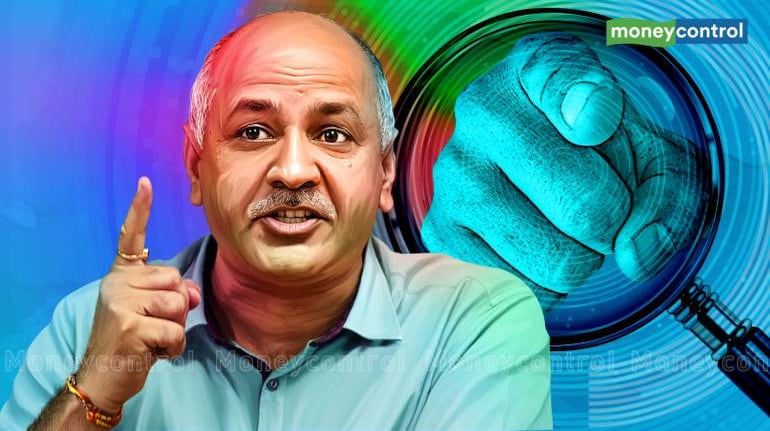
Delhi’s deputy chief minister Manish Sisodia recently showed us a rare virtue for a politician, a tolerance for criticism. When a student at a university in Delhi was fined for allegedly posting some “distasteful remarks” about Chief Minister Arvind Kejriwal and the Deputy Chief Minister, Sisodia immediately gave instructions for the student’s fine to be cancelled. He also issued a strong statement in support stating “No student should be punished for exercising their right to Free Speech.”
From the business tycoon who unleashes his flacks on a publication that dares question him to the political heavyweight who sets his trolls on a former colleague who dares say the king is naked, opprobrium bothers us all. With social media ever ready to grab the slightest controversy, it also lingers on like a scab being picked over and over again.
So when you come across an exception, it isn't just a welcome change, it also holds up a mirror to our own hypersensitivity. Subramanian Swamy, for one, often laughs off criticism like Ronaldo shrugging aside a clumsy challenge by a novice. But what Sisodia did this week went beyond just accepting denunciation. He encouraged it, which really puts him in a league of very few. Nehru once wrote an essay under the pseudonym Chanakya in which he warned of the dangers of giving people like himself unchallenged power.
The ability to take censure in one’s stride is an extremely difficult task for most of us. Perhaps we are wired to shun criticism which is why we take it so badly. A case paper published in the Review of General Psychology says that events like receiving criticism that are negatively valenced “will have a greater impact on the individual than positively valenced events of the same type”, for instance receiving praise. The paper’s explanation: “when feedback is generally good, people let their defenses down, whereupon any small bits of criticism emerge as extremely powerful and are therefore remembered exceptionally well.”
Sadly, criticism is such a force for good that we need more, not less of it.
In his book In Defense of Troublemakers: The Power of Dissent in Life and Business, University of California, Berkeley psychologist Charlan Nemeth argues that without the sauce of criticism, majority opinion often leads to terrible outcomes like plane and market crashes. What you most don’t want to hear is also what you need to hear the most, since it is essential for error correction, obviating easily remediable outcomes. Not heeding critical inputs led to the failed Bay of Pigs Invasion, the United Airlines 173 crash and the Jim Jones cult disasters, writes Nemeth.
Modern psychology tells us that debate stimulates instead of inhibiting; enhances instead of constricting. Indeed, wearing the halo of rishihood makes for poor prophets, be it in the corporate or the governance domain.
Often, politicians and governments look for special immunity from criticism on the grounds that the nature of their jobs entails taking decisions that may not lend themselves to open discussion. On that, the European Court of Human Rights had ruled that because "freedom of political debate is at the very core of the concept of a democratic society ... the limits of acceptable criticism are accordingly wider as regards a politician as such than as regards private individuals." It added that "the limits of permissible criticism are wider with regard to the Government than in relation to a private citizen, or even a politician."
Tycoons and business leaders too need to open themselves up to criticism, for their own good. A 2015 piece in Stanford Business Insights talks about how through the 1960s and ’70s, Xerox’s Palo Alto Research Company (PARC) hosted some of the best engineers in the industry who had come up with inventions like the first true personal computer and the world’s first laser printer. The catch was, few of their ideas ever earned much money for Xerox. Analysing the paradox, Jonathan Bendor, a professor of political economics and organizations at the Stanford Graduate School of Business explains that what the Xerox PARC engineers really needed was something their managers should have dispensed more freely: constructive criticism.
It is what companies need to create, a culture of constructive criticism and the best way to do so is to start at the top. Norman Vincent Peale of The Power of Positive Thinking fame said it best: “The trouble with most of us is that we'd rather be ruined by praise than saved by criticism.”
Discover the latest Business News, Sensex, and Nifty updates. Obtain Personal Finance insights, tax queries, and expert opinions on Moneycontrol or download the Moneycontrol App to stay updated!
Find the best of Al News in one place, specially curated for you every weekend.
Stay on top of the latest tech trends and biggest startup news.