In the two years since the world closed down to battle a bug that was always ahead in the game, much has changed. And yet, there is the risk of going back to our old ways. Companies must fight this tendency and understand that conspicuous consumption has had its day. We have to shift to a greener model that cares for the planet.
Marooned by the fear of catching Covid, many of us were forced to recalibrate our lives. Companies, including the mightiest and the most valuable, packed off employees to their homes and declared that work-from-home was the foreseeable future, and in some cases such as Salesforce, pretty much the absolute future.
We realised that we no longer needed to sit in a plane for several hours for an hour-long meeting, that we could conduct them in our jammies with a formal shirt thrown in to show purpose. We stopped buying the clothes that idle in cupboards, the lipsticks that melt in their cases and the mascara that dries up after a few weeks.
Our air got cleaner and our rivers stopped whipping up chemical foam to the surface.
We learnt to spend our commute time gardening, reading, listening to music, picking up the hobbies lost to our busy lives, learning to cook and eat better, be social media mavens, and valuing family and friends. In some cases, we learnt that we could no longer tolerate the proximity of those we escaped by staying in our offices for long hours. In short, we all learnt some truths.
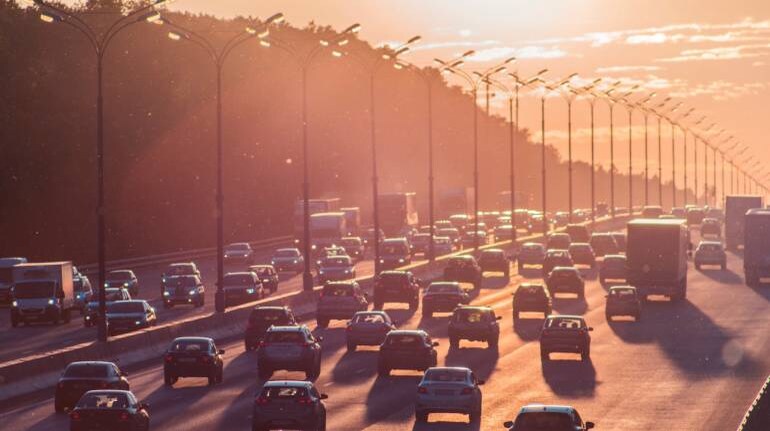
In the last few weeks, though, the lid has lifted on all of this. Like a genie that has shot out of the bottle, we are on plane rides to catch that hour-long meeting, we are rushing about choking roads, buying the next Apple phone that we don’t need, and snapping up the Zara dress we won’t wear. Many are calling it revenge consumption.
It is too early to tell whether this is that or delusional enthusiasm for mindless consumption. If anything, what Covid taught us was that we need a lot less to not just survive, but to thrive, and that the most important things in life are good health, support from family and friends and resilience.
In the return to so-called normalcy, companies big and small must closely examine how they shape the future. This is an inflexion point in history. They can either commit to a green future or go back to the ways that got us to this climate crisis.
They could pare the excesses and focus on lowering their carbon footprint - be that in the folks who are made to commute, the bottled water on desks and the de-rigueur off-sites in the name of team-building, which we know are acts of forced jollity.
Perhaps, they must strive to be companies that value conscious employees, encourage meaningful living, give back to the community, and encourage the idea of refuse, reduce, reuse, repurpose and recycle.
Companies that encourage a deep culture that makes space for the planet will be the future superstar corporations. It is time companies put purpose before profit, instead of talking up recycling programs, without addressing over-production and encouraging over-consumption.
Governments too must tax companies that burden the planet with too much single-use plastic, fast fashion, fast devices that do the same things and encourage a repair culture rather than a replace culture.
This pandemic, dreadful as it has been, has also offered a window into an alternative life - which may be slower in the near term but is a faster way to help us preserve our planet.

Discover the latest Business News, Sensex, and Nifty updates. Obtain Personal Finance insights, tax queries, and expert opinions on Moneycontrol or download the Moneycontrol App to stay updated!
Find the best of Al News in one place, specially curated for you every weekend.
Stay on top of the latest tech trends and biggest startup news.