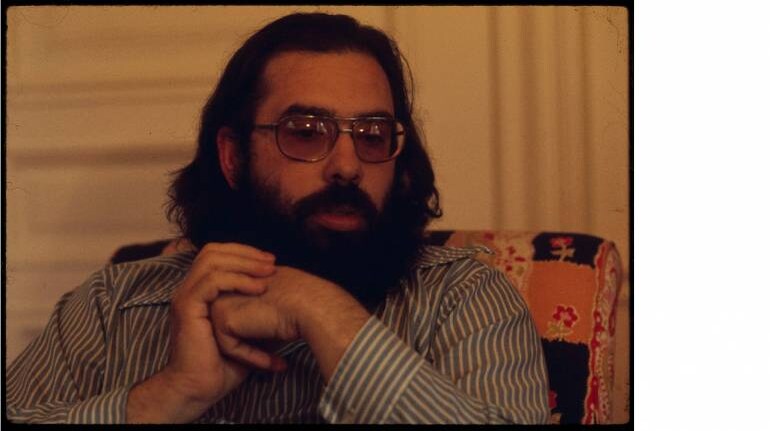
“I believe in America.” Fifty years ago this month, a film that began with those four words enthralled audiences for the first time. Francis Ford Coppola’s The Godfather belongs to a rare species, as writer Mark Seal points out. It’s a work of art that was also a blockbuster.
In Seal’s new book, Leave the Gun, Take the Cannoli, he writes that it revitalised Hollywood, saved Paramount Pictures, and minted a new generation of stars along with a director to watch. It also spawned countless books, documentaries, interviews, commentaries and knockoffs.
Those iconic opening words only appear halfway through the first chapter of Mario Puzo’s novel. By this time, we’ve already been introduced to the speaker’s woes, the predicaments of others, members of Don Corleone’s family, and the scenario at his daughter’s wedding. It took Coppola’s calibre to pluck that sentence from the page and turn it into an ironic leitmotif. As many have noted, The Godfather wasn’t just a film about gangsters and their families, but a metaphor for capitalism in America.
Also read: The Godfather at 50: Dissecting the cultural tour de force
When Puzo came to write the novel, he was in his mid-40s and deep in debt, with a gambling habit, wife and five children to support. His two earlier novels had been well received, but sold poorly. As he later put it: “It was really time to grow up and sell out.”
By then, he was working with Magazine Management Company, a pulp fiction factory for which he churned out tales packed with blood, crime and sex. All that mattered was to grab readers’ attention and keep them turning the pages. “Beautiful prose and fidelity to the truth had nothing to do with it,” Seal writes.
Also read: The Godfather is 50, and the trumpet solo from the beginning of the film still haunts me
Puzo took these lessons and combined them with intensive research into the men and women of the underworld. He marinated all of it with memories of his mother, the matriarch who was the inspiration for Don Corleone. The result was a runaway bestseller of which he later said: “I wished like hell I'd written it better.”
The book certainly has memorable characters, vivid incidents, and some unforgettable dialogue. Puzo is right to be critical, though. Often over-written and lurid, the novel is also stuffed with tales of characters only tangentially connected to the Corleone family.
Coppola himself was less than captivated when he first read it. The director, who was also broke and desperate for a break when the film was offered to him, got only about fifty pages into The Godfather in his initial attempt. “I thought it was a popular, sensational novel, pretty cheap stuff,” he recalled later. To George Lucas, he complained that the book was sleazy. “Well,” Lucas replied, “find something in it that you like.”
Also read: The Godfather turns 50: Epic story of one of the greatest movies ever made
It was good advice. Coppola went through it again and began to pick out the bare bones of his film. He focused on how the characters were consummate entrepreneurs as well as die-hard family men. He also found, as he later said, a tale of classic succession “concerning a great king with three sons, each of whom had a single element of what made the king great.”
Then, he literally took the book apart. Ripping the pages out of their binding, Coppola trimmed and pasted them on oversized sheets of paper which he affixed into a ringed notebook. Sitting at a nearby café, he used the notebook to cut, revise, make notes and otherwise trigger his imagination.
Also read: 50 years of The Godfather: The Frank Coppola-Mario Puzo spell
He ignored the script that Puzo had been working on according to the studio’s dictates, and instead sent his daily work to the author, who would make corrections and offer comments. These inputs, said Coppola, were crucial and greatly improved the script.
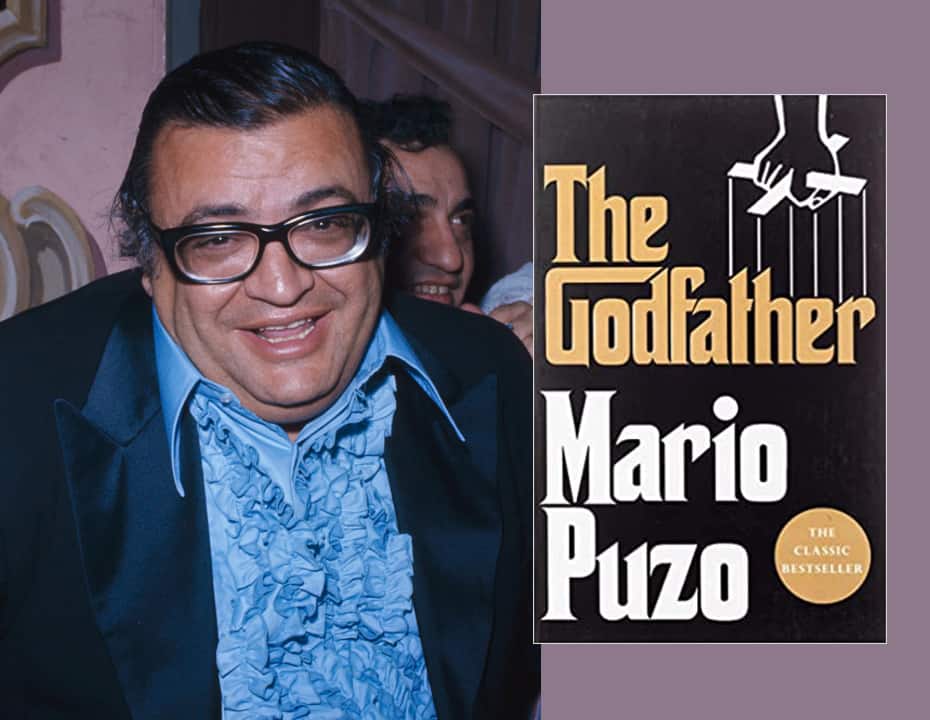 Mario Puzo in 1972; and a copy of 'The Godfather'. (Puzo image by Bernard Gotfryd via Wikimedia Commons).
In short, the book wasn’t treated as gospel, but mined for its strengths in keeping with a unified vision. This attitude and process was key to how the film took shape. It required a strong individual interpretation later backed by equally strong contributions from the stellar cast and crew. Their alchemy turned paper into gold, creating a haunting realm where, as Roger Ebert said, “the real world is replaced by an authoritarian patriarchy where power and justice flow from the Godfather, and the only villains are traitors”.
Not everyone liked the adaptation. For conservative columnist William F. Buckley, the film was “sucked dry of all the juices” that made the novel an extraordinary feast. “Far from surviving as the Gone with The Wind of gangster films,” he went on, “my guess is that The Godfather will be as quickly forgotten as it deserves to be.”
His guess was wrong. Coppola’s The Godfather remains a torchbearer of how to make a great film from a not-so-great book. To paraphrase Vito Corleone’s advice to his son, the filmmakers kept the book close, but kept the film closer.
Also read: Al Pacino on ‘The Godfather’: ‘It’s Taken Me a Lifetime to Accept It and Move On’
Discover the latest Business News, Sensex, and Nifty updates. Obtain Personal Finance insights, tax queries, and expert opinions on Moneycontrol or download the Moneycontrol App to stay updated!
Find the best of Al News in one place, specially curated for you every weekend.
Stay on top of the latest tech trends and biggest startup news.