-
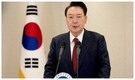
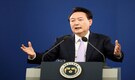
Ousted S. Korean President Yoon Faces Criminal Trial for Insurrection | N18G
Former South Korean President Yoon Suk Yeol appeared in court for the second hearing of his criminal trial on insurrection charges. His martial law bid in December led to national unrest and his removal from office. Yoon denies wrongdoing, claiming he acted to protect democracy.
-

South Korea's Yoon removed from office over martial law, election looms
Human Rights Watch called the ruling a win for the country's resilience, quest for human rights and democratic values.
-
What to expect after South Korea's Constitutional Court rules on impeachment of President Yoon
If the Constitutional Court rules against him, he will be officially thrown out of office and a national election will be held for a successor within two months.
-
South Korea's impeached President Yoon leaves detention, trial continues
Yoon remains suspended from his duties and under insurrection charges over his short-lived martial law imposition on December 3.
-
South Korea investigators transfer Yoon's case to prosecutors for indictment
Yoon Suk Yeol declared martial law on December 3, 2024.
-
South Korea court extends Yoon's detention, protesters storm court
Yoon on Wednesday became the first sitting South Korean president to be arrested as he faces allegations of insurrection related to his stunning Dec. 3 declaration of martial law that has plunged the country into political turmoil.
-
South Korean President Yoon Suk Yeol arrested over failed martial law bid
Following his arrest, Yoon can be held for up to 48 hours under the current warrant.
-
South Korean lawmakers seek independent probe as Yoon's lawyers warn detention may spark 'civil war'
Yoon's lawyers argued against bringing him to custody, claiming he isn't a threat to flee or destroy evidence.
-
Impeached President Yoon Faces Arrest, Authorities Arrive Amid Supporters Near His Residence | N18G
-
South Korea's presidential aides offer to resign amid political crisis
Yoon’s chief of staff, policy chief, national security advisor and special advisor on foreign affairs and security, as well as all other senior secretaries, tendered their resignation, his office said in a statement, without elaborating.
-
South Korean Lawmakers Impeach President Yoon Amid Martial Law Controversy and Escalating Protests
South Korean lawmakers voted to impeach President Yoon Suk Yeol in a second impeachment motion, amid investigations into allegations of rebellion related to his controversial martial law decree. The motion passed with 204 votes, surpassing the required 200. Yoon’s martial law, which lasted only six hours, caused political unrest, halted diplomatic activities, and shook financial markets. Public protests escalated, with Yoon’s approval rating plummeting. Yoon defended his actions, claiming the decree targeted opposition forces. Yoon becomes the second South Korean president to face impeachment, following Park Geun-hye’s removal in 2017. The Constitutional Court will decide on his removal.
-
South Korea’s opposition chief urges top court to act swiftly on impeachment
Yoon's powers will be suspended until the court rules on the case, either removing Yoon from office or restoring his powers.
-
Who is Han Duck-soo, South Korea's acting president after Yoon impeachment?
With parliament's impeachment vote against Yoon passed after his short-lived attempt to impose martial law, Yoon is suspended from exercising presidential powers, and the constitution requires the prime minister to take over in an acting role.
-
South Korea's parliament votes to impeach President Yoon Suk Yeol over his martial law order
Yoon's presidential powers and duties will be suspended after the copies of a document on the impeachment are delivered to him and to the Constitutional Court.
-
South Korea's Yoon faces second impeachment vote over martial law bid
Yoon's conservative People Power Party boycotted the first impeachment vote a week earlier, preventing a quorum.
-
South Korean President Yoon vows to 'fight to the end'
He faces a second impeachment vote in parliament expected on Saturday, a week after the first one failed because most of the ruling party boycotted the vote.
-
South Korea's Yoon Suk Yeol survives impeachment move, but party leader says president will resign
South Korean President Yoon Suk Yeol survived an impeachment motion in the opposition-led parliament on Saturday that was prompted by his short-lived attempt to impose martial law this week, after members of his party boycotted the vote
-
South Korean lawmakers set to vote on impeachment of Yoon after martial law debacle
Impeaching Yoon would require support from 200 of the National Assembly’s 300 members. The opposition parties that jointly brought the impeachment motion have 192 seats combined.
-
From decree to defeat: Inside South Korea's failed martial law attempt
There have been more than a dozen declarations of martial law since the foundation of the South Korean republic in 1948, the last in 1979-1980 following the assassination of former President Park Chung-hee.
-
South Korea’s six-hour martial law: What happened and what’s next?
President Yoon Suk Yeol's has his back against the wall. The opposition has moved a bill to impeach him and his party is in a minority in the National Assembly. His martial law move has angered party colleagues too. Resignation is the only way he can avoid impeachment
-
South Korea Crisis: US Watches developments with 'Grave Concern'; Pentagon Responds | N18G
The U.S. expressed "grave concern" over developments in South Korea after President Yoon Suk Yeol declared martial law in a surprise late-night address on December 3. Yoon claimed the move was necessary to counter "anti-state forces," sparking the country's most significant democratic challenge since the 1980s. Lawmakers unanimously rejected the decree, with protesters clashing with helmeted troops outside parliament. U.S. and South Korean militaries remain in contact, with no request for assistance from Seoul, according to the Pentagon. Yoon later agreed to lift martial law, honouring parliament's vote, amid mounting tensions and international alarm over South Korea's democratic stability.
-
South Korea's Yoon tells China's Xi cooperation needed on Russia, North Korea
Xi and Yoon held a summit for the first time in two years on the sidelines of the Asia-Pacific Economic Cooperation forum in Lima, Peru.
-
North Korea's trash balloon lands in South Korea's presidential compound. What was in it?
North Korea began floating trash-carrying balloons towards South Korea since late May in a resumption of Cold War-style psychological campaign.
-
North Korea's Growing Threat: Outgoing Japanese PM promises warmer ties with South Korea
Japan’s outgoing Prime Minister Fumio Kishida met South Korean President Yoon Suk Yeol to solidify improving ties. The nations have mended relations recently, enhancing military cooperation amidst North Korea's growing threats.
-
South Korea's Yoon warns against Russia-North Korea military cooperation and plans to discuss at UN
Worries about Russian-North Korean ties have flared since North Korean leader Kim Jong Un traveled to Russia last week for a summit with President Vladimir Putin and to tour a slew of high-profile military and technology sites.