-
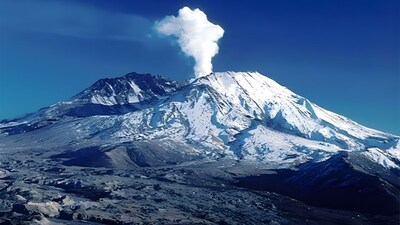
Iran’s sleeping volcano, Taftan show signs of awakening after 700,000 years
After 700,000 years of near silence, Iran’s Taftan volcano is showing signs of underground movement. Satellite data reveals rising ground, prompting scientists to closely monitor the ancient giant.
-

January 2026 Skywatching: NASA’s guide to Jupiter, Saturn and stellar wonders
January 2026 brings Jupiter at its brightest, a Moon–Saturn encounter, and the Beehive Cluster, as NASA highlights easy-to-see celestial events lighting up winter night skies.
-
ISRO detects tiny interplanetary particles with ground-breaking DEX experiment
ISRO’s Cosmic Dust Experiment detects interplanetary particles in orbit, revealing hidden cosmic traffic, advancing India’s space science and providing global insights into space hazards and satellite safety.
-
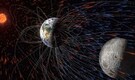
Could the Moon be hiding billions of years of Earth’s air? Here is what study says
New research reveals the Moon may have been silently collecting Earth’s atmosphere for billions of years. Scientists now believe lunar soil holds secrets of our planet’s ancient air and climate history.
-
A bright battle in the sky: January’s Quadrantid meteors face off against the Wolf Moon Supermoon
January skies deliver a rare celestial overlap as a bright supermoon meets the Quadrantid meteor shower, dimming shooting stars but raising a question: what will patient skywatchers still catch?
-
Scientists reveal these "hidden volcanoes" are more dangerous than the famous ones
Scientists warn that hidden volcanoes, including Toba, Taupo, Hayli Gubbi, and Cerro Blanco, may trigger the next global crisis. Dormant for centuries, they can erupt unexpectedly, impacting climate, food, and millions of lives worldwide.
-
What is happening inside Earth’s core? A rare “superionic” state of matter explained
Scientists have discovered that Earth’s inner core may not be fully solid. A rare “superionic” state of matter could explain strange seismic signals and reshape our understanding of the planet’s hidden heart.
-
Is Earth’s magnetic North Pole is shifting fast? Here's what study says
Earth’s magnetic north pole has shifted toward Russia, prompting updates to GPS and navigation systems worldwide. Scientists track this invisible movement to keep technology accurate.
-
NASA strengthens Landsat Mission with new scientists to monitor Earth's climate
NASA has announced a new Landsat Science Team to ensure accurate, long-term Earth monitoring, strengthening how satellites track climate change, land use, water systems and environmental transformations worldwide.
-
Can Earth touch the Moon? Scientists find Earth’s atmosphere depositing on lunar surface
Scientists have discovered trace gases from Earth reaching the Moon, revealing unexpected interplanetary connections and offering potential resources for future lunar bases and space exploration missions.
-
Scientists reveal Earth’s interior is cooling unevenly across hemispheres
Scientists reveal one side of Earth’s interior cools faster. The Pacific Ocean hemisphere loses heat quicker, influencing tectonics, volcanism and mantle circulation over millions of years.
-
NASA and JAXA detect rare life-essential elements in Cassiopeia A remnant
NASA and JAXA’s XRISM mission detected chlorine and potassium in Cassiopeia A, revealing how supernovae forge life-essential elements for planets and the cosmos.
-
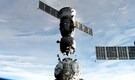
NASA's spacecraft Soyuz MS-27 departs ISS, crew begins journey back to Earth
A Soyuz spacecraft carrying three Expedition 73 crew members has undocked from the International Space Station, beginning a carefully coordinated return to Earth.
-
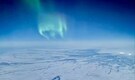
Aurora dancing over The North Pole transforms 35,000-foot flight into a skyside spectacle
The aurora forms when charged solar particles arrive suddenly. These particles strike Earth’s atmosphere at huge speeds.
-
Comet 3I/ATLAS grows more active in new NASA, ESA images ahead of close Earth encounter
Discovered in late June and confirmed as the third known interstellar object in July, 3I/ATLAS has raced through the inner solar system at roughly 130,000 mph.
-
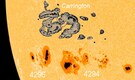
Earth-facing sunspot 'AR 4294‑4296' mirrors historic Carrington Event
A historic-sized sunspot cluster has appeared on the Sun, facing Earth. Scientists monitor it for potential solar flares and coronal mass ejections.
-
European Space Agency's satellite reveals image of mysterious 'Sahara bullseye"
European Space Agency's satellite capture shows the Richat Structure in unprecedented clarity, revealing vivid rings across the Sahara and offering fresh insights into its ancient geological origins.
-
India–US NISAR mission enters crucial stage, enhancing global earth monitoring
The joint India–US NISAR satellite has entered its final science operations phase, promising unprecedented Earth data to improve climate research, resource monitoring and disaster response.
-
ISS astronaut captures night-time view of Southern Europe from space
A JAXA astronaut aboard the ISS captures Italy’s bright urban corridor and Earth’s glowing atmosphere from 261 miles above.
-
New findings challenge long-held theories on the Moon’s birth
A new scientific study is rewriting one of the most recognized origin stories in astronomy: how the Moon was formed may not have been quite the way generations of researchers thought. Emerging evidence suggests that Earth and the impactor once thought to have created the Moon may have shared a far closer relationship than previously imagined.
-
World’s largest modern crater found hiding in plain sight in China
Scientists discover China’s Jinlin crater, the largest modern Holocene impact site, revealing recent meteor strikes may be more common than expected.
-
NASA Warning: Venus becoming increasingly dangerous for future missions
NASA warns Venus is becoming more dangerous for spacecraft. Rapid atmospheric changes and solar activity threaten future missions to the extreme planet.
-
The oldest rock on Earth is older than Earth Itself — Here’s how
Scientists have discovered a meteorite older than Earth, offering the earliest clues to how the Solar System formed and how the first solid materials took shape.
-
Catch the Leonid Meteor Shower lighting up November skies
The Leonid meteor shower will peak on November 17, offering brilliant shooting stars visible to the naked eye across dark night skies worldwide.
-
Asteroid Alert: NASA monitoring two asteroids approaching Earth on November 11
NASA on alert as two are approaching on 11th November, while three asteroids safely passed on 10th November. The asteroids and comets that approach Earth are periodical and safe.