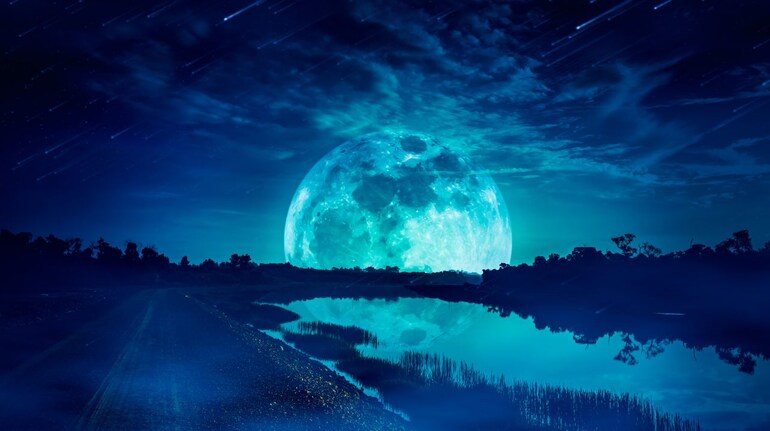

Skywatchers across the Northern Hemisphere are witnessing a rare January alignment as the year’s first supermoon coincides with the peak of the Quadrantid meteor shower, though moonlight may limit visibility.
The Quadrantid meteor shower reaches its peak from Friday night into early Saturday, according to the American Meteor Society, producing fast-moving meteors created when Earth passes through debris left by asteroid 2003 EH1. Under ideal dark skies, observers can normally expect around 25 meteors per hour, though this year’s viewing conditions are affected by the brightness of the full supermoon. Scientists say moonlight could reduce visible meteors to fewer than 10 per hour, particularly in urban areas with additional light pollution.
How the supermoon affects meteor viewing
The supermoon occurs when the Moon reaches full phase while positioned closest to Earth in its elliptical orbit, making it appear slightly larger and significantly brighter. According to NASA, a supermoon can appear up to 14 percent larger and 30 percent brighter than the dimmest full Moon of the year, though the difference is subtle without instruments. Astronomers warn that bright moonlight is the biggest obstacle to meteor watching, as it washes out faint streaks across the sky. Mike Shanahan, planetarium director at the Liberty Science Center in New Jersey, said the full Moon remains the single greatest challenge when viewing meteor showers.
Despite the interference, both events remain visible without telescopes or special equipment. The supermoon can be seen wherever skies are clear, while the Quadrantids are best viewed from northern latitudes during darker hours before moonrise.
When and where to watch the Quadrantids
Experts recommend heading outdoors during early evening hours or just before dawn, away from streetlights and buildings. Jacque Benitez of the Morrison Planetarium in California advises allowing eyes time to adjust to darkness and avoiding phone screens during observation. The meteors appear as brief white streaks crossing wide sections of the sky rather than radiating from a single point. The Quadrantids are named after a former constellation that is no longer recognised, though their radiant lies near the constellation Bootes.
Meteor showers occur annually when Earth intersects concentrated debris streams, creating predictable celestial displays. The Quadrantids are known for producing bright fireballs, despite their brief peak period.
What comes next in the night sky
Saturday’s supermoon marks the final event in a four-month sequence that began in October, with no further supermoons expected until late 2026. Astronomers say the next major meteor display, the Lyrid shower, will arrive in April, offering another opportunity for night-sky watchers under darker conditions.
As Earth continues its journey through cosmic debris and lunar cycles repeat, astronomers remind observers that patience and clear skies remain the keys to enjoying these fleeting celestial moments.
Discover the latest Business News, Sensex, and Nifty updates. Obtain Personal Finance insights, tax queries, and expert opinions on Moneycontrol or download the Moneycontrol App to stay updated!
Find the best of Al News in one place, specially curated for you every weekend.
Stay on top of the latest tech trends and biggest startup news.