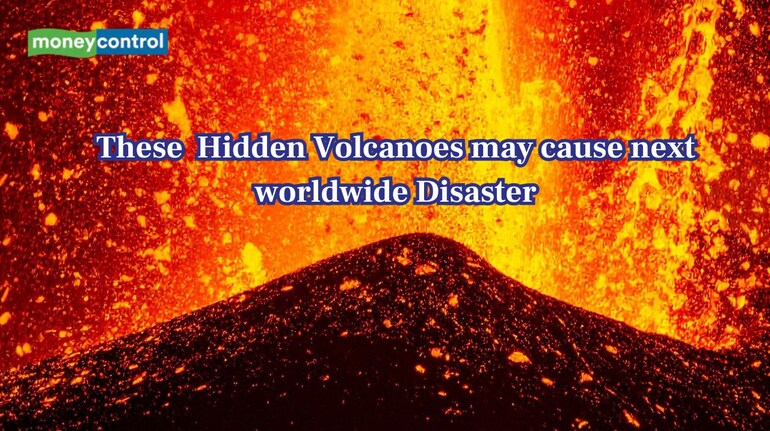

The world’s greatest volcanic threat may be invisible today. Scientists warn lesser-known volcanoes pose the highest global risk. These hidden systems remain poorly studied and dangerously underestimated.
New research highlights a growing gap in volcanic preparedness. While famous volcanoes are closely monitored, others remain ignored. Experts say this imbalance could prove catastrophic.
Which Volcanoes Pose the Greatest Risk?
Many dangerous volcanoes show no recent eruption history. Toba in Indonesia, Taupo in New Zealand, Hayli Gubbi in Ethiopia, Okataina in New Zealand and Cerro Blanco in Argentina, all considered highly dangerous. Some have slept quietly for thousands of years. Dormant does not mean extinct, warned by scientists.
Mind-blowing: 74,000 years ago the Toba super-volcano nearly wiped us out. A decade-long volcanic winter crashed the global human population to just ~1,000–10,000 breeding adults!Every single person alive today descends from those few thousand survivors! pic.twitter.com/N3J6MXWrAC — Bill Mitchell (@mitchellvii) November 19, 2025
Long-quiet volcanoes can awaken without obvious warning. When they erupt, consequences can spread worldwide. Scientists estimate unrecorded volcanoes erupt every decade globally. Many eruptions occur in remote or poorly monitored regions.
Why Are Hidden Volcanoes So Dangerous?
Most monitoring focuses on famous volcanic giants. Mount Etna, Mount Vesuvius and Yellowstone receive constant attention. Hundreds of other systems receive little or none. Less than half of Earth’s active volcanoes are fully monitored.
Many lack seismic sensors or gas detection equipment. Early warning signs can easily be missed. This makes eruptions harder to predict and prepare for.
How Do Recent Eruptions Highlight the Risk?
Scientists point to Ethiopia’s Hayli Gubbi volcano. It erupted recently after sleeping for 12 millennia. The eruption surprised both scientists and local communities. It demonstrated how quickly dormant systems can reactivate. Experts say similar volcanoes exist worldwide. Many sit close to growing population centres.
The eruption of Hayli Gubbi volcano in Ethiopia last month, which had been dormant for 12000 years, was a clear evidence that Africa indeed is splitting in two from the East African Rift. Gordon Michael Scallion's vision of the world map is coming true and we may have to get… pic.twitter.com/EdeuG2cRFO — SynCronus (@syncronus) December 7, 2025
What Could a Major Eruption Do Globally?
A major eruption does not stay local. Volcanic ash can spread across continents. Sulphur gases can cool Earth’s climate. Air travel may shut down for weeks. Food production could decline sharply. Water supplies could become contaminated. A single eruption could trigger a global crisis.
Can the World Prepare for Hidden Volcanoes?
Volcano monitoring requires funding, expertise and commitment. Many high-risk regions lack these essential resources. Developing nations are especially vulnerable. There is no unified global volcanic monitoring system.
Scientists warn this gap increases disaster risks. Improved satellite and ground-based monitoring is urgently needed. Time, scientists warn, is running out.
Discover the latest Business News, Sensex, and Nifty updates. Obtain Personal Finance insights, tax queries, and expert opinions on Moneycontrol or download the Moneycontrol App to stay updated!
Find the best of Al News in one place, specially curated for you every weekend.
Stay on top of the latest tech trends and biggest startup news.