






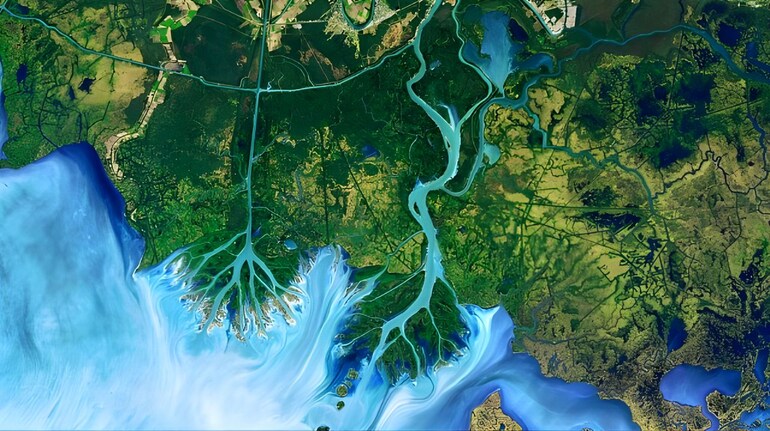
NASA has quietly made a move that could reshape how we see Earth. The US space agency, along with the U.S. Geological Survey, has announced a new Landsat Science Team. This group will guide one of the world’s most trusted Earth-observing programmes.
The Landsat mission is not new or experimental. It is the longest-running Earth observation programme in history, operating continuously since 1972. Its satellites track how Earth’s surface changes over time, from forests and farms to cities and coastlines.
What is the Landsat Mission?
Landsat is the world’s longest-running Earth observation mission. It has been continuously watching Earth from space since 1972. The mission is run jointly by NASA and the U.S. Geological Survey (USGS). Landsat satellites capture detailed images of Earth’s surface. They track forests, farmland, cities, glaciers, rivers and coastlines.
This data helps scientists understand how Earth changes over time. Unlike short missions, Landsat offers decades of consistent observations. The long record makes this mission extremely valuable for climate research.
Who are the new Scientists in this Mission?
NASA and USGS have selected a new Landsat Science Team. The team are experts in climate science, agriculture, water systems, ecosystem and land management.
Scientists including Dr David Roy, Dr Eric Vermote and Dr Raquel De Los Reyes improve Landsat data quality. They correct haze, dust and cloud effects, ensuring images from different decades.
Researchers such as Dr David Frantz and Dr Peter Strobl will work on linking Landsat with Copernicus, Sentinel-2, EnMAP and CHIME. This interoperability allows scientists to treat multiple satellites as one system.
What will scientists in this mission do?
The team will guide how Landsat data is analysed, improved and used. They will ensure measurements stay accurate, consistent and reliable. Scientists will work on better methods to combine Landsat data with other satellites.
They will study vegetation health, crop conditions, water quality, snow cover and wildfires. Their work helps turn satellite images into useful information for real-world decisions.
Was this Mission Really Necessary?
Yes, more than ever as the planet Earth is changing faster due to climate change and human activity. Scientists rely on long-term records to track environmental trends accurately. Without Landsat, many climate studies would lack consistency.
This new science team ensures the mission remains strong, relevant and future-ready. This mission will be world’s longest-running Earth observation mission for a planned 2026-2030 term.
Discover the latest Business News, Sensex, and Nifty updates. Obtain Personal Finance insights, tax queries, and expert opinions on Moneycontrol or download the Moneycontrol App to stay updated!
Find the best of Al News in one place, specially curated for you every weekend.
Stay on top of the latest tech trends and biggest startup news.




