-
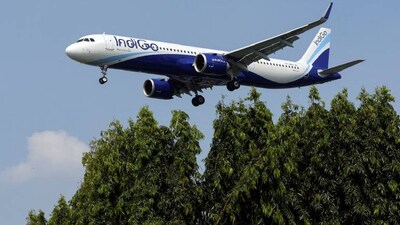
IndiGo stock falls over 2%, emerges among top Nifty losers as DGCA revises air ticket refund norms
Passengers can now cancel or change air tickets without paying an additional charge within 48 hours of making the bookings, subject to certain conditions, says aviation regulator
-

DGCA brings 48-hour free flight cancellation rule, mandates 14-day refund timeline for airlines
DGCA introduces 48-hour free flight cancellation and modification rule for passengers in India. Airlines must process refunds within 14 working days and correct name errors within 24 hours at no extra charge.
-
DGCA revises air ticket refund rules: No charges for flight changes within 48 hours
After the 48-hour window, standard cancellation or amendment charges will apply.
-
DGCA enforces ‘zero tolerance’ policy on in-flight misconduct: Here's what travellers need to know
DGCA has introduced a zero tolerance policy on in-flight misconduct. Here’s what the new no-fly rules mean for air travellers flying to and from India.
-
'Close relations with VSR Aviation': Rohit Pawar seeks Aviation minister's resignation over plane crash that killed Ajit Pawar
A Learjet 45 aircraft, operated by VSR Ventures, crashed in Pune's Baramati, killing former Deputy Chief Minister Ajit Pawar and four others.
-
DGCA orders special safety audit of 14 charter operators after fatal Baramati crash
The inspections, part of a special oversight exercise, began on February 9 and will continue until at least February 25, according to an official order issued by the regulator
-
'2,645 vacancies across AAI, 3 aviation regulators; IndiGo cancellations affected over 10 lakh passengers', says govt
IndiGo, India's largest airline by market share, cancelled 6,936 flights over the past three months, impacting 10,81,680 passengers, said the government in a written reply in the Lok Sabha.
-
'Fuel check done before officials,' says DGCA after defect reported in Air India's Dreamliner
Air India has launched a fleet-wide inspection of fuel control switches on its Boeing 787 Dreamliner aircraft after a defect was reported on a flight operating from London Heathrow to Bengaluru on Sunday.
-
Air India Express 'proactively' grounds one of its Boeing 737-NG aircraft to fix issue raised by DGCA
"In light of an observation by the regulatory authority, we have proactively withdrawn one of our aircraft from operations for any necessary fixes," an Air India Express spokesperson said.
-
'Weekly rest for pilots mandatory, no airline given exemption': DGCA to Delhi HC amid FDTL dispute
The court was hearing a public interest litigation filed by Sabari Roy Lenka and others, who alleged that the DGCA had decided to place the revised Flight Duty Time Limitation (FDTL) rules in abeyance.
-
Who is Jason Herter and why DGCA wants him gone from IndiGo?
Herter has served as IndiGo’s senior vice president since July 2023 and is among the airline’s senior leadership
-
'Committed to take full cognizance', says IndiGo as DGCA slaps Rs 22.2 crore penalty for December flight disruptions
In a move described as uncommon, the DGCA imposed a financial penalty of Rs 20.40 crore for violations spanning 68 days, from December 5, 2025 to February 10, 2026
-
IndiGo fined Rs 22 crore by DGCA for December cancellation mess that left over 3 lakh passengers stranded
The DGCA investigation found that the airline's management failed to properly assess the impact of implementing revised Flight Duty Time Limitation rules during the winter schedule.
-
DGCA restricts use of power banks on flights over fire risks: All you need to know
DGCA restricts the use of power banks on flights over lithium battery fire risks. Here’s what passengers need to know about the new aviation safety rules.
-
OPINION | Regulatory oversight, not competition law, needed for aviation crisis
The aviation disruptions in India stem from operational and regulatory failures, highlighting the need for stronger DGCA oversight, rather than competition law, to address structural issues and protect passengers
-
IndiGo meltdown revives debate over who should run DGCA
Concerns around regulatory capability have also been sharpened by a fatal Air India crash earlier this year.
-
IndiGo crisis: DGCA suspends 4 Flight Operation Inspectors after findings suggest lapses
The action was taken after preliminary findings indicated lapses in oversight relating to the airline’s recent operational crisis.
-
IndiGo to hire external experts to investigate mass flight cancellations
The chairman also apologized unconditionally to the passengers for massive operational meltdown, admitting that the carrier has 'let the customers down'
-
IndiGo's 10% cut translates to only 2.35% flight reduction
Based on data for actual average number of flights a day, the real impact of the cutback is just 2.35% or around 5,600 flights
-
IndiGo crisis: DGCA forms 8-member oversight team, sends officials to airline’s corporate office
The regulator has also set up a multi-member Oversight Team that will be stationed at IndiGo’s corporate office in Gurugram to examine various operational parameters, including the airline’s fleet, pilot strength, crew utilisation and instances of unplanned leave
-
IndiGo sought clarity on FDTL from DGCA two days before operations collapsed
The Ministry of Civil Aviation has formed a four-member committee to probe aspects on IndiGo’s crew planning, operational readiness and compliance with the new FDTL norms
-
Not possible to pinpoint the exact cause of disruption: IndiGo submission to DGCA
IndiGo has asked DGCA for more time to provide a comprehensive and conclusive explanation.
-
IndiGo’s delayed preparation for new FDTL norms triggers mass flight cancellations
The phased FDTL norms were introduced to prevent pilot fatigue and improve flight safety.
-
OPINION | IndiGo Lessons for Core Infra Sector: Market concentration cripples Indian aviation
The IndiGo disruption illustrates how a duopolistic aviation sector can transmit private failure into national economic friction. India’s regulatory architecture remains reactive where it must become preventive
-
IndiGo's flight chaos: Why the airline was hit hardest
IndiGo increased its departures per week by 6% to 15,014 in the winter schedule, as compared to 14,158 departures per week during the summer schedule