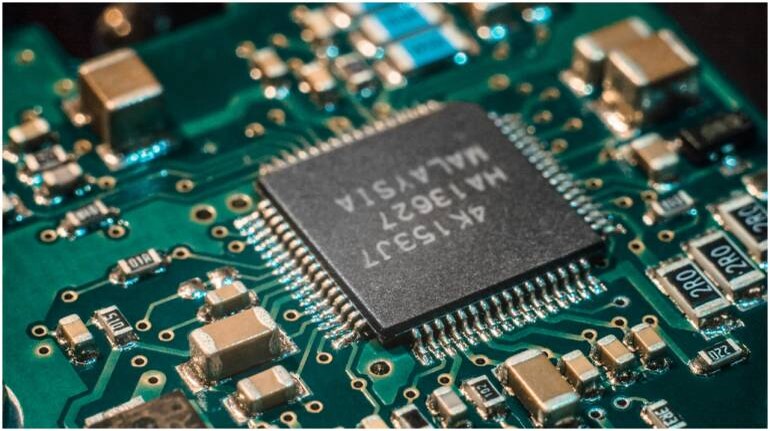
India-Taiwan ties seem to be in a honeymoon phase now. According to recent news reports, the two governments are finalising a semiconductor manufacturing agreement worth billions of dollars. This bilateral co-operation would encourage semiconductor giants such as the Taiwan Semiconductor Manufacturing Corporation (TSMC) and other players to diversify their production beyond their geographical location.
India, a captive market and a potential supplier, can help itself rejig similar manufacturing units, and partake in the global production chain. However, given the evolving geopolitics in the Indo-Pacific, India’s ties with Taiwan cannot be insulated from some eye-rolling from China.
Demand-Supply Balance
From smart phones to high-performance computing, and from automobiles to digital consumer electronics, semiconductors are the backbone of modern day life. Thanks to the United States-China trade war since 2017, followed by COVID-19 pandemic for the last 18 months, the shortage has had a ripple effect across high-tech manufacturing industries.
In India, auto majors such as Maruti have their productions slumped because of supply shortage. With few global players in the US, Japan, South Korea, and Taiwan, the supply disruption has created serious concerns to other economies to re-strategize policies for self-sufficiency, and not to be caught off guard again.
India, and China — both net importers of semiconductors — have been reeling under such problems. Nevertheless, China has made it a national strategy for ‘technological independence’, and develop its own semiconductor industry spending billions of dollars, more so since the trade war with the US.
India’s China Conundrum
When it comes to semiconductors, India is a net importer. In 2020, India imported approximately 40 percent of the total electronics from China, ever after a serious tension at the border in Ladakh in mid-June. In fact, China is India’s largest trading partner.
Although India has a niche capability in chip designs, its role in the global semiconductor supply chain is unnoticeable. The uncertainty of increasing border tensions and an aggressive China in South Asia can be a destabilising factor for India’s economy in the long run. Unless India diversifies its dependence of these crucial products, it would be disastrous not only on the economic front, but also in other strategic sectors. Therefore, engaging with Taiwanese semiconductor firms is a welcome move.
The TSMC, one of the world’s largest semiconductor manufacturer, investing together with Indian partners would help India harness its resources and capabilities to become self-sufficient, if not a net exporter.
However, India’s tango with Taiwan could be disconcerting China, which regards the Taiwan as one of its ‘own provinces’, even when it has a separate self-ruling political system since its formation. Moreover, India’s ‘One-China Policy’ does make New Delhi cautious as to not make it a big announcement giving due regards for Beijing’s concerns.
Since Taiwan is an emotional issue for China’s ruling Chinese Communist Party, and more so under President Xi Jinping, de-hyphenating economic and political engagements become difficult. In fact, New Delhi will be treading a thin line so as to not invite Beijing’s wrath.
Additionally, India is one of the 18 countries that is included under Taiwan’s New Southbound Policy (xin nanxiang zhengce), so the mandate of bilateral ties more are economic and cultural than political. In fact, Taipei and New Delhi’s bilateral co-operation in the education sector, especially the joint programmes in science and technology, fellowships to study, research and work in Taiwan, is laudable.
Changing Geopolitical Realities
With the new regional arrangements in the form of the Quad, and now AUKUS, the Indo-Pacific is a new theatre of power games. Although the Quad has taken cognisance of the possible scenario, multi-layered co-operation not only becomes a premium among the partners but also among competitors — not just in strategic domains but in global commons too.
The ‘peaceful’ rise of China hypothesis is doubted by these countries and more so by its neighbours. Taiwan, though not a member of these arrangements, could be at the centre of the storm of these geopolitical realities. Some analyses indicate that China can enrich its semiconductor capability by a hostile takeover of the island. It is also likely such instances could result in global disruption, and sabotage.
However, that should not matter in India’s push for developing a semiconductor industry. If India wants to succeed in inking the deal with the TSMC, then the homework is yet to begin. Industries such as these require a well-incubated ecosystem. India needs to have hi-tech campuses and firms like the ones in Hsinchu, Taiwan’s Silicon Valley, which can help India have a competitive advantage. ‘Jugaad’ will not help.
Bhim Subba teaches political science at the University of Hyderabad, and is a visiting researcher at the Institute of Chinese Studies, New Delhi.
Views are personal and do not represent the stand of this publication.


Discover the latest Business News, Sensex, and Nifty updates. Obtain Personal Finance insights, tax queries, and expert opinions on Moneycontrol or download the Moneycontrol App to stay updated!
Find the best of Al News in one place, specially curated for you every weekend.
Stay on top of the latest tech trends and biggest startup news.