The Reserve Bank of India’s State of the Economy report for July 2022 suggests that the economy has demonstrated resilience in the first quarter of FY23. It adds that several factor hint towards further recovery (namely revival of the monsoon, pick-up in manufacturing and services, and stabilisation of retail inflation) and adequate inventory of food grains, international reserves, and well-capitalised financial sector.
Amidst all the bright prospects, how is consumption progressing?
This is important because private consumption accounts for almost 55-60 percent of India’s GDP, and was severely impacted during the height of the COVID-19 pandemic. The growth in ‘real private final consumption expenditure’ tapered from a year-on-year growth of 14.4 percent in Q1-FY22 to 1.8 percent in Q4-FY22. Barring a couple of variables, the high-frequency indicators reflect that the pain for the Indian consumers is far from over.
Elevated retail inflation in the economy has had a significant impact on consumption. Corporates have either hiked consumer prices or have ‘shrunk’ the package size. The FMCG sales have ebbed in June 2022, led by a steeper decline in urban FMCG demand, and major companies have pointed that unprecedented inflation has been a key reason for titration in consumption. Retailers Association of India reported retail sales growth at 13 percent in June 2022 (v/s June 2019), which is slower than 23 percent and 24 percent growth observed in the previous two months.
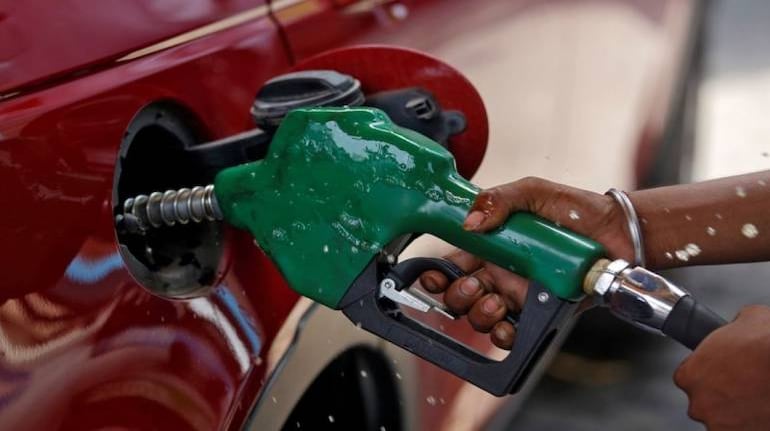
Although the June 2022, the retail inflation print reflected a marginal decline to 7.01 percent from 7.04 percent in May 2022, what matters to the consumers is the retail price quoted by the vendor. There have been seasonal or crop-loss-related spikes in common vegetables (recently in tomatoes), while pulses have remained elevated for little more than a year now. Edible oil continues to pinch the pockets of consumers, despite the recent intervention to bring the prices down. Retail price of petrol continues to remain above Rs 100 per litre while diesel prices have narrowly skid below that mark. These are essential commodities with inelastic demand, impacting the whole society, but the hit to the lower strata is enormous, led by falling consumption, depleted savings, and dwindling nutritional quotient.
There has been sequential stagnation in E-way bills owing to moderation in inter-state e-way bills. Fuel consumption has broadly remained stable in the previous three months. Although SIAM reported strong Q1 auto sales numbers, it continues to remain 19 percent lower than the first quarter of FY19. The report also highlights challenges for entry level cars, scooters and motorcycles, which are around 40-50 percent below their levels registered in Q1-FY19.
On the flip side, GST collections have been robust, recording total receipts of Rs 1.44 lakh-crore in June 2022, the fourth consecutive month in which the collections have surpassed Rs 1.4 lakh-crore. Though one can argue that higher collections could have been driven by inflation (including via imports), sustained collection numbers reflect improved consumer sentiments as well as better compliance. The important question is not about whether high GST collection reflects consumption robustness, but it is about whether inflation-led GST collections is camouflaging the real consumption pattern in the economy?
Consumption is supported by income with the latter sourced from multiple avenues. Wage growth data is not available but the employment situation in India is mixed. There have been some positives for organised sector employment (proxied by Naukri JobSpeak Index) and improvements in employment conditions as seen from PMI indices. However, the CMIE data shows a decline in labour force participation while unemployment remains at around 7.8 percent for June 2022. There have also been reports of job losses, especially in the start-up space.
From an investor’s point of view, asset classes have performed poorly since the start of 2022. The BSE Sensex has fallen by almost 13 percent till June 16, 2022, after which there has been modest rally. Bond yields (especially short term) have spiked indicating fall in bond prices, narrowing the returns from the debt mutual funds. Domestic investors have made a net investment of Rs 1.3 lakh-crore in FY23 (till July 11, 2022) with new investments seeing negative or low returns. Gold prices too have hit an 11-month low. The transmission of the RBI rate hikes to deposit rates have also been sluggish.
The combined effect of elevated inflation, challenging employment scenario, and poor investment returns has fallen on the overall consumption in the economy. With the other segments of the economy doing well — strong exports and government spending along with pick-up in investments — consumption continues to remain a laggard. Heightened risks could delay the process of ‘sustaining the consumption recovery’ and ergo will have to wait for the Indian economy to fire on all cylinders.
Sushant Hede is an independent economist. Views are personal, and do not represent the stand of this publication.Discover the latest Business News, Sensex, and Nifty updates. Obtain Personal Finance insights, tax queries, and expert opinions on Moneycontrol or download the Moneycontrol App to stay updated!
Find the best of Al News in one place, specially curated for you every weekend.
Stay on top of the latest tech trends and biggest startup news.