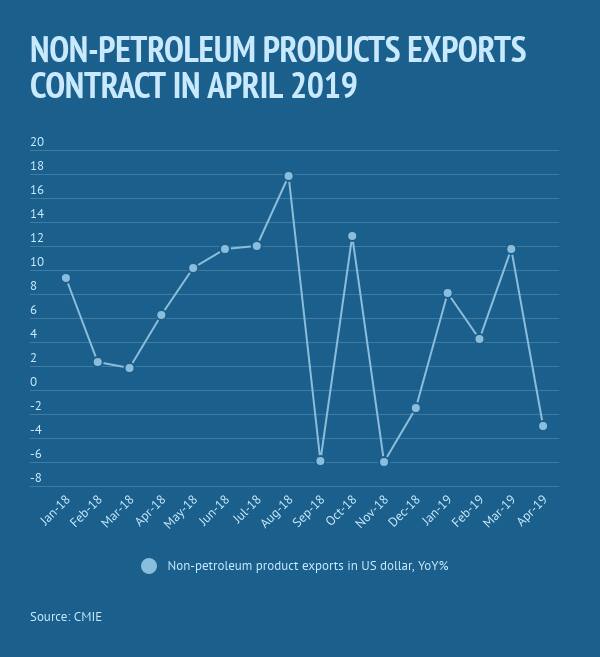
To the slowdown in domestic consumption and investment we must now add a slowdown in exports. Merchandise export growth was a meagre 0.6 percent from a year ago in April 2019. Exports of non-petroleum products fell by 3 percent (see chart). The double-digit export growth in March appears to have been a flash in the pan, due partly to the base effect and partly due to pushing exports before the financial year-end. The trade deficit in April 2019 was the highest since November 2018.
The import bill went up in April due to increased imports of petroleum and gold and silver. The weakness in the domestic economy was evident from a contraction of 1.3 percent in non-petroleum products and non-gold and silver imports. This yardstick has been contracting since the beginning of this year.
With export growth slowing down, all the engines of the economy are now sputtering. Consumption is cooling off, investment demand hasn’t picked up and the rising fiscal burden will constrain government spending.
Will the rise in trade deficit affect the rupee? A note by Kotak Mahindra Bank economists Upasna Bhardwaj and Avijit Puri says, "Looking beyond the current quarter which will be primarily dominated by the election outcome, we expect INR moves to be shaped by the volatile global risk sentiments weighed down by global growth concerns. While our external sector matrix remains comfortable with FY2020 CAD/GDP expected at 2.1% and BoP surplus at US$16 bn, global uncertainties and oil price shocks could continue to keep INR under pressure in the medium term. However, political outcome remains key in defining the near term trajectory of INR."

Discover the latest Business News, Sensex, and Nifty updates. Obtain Personal Finance insights, tax queries, and expert opinions on Moneycontrol or download the Moneycontrol App to stay updated!
Find the best of Al News in one place, specially curated for you every weekend.
Stay on top of the latest tech trends and biggest startup news.