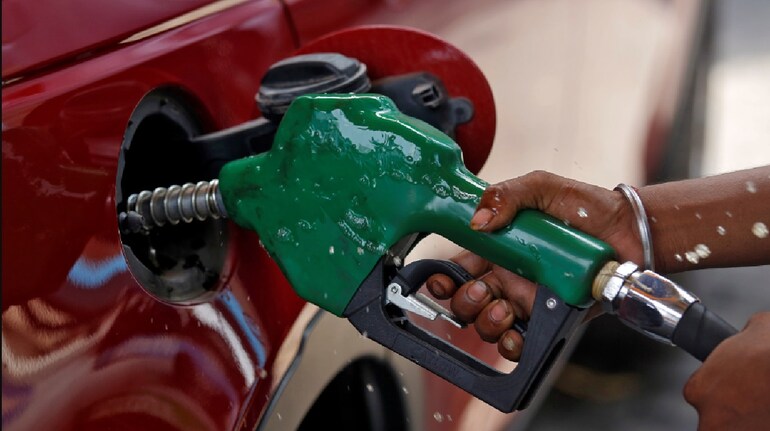

Prices of petrol and diesel at the retail fuel stations are unlikely to be increased for the foreseeable future amid rising global oil prices due to the escalating conflict in West Asia which, government sources said.
“Petrol and diesel prices are unlikely to be increased for the foreseeable future,” a top government source said, adding that the oil marketing companies have enough cushion absorb rising costs.
Brent oil prices surged past $100 per barrel on March 9 touching $120 per bbl earlier in the day before settling to $102 per bbl.
“The state-run oil marketing companies did not raise retail fuel prices earlier when crude oil prices breached $100 per barrel mark. In the past two years, they have done financially well,” the official said.
Sources in the government also said that oil prices are likely to remain in the range of $100 per barrel for the time being. They added that India is not planning to release oil reserves in coordination with the International Energy Agency and is not a member of the organisation.
The closure of the Strait of Hormuz amid the conflict in West Asia has disrupted as much as 20% of world’s oil supply and almost 40-50% of India’s oil imports.
As a result, the number of ships transiting the Strait has fallen significantly to 3 as compared to 138 prior to the conflict. “Freight insurance cost has increased four-five times amid Gulf crises,” an official source told Moneycontrol.
Tensions in the middle east have led to disruptions around the Strait of Hormuz, unsettling crude movement and crude oil production, said Sourav Mitra, Partner – Oil & Gas, Grant Thornton Bharat.
“Rising crude oil prices usually benefit upstream players, such as ONGC and OIL, as their realizations are pegged to the crude oil benchmarks. At the same time, downstream companies face the brunt as their refining and marketing margins squeeze due to their inability to pass on the entire costs to customers,” Mitra said.
Analysts note that in order to cushion the impact on downstream players, the government can either allow refiners and marketers to gradually pass on higher costs to consumers if elevated crude prices and conflict‑related disruptions continue or choose to cushion the impact through fiscal measure such as reducing excise duty on fuel.
“The government can dampen the impact of the above measures by way of introducing the windfall gain tax on upstream players as was done previously,” Mitra said.
Discover the latest Business News, Sensex, and Nifty updates. Obtain Personal Finance insights, tax queries, and expert opinions on Moneycontrol or download the Moneycontrol App to stay updated!
Find the best of Al News in one place, specially curated for you every weekend.
Stay on top of the latest tech trends and biggest startup news.