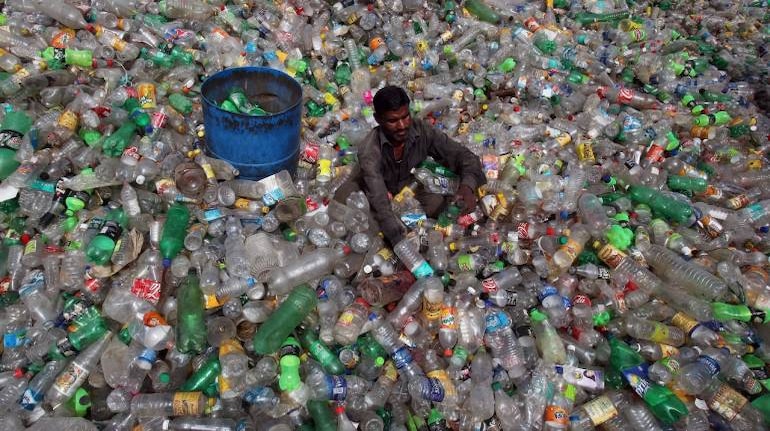
Prime Minister Narendra Modi is leading a campaign to shun single-use plastic. He issued a clarion call both in his latest Mann Ki Baat radio broadcast and in his address to the nation on Independence Day.
It is now being speculated that PM Modi is set to impose a nationwide ban on single-use plastics and that he will make an announcement to this effect on October 2, the 150th birth anniversary of Mahatma Gandhi. The government has already announced its plans to phase out disposable plastic by 2022.
What is single-use plastic and what has triggered PM Modi to declare a war on it now, let’s find out:
What is single-use plastic?
As the name suggests, single-use plastics (SUPs) are used only once before they are thrown away or recycled. These include plastic bags, cups, plates, aerated drinks' bottles, straws, stirrers, take-away food containers, processed food packers and wrappers. Of these, foamed products such as disposable cutlery, plates and glasses are considered the most dangerous to the environment.
The benefits of plastic are undeniable. The material is cheap, lightweight and easy to make. In fact, SUPs are so convenient and cost-effective, it is hard to think of scenarios free of single use plastic. We wear it, eat and drink from it, work with it!
It is for this reason that the scale of plastic production has reached a massive 300 million tonnes every year. Of this, 50 percent is SUP.
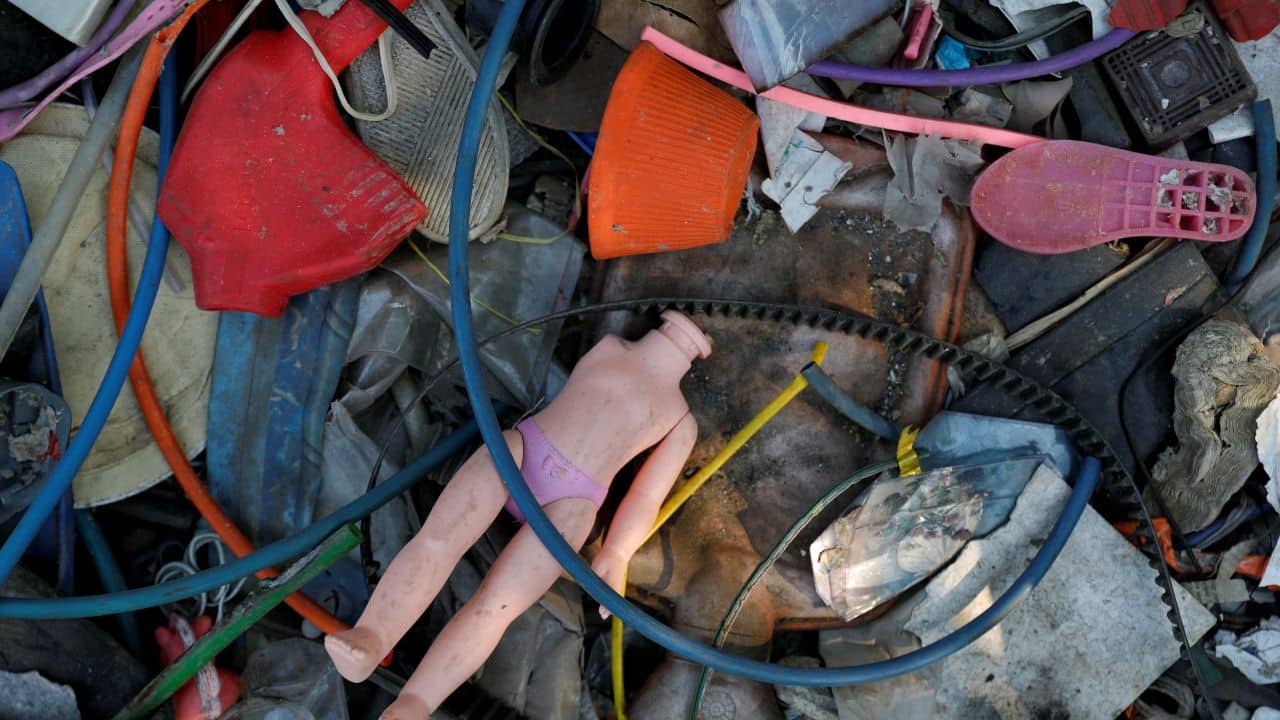 Image: Reuters
How does it affect the environment?
According to United Nations Environment Programme, if not recycled, plastic can take up to a thousand years to decompose.
The plastic discarded at landfills slowly degenerates into small fragments and leaches carcinogenic (cancer-causing) chemicals into groundwater.
Being light in weight, plastic floats on water bodies, accumulates and clogs airways of marine animals. This not only leads to endangering marine life, but also the risk of harmful chemicals entering the human food chain.
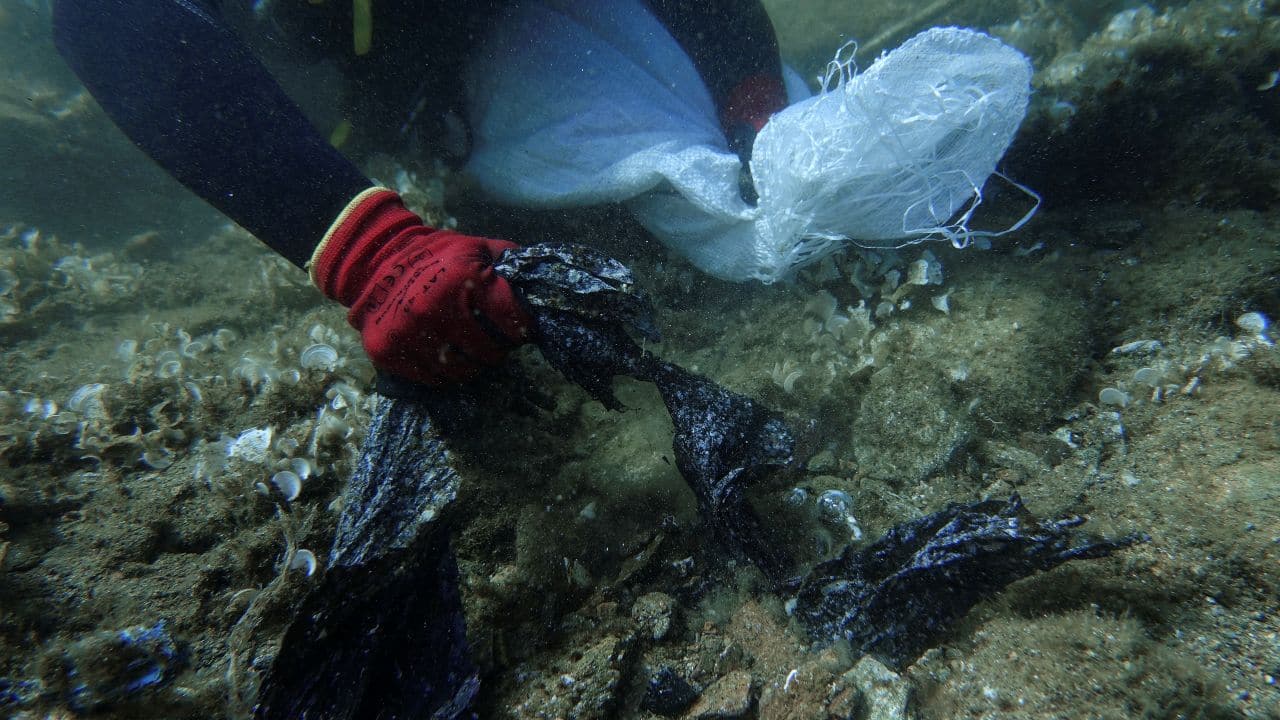 Image: Reuters
The phenomenon, even if it might not be visible immediately, affects an entire ecosystem.
Size of the problem
Since the year 1950, about 9 billion tonnes of plastic has been produced globally – this is equivalent to more than four Mount Everests of waste. Of this, 44 percent was produced only after the year 2000. A whopping 79 percent of all plastic produced since 1950 is still in the environment.
According to a report by CPCB, India generated about 26,000 tonnes of plastic waste daily in 2011-12. This is equivalent to the weight of 4,700 elephants. It is likely that waste generation will have surpassed these estimates in the current year.
Can’t plastic be recycled?
According to experts, 94 percent of plastics are recyclable. However, India recycles about 60 percent and the rest is dumped on to landfills and in the sea and other water bodies.
Experts also believe that plastic products have an end life and cannot be recycled more than three-four times. In fact, the CPCB has warned that recycled products are at times more harmful to the environment because of added chemicals and colours.
Have other countries banned SUPs?
Just when scientists and experts were getting used to their repeated warnings going unheeded, governments of various nations opened their eyes to the adversity that is plastic.
In keeping with the saying, ‘better late than never’, countries have taken stringent measures against the use of SUPs.
Interestingly, Bangladesh was the first country to ban plastic bags in 2002. In 2008, Rwanda imposed a blanket ban on the sale, use, and production of plastic bags. Even though it led to illegal smuggling of plastic from neighbouring nations, and Rwanda was compelled to increase penalties, eventually people switched to greener alternatives.
The European Union plans to ban single-use plastic items such as straws, forks, knives and cotton buds by 2021.
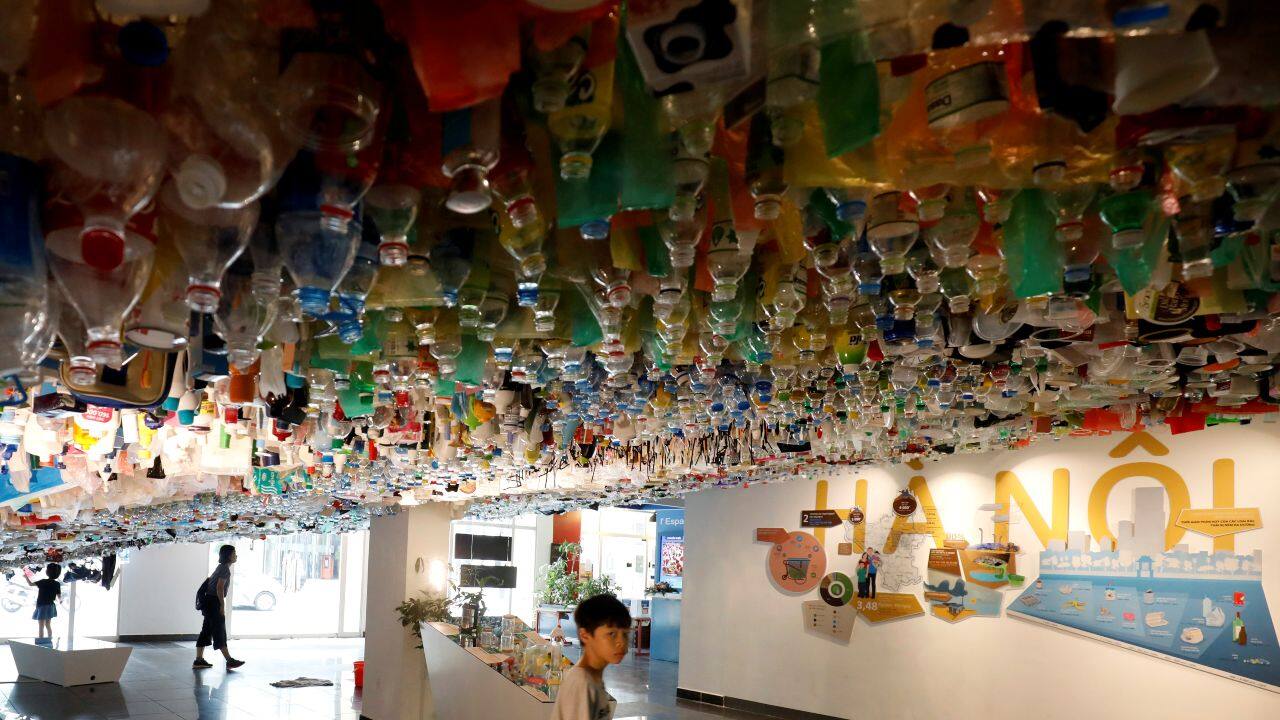 Members of a family visit a hanging art installation made from scraps of plastic bags, bottles, cans and containers at an exhibition entitled Reduce, at the French Cultural Center in Hanoi, Vietnam. (Image: Reuters)
China’s commercial hub of Shanghai is gradually reining in use of single-use plastics in catering, and its island province of Hainan has already vowed to completely eliminate single-use plastic by 2025.
Will India be successful in its endeavor?
India lacks an organised system for management of plastic waste, leading to widespread littering across its towns and cities.
The ban on the first six items of single-use plastics will clip 5% to 10% from India’s annual consumption of about 14 million tonnes of plastic, a Reuters report suggested.
 Women employees separate plastic trash inside a recycling factory in Mumbai.
Penalties for violations of the ban will probably take effect after an initial six-month period to allow people time to adopt alternatives, officials said.
Some Indian states have already outlawed polythene bags.
Discover the latest Business News, Sensex, and Nifty updates. Obtain Personal Finance insights, tax queries, and expert opinions on Moneycontrol or download the Moneycontrol App to stay updated!
Find the best of Al News in one place, specially curated for you every weekend.
Stay on top of the latest tech trends and biggest startup news.