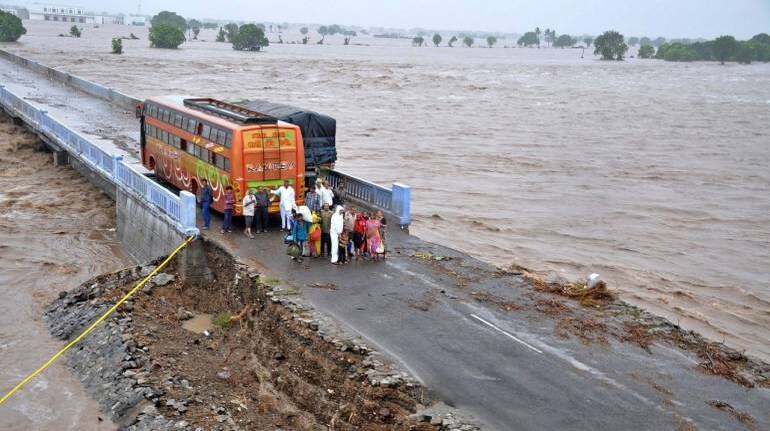
The data is alarming. The number of recorded disasters globally increased by a factor of five in the past 50 years, driven by climate change and extreme weather. This trend is expected to continue, with the number of medium- or large-scale disaster events projected to reach 560 a year – or 1.5 each day – by 2030. Yet, as of 2022, only half of all countries are protected by multi-hazard early warning systems.
To this end, the Early Warnings For All Initiative (EW4All) was formally launched at COP27 in Egypt. The UN-backed global initiative calls for every person on Earth to be protected by early warnings by 2027. Last month, the EW4All was fast-tracked into action, after Tropical Cyclone Freddy caused severe disruption to critical services in southeast Africa, and fuelled a dangerous cholera outbreak. The coming months will see stepped-up coordinated action in 30 particularly-at-risk countries.
But is the EW4All viable, and how can it help vulnerable populations in India and around the world? Let’s find out.
Cause and effectClimate change continued its advance in 2022, as per the World Meteorological Organization (WMO). WMO's State of the Global Climate 2022 report, released last month, shows that droughts, floods and heatwaves affected every continent and caused damage worth billions of dollars. In terms of global temperature, the years 2015-2022 were the eight warmest on record, while the melting of glaciers and sea-level rise reached record levels last year.
Populations worldwide were gravely impacted. As per the report, record-breaking rain in Pakistan saw 33 million people affected, while damage and economic losses were assessed at $30 billion. Extreme heatwaves affected Europe during the summer, resulting in 15,000 excess deaths across Spain, Germany, the UK, France, and Portugal. In Somalia, almost 1.2 million people were displaced by the catastrophic impacts of droughts.
India, too, felt its effects. According to a report by the Centre for Science and Environment (CSE), the country witnessed 241 days of extreme weather events in 2022. In fact, there was a disaster nearly every day in the first nine months — from heat and cold waves, cyclones, lightning to heavy rain, floods and landslides. These disasters have claimed 2,755 lives, affected 1.8 million hectares of crop area and destroyed over 416,667 houses.
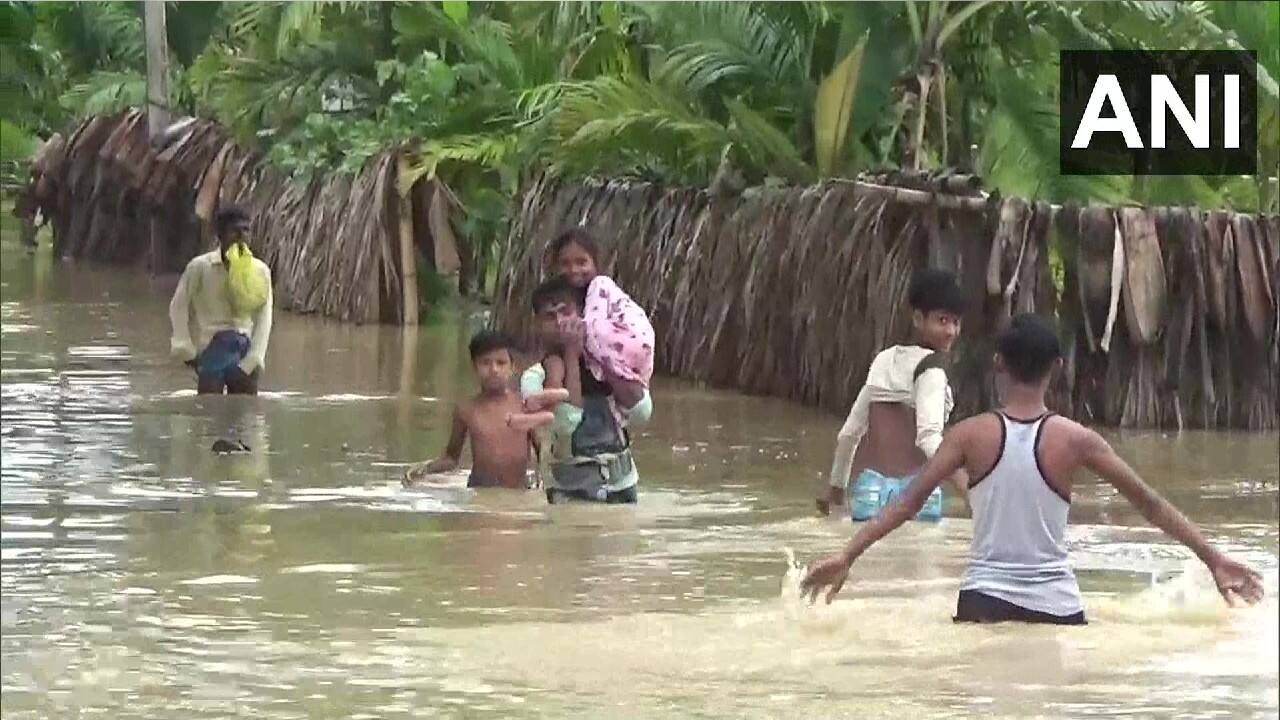 May 2022 floods in Assam. From heat and cold waves, cyclones, lightning to heavy rain, floods and landslides, climate disasters claimed 2,755 lives in India in 2022. (Photo: ANI)Deep impact
As per the UN, just 24 hours’ notice of an impending hazardous event can cut the ensuing damage by 30 percent. This is where the EW4All comes in. It strengthens disaster risk knowledge, observations and forecasting, preparedness and response, and communication of early warnings. Thus, it can save lives by enabling people to adapt to climate change and respond to weather events before disaster strikes. It is also economically viable. The WMO, for instance, estimates that its EW4All will cost the equivalent of a mere 50 cents per person per year over the next five years. Also, spending $800 million on such systems in developing countries helps avoid losses of $3 billion to $16 billion per year, according to the Global Commission on Adaptation.
India stands to gain from it. Our geography and population make our country particularly vulnerable to the effects of extreme weather events. Around 80 percent of our population lives in regions highly vulnerable to extreme disasters such as severe flooding, droughts or heatwaves. It means we are exposed to its impacts, and have to constantly adapt to survive.
Over the years, India has worked to improve early warning systems for hydro-meteorological events (such as cyclones and tsunamis), and installed early warning systems across its east and west coasts. As per the government of India, this has reduced mortality from cyclones by up to 90 percent over the last 15 years. This year, Prime Minister Narendra Modi also chaired a high-level meeting to review the country’s readiness for a hot summer and instructed the India Meteorological Department to release daily weather forecasts that can be easily interpreted to help save lives and crops.
But as climate-related disasters become more frequent, more intense and more deadly, the need for a multi-hazard warning system grows. It is the first line of defence for communities and prevents a humanitarian crisis - especially for the most vulnerable and remote communities who bear the brunt of it.
“People in Africa, South Asia, South and Central America, and small island states are 15 times more likely to die from climate disasters. These deaths are preventable. The evidence is clear: early warning systems are one of the most effective risk reduction and climate adaptation measures to reduce disaster mortality and economic losses,” said UN chief António Guterres, while talking about the initiative.
It is why India has already announced its support for the EW4All, and why the UN hopes that it will become a reality for everyone, everywhere.
Discover the latest Business News, Sensex, and Nifty updates. Obtain Personal Finance insights, tax queries, and expert opinions on Moneycontrol or download the Moneycontrol App to stay updated!
Find the best of Al News in one place, specially curated for you every weekend.
Stay on top of the latest tech trends and biggest startup news.