-
'This sacred day celebrates hope and renewal': PM Modi extends greetings on Easter
He wished for peace, joy, and unity, urging that the teachings of Jesus Christ inspire kindness and strengthen social togetherness
-

Families of AI171 crash victims seek release of black box data, write to PM Modi
Around 30 bereaved families from across Gujarat met in Ahmedabad on Saturday and wrote a letter to the prime minister, requesting the release of the CVR and 'black box' (Flight Data Recorder) data to uncover the truth behind the calamity.
-
Budget session extended so that 33% women quota law can be implemented by 2029: PM Modi
Prime Minister Narendra Modi said the government has extended the Budget session and it will meet again for three days -- April 16, 17, and 18.
-
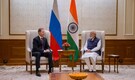
Russia’s Manturov briefs PM Modi on expanding trade corridors, people-to-people ties
First Deputy Prime Minister Denis Manturov met with PM Modi and discussed ways to deepen economic cooperation and enhance connectivity corridors.
-
Rupali Ganguly urges PM Narendra Modi to ban elephant rides after ‘pink elephant’ controversy
After the “pink elephant” controversy and Chanchal’s reported death, Rupali Ganguly urged PM Narendra Modi to ban elephant rides, highlighting cruelty concerns and proposing safer, non-animal alternatives for tourism.
-
Keralam polls: PM Modi says safety of Indians top priority, thanks Gulf nations amid West Asia crisis
Prime Minister Narendra Modi said ensuring Indians’ safety remains a top priority amid the West Asia conflict, thanking Gulf nations for support and urging unity while warning against misinformation and political opportunism.
-
Mann Ki Baat: PM Narendra Modi lauds Jammu and Kashmir cricket team for maiden Ranji Trophy triumph
Addressing his monthly radio broadcast 'Mann Ki Baat', PM Modi said March has been a month full of excitement and enthusiasm for cricket fans across the country.
-
India denies Musk’s presence in Modi-Trump call on Hormuz crisis
The talks between Trump and Modi focused on ensuring stability in the Strait of Hormuz, disruptions in which have already driven up global energy prices and heightened fears of fuel shortages across parts of Asia
-
India strengthens energy security, eyes fresh LNG deal with Russia amid Hormuz disruptions
India and Russia are moving quickly to explore a deal as energy markets tighten following tensions in West Asia and disruptions linked to the Strait of Hormuz.
-
PM Modi to attend G7 Summit in France from June 15 to 17
The announcement followed a meeting between external affairs minister S Jaishankar and French minister for Europe and foreign affairs Jean-Noël Barrot on the sidelines of the G7 Foreign Ministers’ Meeting at the Abbaye des Vaux-de-Cernay.
-
Pakistan offering to mediate West Asia crisis is 'ludicrous nonsense,' says former Trump Pentagon advisor: 'Modi should step in'
Macgregor made an emphatic case for India, arguing PM Modi's rare ability to maintain working relationships across geopolitical fault lines makes him uniquely positioned to intervene.
-
Dhurandhar 2 draws from real events: From PM Modi’s 2014 win to demonetisation and Atiq Ahmed’s killing
Dhurandhar: The Revenge incorporates real-life events like PM Narendra Modi’s 2014 win, demonetisation, and Atiq Ahmed’s killing to create a gripping, reality-inspired narrative.
-
OPINION | Twelve years on, BJP remains an electoral juggernaut but is in need of moral renewal
No democratic government in a spiritually inclined society like India can endure on brute force or electoral machinery alone. Sustained power demands moral legitimacy
-
Govt issues order to accelerate gas pipeline infrastructure amid Hormuz disruption
The order aims to facilitate the expansion of piped natural gas (PNG) networks, improve last-mile connectivity, and promote a shift towards cleaner fuels for cooking, transport and industrial purposes, thereby strengthening energy security and supporting India’s transition to a gas-based economy, the government said.
-
Crude surges past $104: Why India is better placed than its neighbours to handle the oil shock | Explained
PM Modi, addressing the Parliament on Monday and Tuesday, laid out India’s preparedness and response, while also underlining the long-term challenges posed by the conflict.
-
Iran-Israel war: US welcomes PM Modi's role as mediator in Middle East crisis, says envoy Gor
The US has backed Prime Minister Narendra Modi as a key mediator in the Middle East crisis, with envoy Sergio Gor highlighting his role after talks with President Donald Trump.
-
‘India supports de-escalation’: PM Modi calls for peace in Middle East, stresses open Hormuz in Trump talks
The conversation with PM Modi comes a day after Trump announced a five-day pause on planned US military strikes at Iran's energy grids and power plants, citing “very good and productive conversations."
-
Hormuz disruption threatens India’s export pivot to Gulf as US trade shrinks
Shipments redirected to Gulf markets after US tariff hit now face fresh risks as Strait of Hormuz tensions disrupt trade routes
-
PM Modi says govt trying to buy gas and crude oil from all possible sources
Modi said the war in West Asia is a cause of concern, and India wants peace in the region through dialogue and diplomacy
-
'Those who seek to exploit will spread lies… security on high alert': PM Modi says amid West Asia crisis
Stressing the broader stakes, PM Modi said the crisis carries “economic, national security and humanitarian aspects” for India.
-
Modi biggest infiltrator, West Bengal Assembly poll a battle to protect state's plural social fabric: Mamata Banerjee at Kolkata Eid gathering
West Bengal Chief Minister Mamata Banerjee described the upcoming assembly elections as a battle to protect democratic rights and Bengal's plural social fabric.
-
Iran lists conditions for ending war with US, Israel in call with PM Modi
The remarks were made after PM Modi and Iran’s President held a phone conversation on March 21
-
Can India broker peace in US-Israel-Iran war? Here’s why it is being seen as a key mediator | Explained
While New Delhi has not formally offered to step in, the idea has gained traction among diplomats and analysts who believe India has the rare ability to engage all sides.
-
Wait for Noida International Airport is over: CM Yogi Adityanath reveals official inauguration date for India’s largest airport at Jewar
UP CM Adityanath said that the Noida International Airport will contribute Rs 1 lakh crores to state’s economy.
-
PM Modi flags off three new train services, unveils projects worth over Rs 4,570 crore in Assam
PM Modi also virtually performed Bhoomi Poojan of Assam Mala 3.0, a major road infrastructure initiative worth over Rs 3,200 crore.