There is no dispute that the agriculture sector is in stress and needs policy attention. It is being reported that the government is working on a package for the farm sector. Congress President Rahul Gandhi's promise to give a basic income to the poor, provided his party is voted back to power, should be seen in this context.
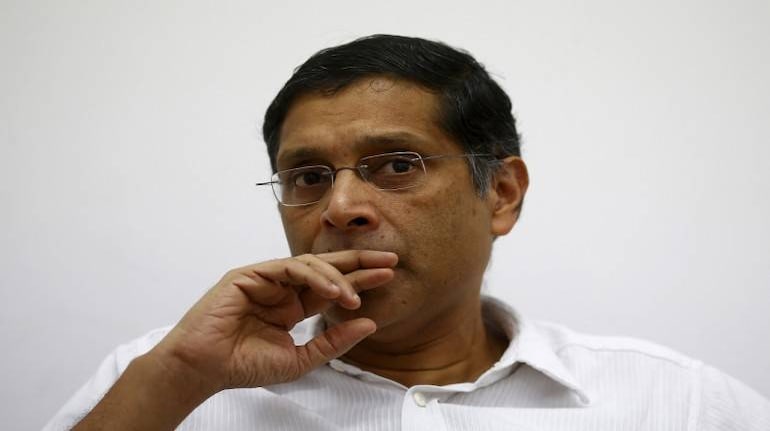
While the details of what the government or the opposition intend to do are not clear, economists Josh Felman, Boban Paul, M.R. Sharan and Arvind Subramanian, in an article in the Business Standard—accompanied by a technical note—have made a proposal for basic income in rural India, which deserves wider discussion.
Briefly, the economists have shown that an annual transfer of about Rs 18,000, or Rs 1,500 per month, can be made to 75 percent of rural households at a fiscal cost of Rs 2.64 lakh crore (2019-20 prices), or about 1.3 percent of the gross domestic product. The amount covers one-third of the current consumption of the poorest 40 percent of the population. The idea is certainly more equitable than the Rythu Bandhu scheme of Telangana, for instance.
Further, Subramanian and his co-authors see the idea as fiscally neutral and suggest that it should not be financed by resource transfers from the Reserve Bank of India or by breaching fiscal targets.
So, where will the money come from? This is where such an idea is likely to face political resistance. The authors suggest raising resources by cutting expenditure, both at the centre and the state level, and noted: “As a starting suggestion, the following agricultural schemes should be eliminated or phased out: interest rate subsidy for crop loans (Rs 15,000 crore); FBY [Fasal Bima Yojana](Rs 11,000 crore); Additional MSP [Minimum Support Price]/price deficiency scheme (Rs 10,000 crore); fertiliser subsidy (Rs 70,000 crore)…the domestic price of fertiliser should be increased by about Rs 150-200 per quintal every month so that the subsidy is eliminated over three years.” However, this is unlikely to work for a number of reasons.
First, as Niranjan Rajadhyaksha noted in Mint, this would mean shifting spending from large farmers to the poor. While the idea has merit, it is unlikely that any government would want to upset the most powerful and politically connected group in rural India.
Second, this would be seen as shifting resources from one pocket to another with total support to the sector remaining constant or declining at the margin. Since the idea needs support and financing from states as well, it is unlikely that different political parties will have enough incentives to arrive at a consensus. It is also likely that even small and marginal farmers would not be willing to forgo subsidies, such as on power and fertiliser, in return for the amount of cash transfer mentioned above. Therefore, as this writer highlighted earlier this week, the risk is that a programme like this will be implemented without adequately rationalising existing expenditure.
Third, this will not solve the real problem that the agriculture sector is facing. At a broader level, a cash transfer of Rs 1,500 per month will neither cover losses due to collapse in prices or crop failure nor will it be enough to help finance inputs or investment for a large number of farmers. There is a chance that a programme like this will be neither here nor there.
Fourth, the biggest risk of a quick fix solution like cash transfer—fiscal neutral or otherwise—is that it might take political attention away from structural problems in the sector. Economist Ashok Gulati, for example, has shown that due to restrictive trade and marketing policies, the farm sector was implicitly taxed to the tune of Rs 2.65 lakh crore per annum (2017-18 prices) between 2000-01 to 2016-17.
The sector needs a comprehensive approach with interventions at multiple levels. Small cash transfers or some rejigging of existing subsidies is unlikely to take the Indian farmer too far.

Discover the latest Business News, Sensex, and Nifty updates. Obtain Personal Finance insights, tax queries, and expert opinions on Moneycontrol or download the Moneycontrol App to stay updated!
Find the best of Al News in one place, specially curated for you every weekend.
Stay on top of the latest tech trends and biggest startup news.