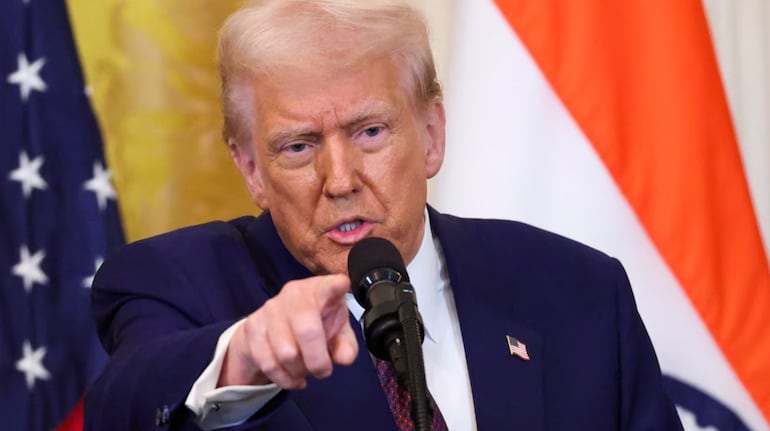

President Donald Trump, on February 20, signed an executive order ending a series of reciprocal additional ad valorem tariffs that had been imposed under the International Emergency Economic Powers Act (IEEPA), while leaving other trade measures in place.
In the order issued, Trump said that "in light of recent events", the reciprocal duties introduced under several earlier executive orders "shall no longer be in effect and, as soon as practicable, shall no longer be collected".
The now-terminated reciprocal tariffs were put in place during 2025 and 2026, and targeted a range of foreign trade practices and national security concerns. These included measures tied to illicit drug flows across the northern and southern US borders, the synthetic opioid supply chain in China, imports connected to Venezuelan oil, large and persistent US goods trade deficits, and actions directed at Brazil, Russia, Cuba, and Iran.
Although the reciprocal IEEPA-based tariffs are being lifted, the president stated that the national emergencies underlying those executive orders "remain in effect and shall not be affected by this order".
"All other actions… that do not impose additional ad valorem duties under IEEPA… shall not be affected by this order," the directive states.
The order was rolled out shortly after the US President signed an executive order imposing a 10 percent tariff on imports from all countries, hours after the Supreme Court struck down key elements of his previous trade measures.
The new tariff is being enacted under Section 122 of the Trade Act of 1974, which allows the president to impose temporary, nondiscriminatory tariffs for up to 150 days, with any extension requiring congressional approval.
Meanwhile, federal agencies have been directed to begin immediately terminating the collection of the reciprocal duties. The Secretary of Commerce, the Secretary of Homeland Security, and the US Trade Representative will assess whether changes to the Harmonized Tariff Schedule of the United States are required to implement the move.
The order further clarifies that tariffs imposed under other legal authorities remain untouched.
"This order does not affect any other duties, including duties imposed under section 232 of the Trade Expansion Act of 1962… and section 301 of the Trade Act of 1974," it says.
As a result, national security tariffs under Section 232, including those on steel and aluminium, and trade remedy tariffs under Section 301, will continue in force.
The White House also said that a separate February 20 executive order continuing the suspension of duty-free de minimis treatment, along with a proclamation imposing a temporary import surcharge, are not affected by the new directive.

Discover the latest Business News, Sensex, and Nifty updates. Obtain Personal Finance insights, tax queries, and expert opinions on Moneycontrol or download the Moneycontrol App to stay updated!
Find the best of Al News in one place, specially curated for you every weekend.
Stay on top of the latest tech trends and biggest startup news.