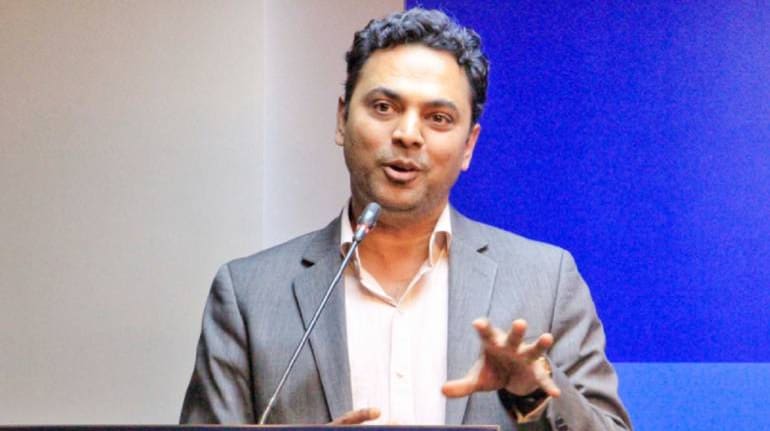
Attributing the rise in inflation to supply-side frictions, Chief Economic Adviser K V Subramanian has exuded confidence that retail inflation will come down in the days ahead with the easing of lockdowns.
According to the government data, retail inflation rose to 6.93 percent in July, mainly driven by rising prices of food items like vegetables, pulses, meat and fish. However, wholesale price-based inflation declined 0.58 percent in July, even as food items turned costlier.
"If you look at inflation...it's primarily because of those supply-side frictions, but as local lockdowns are actually being reduced, these frictions should basically go down," he told PTI.
"Overall, the difference between wholesale and retail inflation is primarily due to supply-side factors which should decrease and therefore going forward even the retail inflation should ease," Subramanian said.
There are fears that retail inflation would remain at an elevated level during the rest of the year limiting the scope for the RBI to further ease the benchmark interest rate.
The six-member Monetary Policy Committee (MPC) headed by the RBI Governor has been given the mandate to maintain annual retail inflation at 4 percent until March 31, 2021, with an upper tolerance of 6 percent and a lower tolerance of 2 percent.
Retail inflation so far has been in the tolerance range of MPC except for breach in July. In June, retail inflation was 6.09 percent. At the same time, WPI inflation in June was at (-) 1.81 percent, while for the month of May and April it was (-) 3.37 percent and (-) 1.57 percent respectively.
As far as growth is concerned, India's economy suffered its worst slump on record in April-June, with the gross domestic product (GDP) contracting by 23.9 percent as the coronavirus-related lockdowns weighed on the already-declining consumer demand and investment.
The GDP contraction in the world's fifth-largest economy compared with 3.1 percent growth in the preceding January-March quarter and 5.2 percent expansion in the same period a year back.
During the April-June quarter, agriculture was the lone bright spot, growing by 3.4 percent. Financial services -- the biggest component of India's dominant services sector -- shrank 5.3 percent, while trade, hotels, transport and communication declined 47 percent.
Manufacturing shrank 39.3 percent, construction contracted 50.3 percent, mining output fell 23.3 percent, and electricity and gas segment dropped 7 percent.
The latest print of factory output is also not encouraging as the Index of Industrial Production (IIP) contracted by 10.4 percent in July mainly due to lower output of manufacturing, mining and power generation. This is the fifth consecutive monthly decline.
Follow our full coverage of the coronavirus pandemic here.
Discover the latest Business News, Sensex, and Nifty updates. Obtain Personal Finance insights, tax queries, and expert opinions on Moneycontrol or download the Moneycontrol App to stay updated!

Find the best of Al News in one place, specially curated for you every weekend.
Stay on top of the latest tech trends and biggest startup news.