Ruchi Agrawal
Moneycontrol Research
Concerns about the potential impact from US imposing fresh sanctions on Iran - the third largest producer of crude globally - is among the major factors driving up crude prices.
Under the terms of the Iran nuclear deal signed by the Obama administration in 2015, Iran had agreed to limit its sensitive nuclear activities, and in turn was allowed, among other things, to sell oil in the international market. The US had signed that deal in collaboration with UK, France, China, Russia, Germany and the EU.
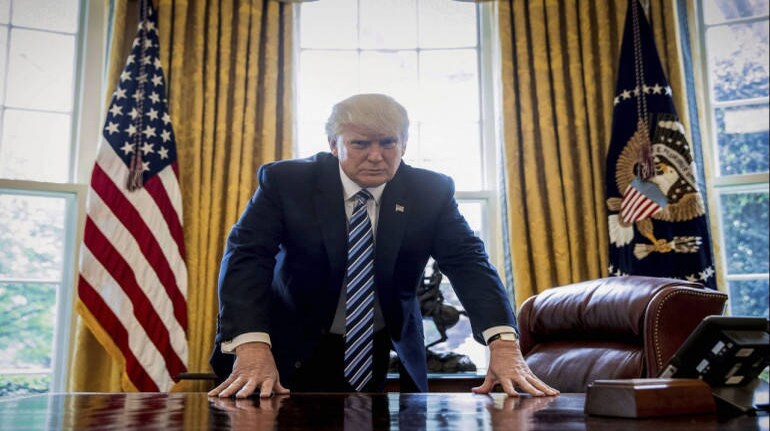
The Trump administration has now pulled out of the deal unilaterally, citing that the agreement was not stringent enough to deter Iran from pursuing hostile nuclear development. Also, the US has threatened to impose fresh and powerful sanctions on Iran, hoping that economic pain would compel Iran to restrain notorious non-compliance.
This has created ripples in the international oil market as fresh sanctions could reduce the supply of crude by Iran. Already, Brent crude has crossed $75 per barrel and some feel it could climb as high as $100 per barrel over the next few months while others view current levels to be unsustainable.
Countries like Saudi Arabia and Israel support US’s decision to exit the deal and stand to benefit both economically and politically from the sanctions.
About the sanctions
Since the Iranian revolution in 1979, the US had been increasingly imposing economic sanctions on Iran to restrain its nuclear technology development activities.
The 2015 nuclear deal revoking the sanctions was silent about the development of the ballistic missile program, and has a sunset clause permitting Iran to develop nuclear technologies after 2025. According to the US, the deal was ill-negotiated, had many loopholes, and inspection provisions lacked adequate mechanisms to prevent, detect, and punish non-compliance. Iran on the other hand, has accused US of imposing many other secondary sanctions which violate the deal terms.
Current situation
Since the sanctions were lifted in 2015, Iran ramped up its crude oil production and expanded production capacities from 1 million barrels per day (mbpd) to almost 3.8 mbpd by March 2018.
Over the past year, the Organization of Petroleum Exporting Companies (OPEC) along with Russia has cut production to boost crude prices. Production shortage in Mexico and Venezuela in the past few months has further reduced global crude supplies and pushed up oil prices.
Having faced fiscal stress during periods of low crude prices and wanting to get the best valuation for its stake in Saudi Aramco, Saudi Arabia has been very keen to keep crude prices high. With shifting agendas and political equations, there has been increasing division within OPEC lately.
The impact of the announcement
US’s exit from the nuclear deal and re-imposition of sanctions poses a substantial impact on the Iranian oil and shipping sectors. It will bring about renegotiation of trade deals with Iran and would take away some portion of the Iranian crude supply from the market. This coupled with low production from Mexico and Venezuela could lead to supply side pressure in the immediate term and we see some upside risk in the immediate term. However, Saudi Arabia and Russia are already eyeing this opportunity and capture a share of this pie, which would normalize the supplies eventually.
Any fresh sanctions on Iran will have a significant political impact, with potential to escalate conflict within the Middle Eastern countries. There is already a rift within OPEC because of political moves by both Saudi and Iran in Iraq, Israel and other countries in the region.
India and China are the two major importers of crude from Iran, accounting for almost 30 percent of the Iranian crude production. India imports nearly 80 percent of its crude requirement from international markets. If sanctions are imposed, Indian companies might have to look for alternate supplies to compensate supplies.


Higher prices spell cheer for oil producers like OIL India and ONGC by way of better realisations. It spells bad news for oil marketing companies (OMCs) like IOC, HPCL, BPCL because of increased pressure on margins. Even for the producers, a steep rise is not desirable as they might then have to bear a share of the subsidy burden. Higher prices also brings in added pressure on the government to cut excise duties which could potentially tinker with the fiscal math.
The management at OMCs have indicated that current prices levels are unsustainable and prices are unlikely to rise much from these levels. Given that Saudi and Russia in the near term and US shale in the longer period are more than willing to cover up for the supply gap, supply side pressures may not persist. With higher supplies from alternative suppliers, crude prices are likely to normalise. Moreover, strategic reserves, which OMCs have built over time, provide them some cushion in the near term and will help them to absorb the price hike.
The stock market is already bracing for a further rise in crude prices. Stocks of downstream players corrected around 2-3 percent, and those of upstream companies have risen around 3-4 percent.
The HPCL management has indicated that in case crude prices continue to rise, consumers will have to bear a portion of the cost. Price hikes for petrol and diesel could impact volumes and put pressure on margins. We advise investors to exercise caution in this space.
For more research articles, visit our Moneycontrol Research Page.
Discover the latest Business News, Sensex, and Nifty updates. Obtain Personal Finance insights, tax queries, and expert opinions on Moneycontrol or download the Moneycontrol App to stay updated!
Find the best of Al News in one place, specially curated for you every weekend.
Stay on top of the latest tech trends and biggest startup news.