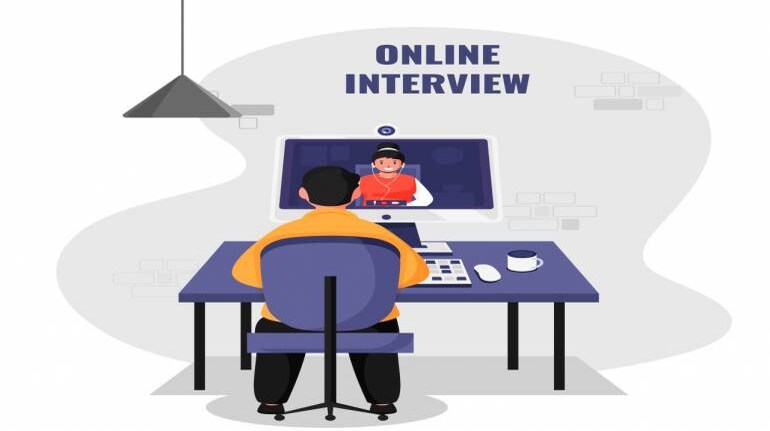
Bengaluru-based Arjun (name changed), a techie with 15 years of experience, has two jobs — one, as a developer in a product company on weekdays, and two, moonlighting as a technical interviewer on weekends. He has been doing this for three years but his second job became quite active only recently, with remote work gaining traction and demand for techies at an all-time high.
Arjun did not want to disclose his exact earnings. But he says one can get as much as 70-80 percent of the salary as an interviewer during good months, and during others, the pay is no less than Rs 15,000 to Rs 30,000 monthly. That's a decent income supplementing the salary from his primary job. “Being an interviewer might never be a full-time job but it offers a helping hand in time of need,” explains Arjun.
Arjun is not alone. Over the last few months, hundreds of techies have been taking on part-time jobs as freelance interviewers on multiple platforms that offer interviews as a service, such as Flocareer, InCruiter and Cybermeru. All this comes in the wake of hiring for technology professionals touching a new peak and remote working becoming the mainstay.
What is happening?
Amid the pandemic, businesses across the world transitioned to digital in order to ensure business continuity. For example, physical stores had to move online if they wanted to stay in business. As hospitals overflowed with Covid-19 patients, people tapped into online consultation with doctors for ailments that do not require hospitalisation. This meant that every business, technology-dependent or otherwise, had to hire tech talent, and fast.
Satish Jeyaraman, CEO, Diamondpick, a talent advisory firm, who works with platforms such as Flocareer, explained that there was a sudden need to quickly ramp up recruiting capability to cater to the growing demand for talent.
While companies would have utilised in-house consultants/technology professionals for technical interviews under normal circumstances , the high demand environment made it difficult to spare additional resources. The industry's growing attrition rate did not help the cause and only served to increase the frequency of interviews. For instance, if a company interviewed two candidates to select one earlier, this has increased to four now. Even then there are no guarantees.
According to Jeyaraman, this creates a huge opportunity for third-party companies that offer technical interviews-as-a-service, often done by professionals who are already employed.
Interviews as a service (IaaS)
IaaS, as the name implies, refers to offering interviews, primarily technical ones, as a service. While the concept has been in existence for the last few years, it wasn’t until the pandemic that it picked up traction.
Business has more than doubled for platforms that offer IaaS and newer companies have come up in recent times to tap the opportunity.
Take, for instance, Flocareer, which was started in 2018. Mehul Bhatt, CEO, Flocareer, said that while the company had been growing even before the Covid outbreak, demand since the onset of the pandemic has changed the company’s trajectory. From doing 2,000 interviews per month, the firm is doing 20,000 now, he says. The company has 2,500 interviewers on board, and has seen a sharp increase in the last eight months.
At Cybermeru, which was started in 2019, the number of interviews has more than doubled over the last few months. For instance, if the company had 1,000 consultants last year, this has increased to 2,000 in a matter of months.
Incruiter, another IaaS platform, has 1,000 interviewers on board and is growing 20-30 percent every month. According to Anil Agarwal, CEO & Co-founder, InCruiter, “Previously, there was hardly anybody interested in joining. But in the last six months we have seen more interviewers signing up with us due to remote work.”
As the market continues to heat up, more companies are jumping on the bandwagon. “When we started, there were only 4-5 companies. Now there are over 15 companies that want to tap into the market,” says Agarwal.
What is driving people to join these platforms?
As Jeyaraman pointed out, there is huge demand and very little time to hire candidates, and companies and people are looking to tap into this mad rush for hiring. But that is not all.
Remote work definitely had a role to play. Earlier, it would be impossible for employees to take on additional work as they are limited by the office environment, even on lean days. Remote work has broken down that barrier.
Take Arjun, who was cited earlier, for instance. He registered to become a freelance interviewer three years back, when the IaaS market was just taking shape. The additional money the platforms offer supplements his salary.
But for Arjun there was another incentive. “For me it is a learning experience. I don’t usually follow the template questions. Rather, I base the interview on real problems I faced and see if there are other ways I can approach them. The answers from candidates may not offer solutions but they do give me different ways of thinking that I can build on,” he explains.
With demand picking up, the interview numbers have now gone up from 5-10 a month three years ago to 40-45 last month, a function of the market dynamics in hiring and the flexibility remote working offered. While Arjun did not disclose how much money he makes, he said that there are some interviewers who earn as much as Rs 50,000 to 70,000 per month doing interviews part-time and who take home a minimum of Rs 15,000 to 30,000 monthly.
In the case of Sudha Jayaraman, who has been working as a freelance HR interviewer for the last five months, it is about flexibility as she has to take care of her two young daughters without family support to bank on. She interviews a minimum of 20 candidates over four hours per day. While Jayaraman did not disclose her earnings, she said one can earn Rs 20,000-Rs 30,000 on average, an arrangement that suits her and also supplements her income.
Bhatt of Flocareer said that retired employees are also signing up, as many find this phase interesting and also challenging. Given the volatility in the market, this might not be a full-time job, but provides enough to pay car and home loans, he added.
How does it work?
Most IaaS outfits are focused on the first-level interview, which is a technical round. The clients could be IT firms, startups, global capability centres or even staffing firms that partner with IaaS platforms for technical interviews.
Companies earn on a per-interview or project basis, say, 500 interviews over a certain period.
The cost of the interview itself differs based on the profile of technology and demand. Vinod Bakhare, Co-Founder and Director at Cybermeru Technologies, said that technologies that are in high demand but in low supply command a premium.
There are certain rules that are in place to ensure that the interviewer is offered anonymity. Arjun explained that during the interviews, candidates cannot see either the interviewer or his/her name. In case clients require the video to be enabled for the interviewer as well, this is done only with the consent of the interviewer.
The platforms also ensure that there is no conflict of interest. For instance, if the interviewer is from Company A, he will not be interviewing a candidate from Company A or someone looking to work in Company A to ensure that the entire process is non-partisan.
A question of ethics and violations
Of course this brings up the question of whether full-time employees can work part-time gigs. Employee contracts in most firms do not have room for freelance gigs for fear that employees might work for competitors. However, people like Arjun aren’t troubled; as he put it: “I did not think about it”. For one, they say, the interviews do not conflict with the work they are involved in and are scheduled during weekends or when they are free, so that their primary work is not affected.
Bhatt of Flocareer adds: “It all depends on their individual employment agreements. Here they are not competing to develop software.”
Bakhare of Cybermeru concurs: “We suggest they check their appointment for any such restriction."
Will this momentum last?
Industry experts said that the current momentum might not last. However the demand for such services is unlikely to go away, they added.
For one, the convenience of such models is likely to stay even when employees return to work and demand tapers. Bakhare of Cybermeru said that attrition will never come down and firms will look to IaaS to backfill this need. “Also, while employees may return to office, it will never be full-time as earlier. Though the numbers might come down, this (IaaS) will never go away.”
While IaaS is more or less restricted to technical interviews and tech firms, it will expand to other areas as well. Flocareer is already looking to expand to Biotech and finance from tech in the coming months. Incruiter is expanding its employee base and will look to raise funding in the next six months as demand picks up.
Discover the latest Business News, Sensex, and Nifty updates. Obtain Personal Finance insights, tax queries, and expert opinions on Moneycontrol or download the Moneycontrol App to stay updated!
Find the best of Al News in one place, specially curated for you every weekend.
Stay on top of the latest tech trends and biggest startup news.