India’s yield curve, which captures the long-term risk sentiment in the economy, is steep. In fact, it is at its steepest incline in history–the difference between the policy rate of 4.40% and 10-year G-Sec of 7.4% (approx) is 300 bps.
It can impact long-term investment and therefore economic recovery, since companies plan their capex around the long-term interest rates. So why is the long-term rate rising so significantly more than the short-term one?
Is it a sign of lack of confidence in the central bank to contain inflation?
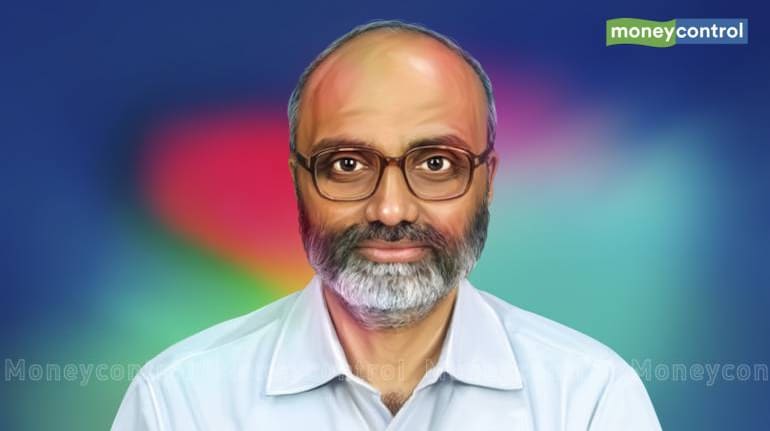
Jayanth R Varma, member of the Monetary Policy Committee, who had often been critical of the central bank’s accommodative stance saying that it can affect its inflation-fighting credibility, said that the steep yield curve is actually a vote of confidence in the RBI. “It is not a question about lack of credibility, but it is actually the opposite… that the market is now pretty convinced that the central bank is going to raise rates,” he said, in an interview with Moneycontrol.
Also read: Prof Varma on global bond super cycle turning and why markets and economy aren't like the Olympics
In 2020, when the curve had steepened by a lesser degree, when the difference between the two rates were only 215 bps, he had argued that the curve indicated a lack of faith in RBI. So what changed?
According to him, the difference comes from RBI’s withdrawal of accommodation. “Back then, the MPC was talking about being accommodative for long… it was open-ended and the market may have been worried that the MPC was taking too long (to keep pace with inflation). Today, it is different. The market is now assuming that there will be rate hikes,” he said.
“Today, MPC’s language has also changed. Back then, it spoke of strengthening recovery and then of inflation. In the April meet, it spoke of inflation first and strengthening recovery later,” he said.
That said, delivering shorter hikes over a longer period–like it seems to be doing now–can worry the market.
Why front-loading helpsThis is because the expectation around 10-year interest rates can be broken down broadly into three–expectations on inflation over that time and on the real interest-rate, and the risk premium. According to Varma, the expectation on all three could be elevated right now.
“We may be able to bring inflation down to 5-6% but to bring it down to 4% may take a while. The market is expecting inflation to be in the upper band for a fair amount of time,” he said. The market is also expecting the central bank to raise the policy rate to contain this inflation. “There is a clear signal that we are going to tighten, to bring inflation under control, (and for that) you need a significant hike in real interest rate. So the market’s expectation on the real-interest rate would have gone up,” he said.
For a significant hike in real-interest rate, a significant rise in nominal rate will be warranted, which means a significant rise in long-term rates.
“Ideally, the real-interest rate should emerge more from inflation coming down, than from rate going up. But people fear that if inflation doesn’t come down quickly enough, then (nominal) rates will have to go up even higher,” he said.
“That is why front-loading is important. We need to do rate hikes quickly, so that it starts to bring inflation down, then central banks need to do less (fewer rate hikes) in future,” he said.
Besides the expectations around inflation and rate hikes, there is a fourth reason why long-term interest rates are going up–the expectations around a large government borrowing. “Some of that could also be reflected in the higher interest rate, simply because the borrowing programme is so large,” he said. That said, the first three factors could be the more dominant and the borrowing could have a relatively smaller weightage, according to him.
Drag on capexThe 300 bps difference can have an impact on the economic recovery. “The most important interest rate when it comes to investment demand is the long-term interest rate. If you are a company deciding to invest in a brand new factory, you're not going to look at the three-month interest rate, because you're going to borrow for seven years or 10 years or whatever… So as that number goes up (the 10-year G-sec bond yield), the cost of borrowing for financing corporate capex is going up. That can act as a drag on capex. So that’s the concern really,” said Varma.
This is particularly hard when the interest-rates are raised in response to a supply shock. “It is much easier to raise it in response to a demand shock. It will be okay since there is enough demand and so if you took away some it is okay. But when you're responding to a supply shock, when demand is deficient already, and you take away whatever demand is there, it is an unpleasant situation,” he said.
“But, inflation is intolerably high. Therefore, one has to choose which flavour of unpleasantness one wants,” he said.
Quick, front-loading of interest rates can help here too. “Businesses don’t want a sword hanging over their head, best to get the bad news out quickly. The uncertainty is quite often more damaging to business sentiment and investment decisions, and frontloading reduces the uncertainty. Then businesses can start planning their capex,” he said.
“This points to frontloading as a good idea and also points to the need to communicate very clearly the path we are going to take,” he said.
Discover the latest Business News, Sensex, and Nifty updates. Obtain Personal Finance insights, tax queries, and expert opinions on Moneycontrol or download the Moneycontrol App to stay updated!
Find the best of Al News in one place, specially curated for you every weekend.
Stay on top of the latest tech trends and biggest startup news.