




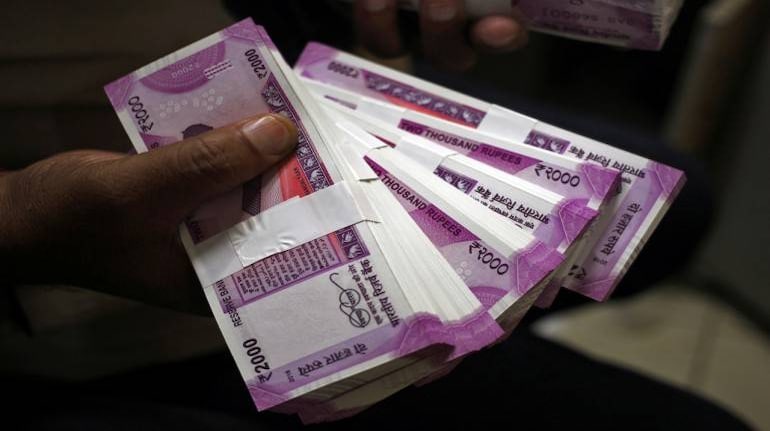
Each one of us has a debt of Rs 54,000. Wondering how?
Here’s the answer. The government borrows funds from external agencies for development purposes, which it divides by the total number of citizens to get the per capita debt. Since the funds borrowed are for the people and hence, the government calculates per person average cost. And this is the debt that comes on each person’s head.
According to a Finance Ministry report, per capita debt (calculated on basis of Union Government debt) is at Rs 53,796 as on March 31, 2016, as against Rs 49,270 on March 31, 2015.
Analysts expect that the debt figure will only rise each year as the country’s development model is based on borrowing.
In a reply to a question asked in Parliament on March 10, Minister of State for Finance Arjun Ram Meghwal said that per capita debt has risen by 9.2 percent in per capita total debt (internal and external debt) as on 31st March 2016. The per capita internal debt rose by 9.3 percent while the per capita external debt increased by 5.1 percent in the same period.
“The primary reason for the increase in debt has been increase in government borrowings, majority of which has been due to increase in internal debt, which contributes to 97% of total debt,” Meghwal had told Lok Sabha.
The government has further asked for USD 9,432 million for developmental policies, he added.
This includes assistance of USD 500 million for Pune metro project, USD 375 million for development of waterways, USD 500 million for skill development, USD 400 million for development of Uttar Pradesh road network and USD 500 million for Smart City project.
Why government borrows
The government has to borrow to ensure smooth flow of its work. In a case of fiscal deficit, the government has to borrow to meet demand for crucial expenditures.
A major part of government’s revenue comes from taxes, and when these earnings are not adequate, Centre and states are allowed to borrow to bridge the fiscal deficit gap.
As of March 2016, the general government debt (GGD) to gross domestic product (GDP) stood at 68.6 percent, which means that the amount of debt was 68.6 percent of the GDP.
GGD is an indicator of the indebtedness of the government sector.
Per capita debt
The external debt is the outstanding amount of the actual current (not contingent) liabilities that need to be repaid — either the principal or interest amount — in the future and that is owned by the residents to non-residents.
The government borrows from the World Bank, Asian Development Bank and International Monetary Fund for development purposes.
Internal debt, on the other hand, is debt owned by residents of an economy to other residents who lend funds to the government.
As per the borrowings of central and state government, total debt is calculated and then, the per capita debt is calculated. The total outstanding debt of the government is divided by the total number of residents to calculate per capita debt.
This number includes both the funds borrowed from external sources as well as internal debt.
Discover the latest Business News, Sensex, and Nifty updates. Obtain Personal Finance insights, tax queries, and expert opinions on Moneycontrol or download the Moneycontrol App to stay updated!
Find the best of Al News in one place, specially curated for you every weekend.
Stay on top of the latest tech trends and biggest startup news.




