




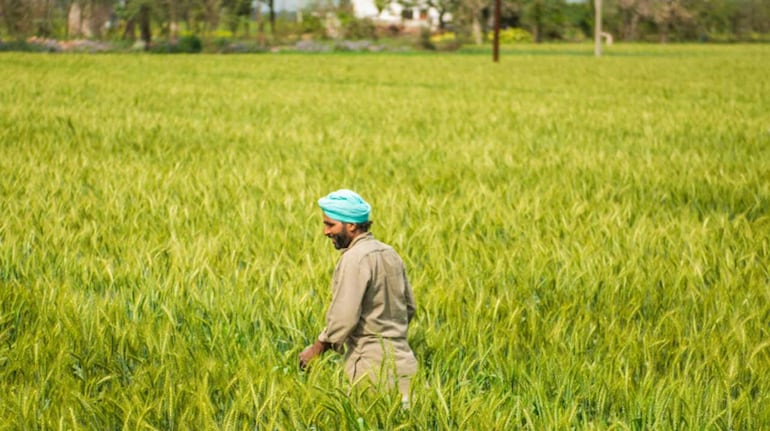
As India-US inch closer to a mini-trade deal, which may even be announced this weekend, agriculture and dairy sectors can make or mar the agreement, which the two sides have been working on for a while now.
“Last night, talks reached a juncture where a breakthrough is possible, therefore it is not an impossibility that the deal may be announced sometime this week,” a source told Moneycontrol.
India has, so far, stuck to its stance on agriculture and dairy, the source added. The government is walking a tight rope as it seeks to protect millions of Indian farmers while averting steeper US tariffs, with genetically modified (GM) crops emerging as a contentious issue.
Officials, too, warned that talks may collapse if the US continues to press for sweeping concessions on dairy and agriculture, especially GM maize and soyabean.
India has always followed a farmers-first policy on agriculture and dairy in negotiating trade deals, and is unlikely to make concessions for the US, which wants New Delhi to allow in GM foods, despite the threat of steeper duties, experts told Moneycontrol.



It would be a disaster for farmers if GM crops flowed in from the US, agricultural economist Deepak Pareek said, citing increased competition for around 24 million soyabean and maize cultivators.
GM crops refer to plants that have been genetically altered to make them resistant to insects or disease or increase their nutritional value.
The US is demanding access for GM soyabean and maize. In 2020, 94 percent of the soyabean and 92 percent of the maize grown in the US were genetically modified.
Siraj Hussain, former secretary, food processing ministry, said if cheap US imports of soyabean and maize are allowed, domestic prices may fall further, hitting farmers’ livelihood.
Last year, farmers received just about Rs 4,000 a quintal for soybean, lower than the minimum support price of Rs 4,892.
“If India lowers duty on the American variant, about 11 million Indian soyabean farmers may see a crash in prices, which will further impoverish India’s already poor peasantry in rainfed regions,” Hussain added.
Also read: India, US inch closer to mini trade deal as talks enter day 5 to bridge gaps
In FY25, India’s soyabean imports fell nearly 85 percent in FY25, while exports grew almost 11 percent on-year.
“In India, soyabean yield has never been higher than 1 tonne per hectare compared to 4.2 tonnes per hectare in the US. Allowing imports would kill our farmers. So, I think that will be non-negotiable. India will not allow that. Instead, our farmers should be allowed to cultivate GM crops,” Pareek said.
Issues are similar if India opens up to American GM corn or maize.
While the US’s maize yield is close to 11 metric tonnes, India’s is around 3-4 metric tonnes. “So, if we allow maize imports, it will be a big problem,” Pareek said.
India is already a net importer of maize due to diversion of the crop for ethanol, leading to an over 500 percent surge in imports in FY25.
Pareek estimates that at least 13 million farmers in India cultivate maize.
Farmer first
GM crops are a sensitive issue for Indian farmers. When India first approved Bt cotton for cultivation in 2002, farmers, especially in producer states like Karnataka, protested.
Indian farmers are wary of GM crops due to their potential implications on public health and their incomes.
“Experiences with Bt cotton (India’s only widely approved GM crop) are mixed — some farmers gained, others faced issues like rising costs and pest resistance,” Divya Kumar Gulati, chairman at Compound Feed Manufacturers Association (CLFMA), said.
“There are worries that GM seeds (often patented) could increase dependency on large agribusinesses. GM seeds are often non-reusable, meaning farmers have to buy new seeds every season, unlike traditional practices. Small and marginal farmers may struggle to afford these seeds or bear losses in case of crop failure due to unexpected conditions,” Gulati said.
The plan to allow certain GM crops from the US assumes that India can tightly control the movement of such material through strict Sanitary and Phytosanitary (SPS) protocols.
In reality, enforcement is weak, supply chains are fragmented, and markets are hard to monitor, Global Trade Research Initiative (GTRI) said in a note on June 10.
"Once GM products enter the country, there is a high risk they will leak into domestic agriculture, raising serious concerns over food safety, environmental impact and export bans from countries that don't accept GM contamination," GTRI's founder Ajay Srivastava said.
Also read: US unlikely to grant India tariff relief on steel, autos in mini-deal
India has, so far, resisted America’s demand for greater access for its GM crops even as New Delhi looks to secure a scaled-down version of a bilateral trade agreement (BTA) before President Donald Trump’s 26 percent reciprocal tariffs kick in from July 9. A 10-percent baseline levy is already being imposed on all goods entering American shores.
The Trump administration has repeatedly criticised India for its “high-tariff regime” and has been seeking greater market access for US farm goods. The simple average tariff for agricultural goods in India is 39 percent, higher than the US’s 5 percent.
But for India, the buck stops with farmers.
In 2021, India walked out of the Regional Comprehensive Economic Partnership (RCEP) agreement involving the Association of Southeast Asian Nations (ASEAN), citing its negative effects on farmers and the dairy sector.
“GM crops are a complex issue. One of the reasons why countries like Brazil and the US have such high yields and productivity is because of genetically modified varieties, which India is not using. So, the yield is less and therefore their entry from the US could lead to stiff competition for Indian farmers,” a senior government official told Moneycontrol earlier.
The ethanol caveat
Allowing a limited quantity of American corn only to blend ethanol, however, may just work in India’s favour.
India is looking to increase its share of biofuels to spur a shift from fossil fuels, key to achieving its net-zero emissions target by 2070.
With the country on track to achieve a 20 percent ethanol blending target in petrol, the deadline for which is October 2025, the oil ministry is now working on a roadmap to further increase the blending share of the biofuel.
In June, ethanol blending in petrol stood at 19.8 percent, according to official data.
Moneycontrol has reported that the government is looking at prioritising ethanol production from maize and broken grain instead of sugarcane to settle the food versus fuel debate.
A paper released by Niti Aayog in May, which has now been withdrawn, favoured allowing US corn and corn by-products like Distiller’s Dried Grains with Solubles for ethanol blending and export processing, while keeping genetically modified material out of domestic food chains.
"India is the largest importer of edible oil in the world and the US has a huge export surplus of soybeans which are GM. India can offer some concessions to the US in the import of soyabean oil to meet US demands to reduce trade imbalance, without harming domestic production," the paper said.
The paper was withdrawn after it was criticised by farmers and industry bodies.
“It is quite possible that the US would be pushing for the import of ethanol, if maize itself cannot be imported as the American variant is genetically modified,” Hussain said.
An Indian team in the US has been negotiating the contours for five days now, repeatedly extending stay to iron out differences as the Trump regime remains adamant over more access for agriculture.
GM or not, for the government, protecting agriculture goes beyond economics.
“Agriculture in India is not just economic — it's cultural and political. GM crops are seen by many as foreign-imposed technology, provoking resistance on sovereignty grounds,” CLFMA’s Gulati said.
Discover the latest Business News, Sensex, and Nifty updates. Obtain Personal Finance insights, tax queries, and expert opinions on Moneycontrol or download the Moneycontrol App to stay updated!

Find the best of Al News in one place, specially curated for you every weekend.
Stay on top of the latest tech trends and biggest startup news.




