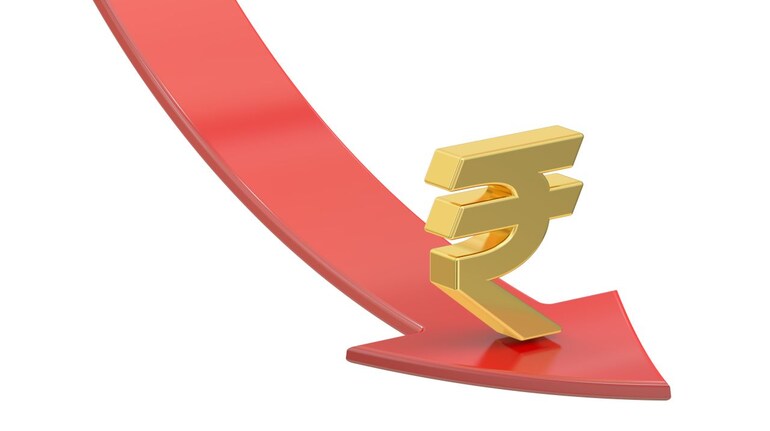
The rupee’s slide has turned into one of the biggest macro risks corporates are navigating this year. Having weakened close to four percent, so far, this calendar year, (till November 26) the currency has emerged as one of the worst performing emerging-market currencies.
On November 21 , it hit an all-time low of 89.49 against the US dollar, deepening concerns for import-heavy firms and complicating the operating landscape for exporters who had hedged at lower levels.
Exporters and importers are responding differently, but both sides are accelerating hedge coverage, hedging their exposure using structured products and preferring shorter tenor hedges until policy and geopolitical backdrop stabilises.
Currency hedging is a strategy used by importers and exporters to mitigate the risk of currency fluctuations by using financial instruments like forward contracts.
Abhilash Koikkara, Head – FX & Commodities at Nuvama Professional Clients Group, noted that many exporters who had hedged between 87 and 88 have already absorbed mark-to-market losses as the rupee slipped to record lows.
However, he stressed that exporters have not panicked. Instead, they used the dip to step up hedge coverage at 89.30–89.40, aided by the belief that the RBI is likely to defend the psychologically important 90 level.
Importers, Koikkara pointed out, have been more nervous. The moment the 88.80 stop-loss level broke, short-term importers “rushed to hedge,” which accelerated the move towards 89.40, he said.
Higher hedging
Experts commented that the traditional gap between exporters and importers on hedge behaviour is narrowing.
Exporters typically hedge more aggressively because they earn the forward-premium thanks to the India–US rate differential. But with forward premiums having fallen sharply from around 4 percent a year a couple of years ago to roughly 2–2.5 percent now, importers too have begun increasing hedge coverage.
A forward premium occurs when a currency's future expected exchange rate is higher than its current spot rate, suggesting that the market expects the currency to depreciate going ahead.
Akshay Kumar, Head of Global Markets at BNP Paribas India, said that the bank’s advice to clients is to hedge as much as possible.
While importers often hesitate because of the cost of paying forward premiums, he believes that today’s subdued premium levels make it worthwhile.
With rupee depreciation exceeding the cost of hedging this year, he argued that it makes sense for importers to lock in forward cover at these levels.
Also Read: Rupee at record low near 89-mark: What it means for overseas education and foreign travel
Structured hedging products become attractive
This drop in premiums is also resulting in changes in companies' mix of hedging instruments from simple currency forward contracts. .
Kumar commented that though forwards remain the simplest tool, the recent spike in volatility has opened up room for FX options and basic structures such as range forwards and seagulls that can sometimes deliver better all-in hedging levels than plain forwards.
A seagull hedging strategy in forex is an option strategy that combines buying and selling currency options to hedge against adverse price movements
Nuvama’s Koikkara said that in the current volatile forex scenario, corporates are now also keen to explore more exotic structured products such as TARFs (Target Redemption Forward) and knock-in/knock-out options, because these structures “provide protection and participation till predefined levels.”
Shorter tenor hedges preferred
Abhishek Bisen, Fund Manager at Kotak AMC, described the macro backdrop as a classic “VUCA environment - volatile, uncertain, complex and ambiguous.”
In such an atmosphere, he said, importers in particular are sticking to what is “visible and near-term.”
With the rupee already having weakened sharply, there is limited appetite for long-dated hedges, leading to a clear preference for short-term contracts. Firms are hedging immediate exposures and rolling them forward as fresh liabilities arise, said Bisen.
“Even if clients are reluctant to hedge for very long tenures like one year or beyond, it still makes sense to hedge for the next couple of months. That allows them to tide over events that are yet to play out – the trade deal, for example,” added BNP Paribas’ Kumar.
US-India trade deal a key factor for Rupee
Kotak’s Bisen said that a conclusion of the US–India trade deal holds the key to the currency’s near-term direction.
“The deal will remove uncertainty,” he emphasised. If tensions fade and foreign portfolio inflows resume, he expects the rupee to retreat towards 87–88.
Monetary policy could complicate the picture further. Rate cuts are normally negative for the currency, but Bisen argued that this cycle is different. If rate cuts are interpreted as supporting growth revival and bond-market performance, “flows can come in and save you from the currency problem.” The RBI, he added, would likely prefer to cut rates after clarity emerges on the trade deal, as that would lower currency risks.
BNP Paribas’ Kumar said the “overhang of uncertainty around the trade deal” remains the single biggest weight on the rupee.
If that uncertainty drags on, Kumar warned, more depreciation is likely. “It is quite possible that we see a breach of 90,” he said, even if the RBI intervenes intermittently. In such a scenario, a weaker rupee becomes the “natural path, he said.
Koikkara added that the short-term risks to remain skewed towards further weakness.
“On the back of DXY (US Dollar Index) strength and tariff uncertainty,” the rupee could still test 90, he said.
“On a 6 -12 month basis we expect a move back towards 87-87.50 levels once tariff issue is sorted as rupee is currently undervalued on Real Effective Exchange Rate (around 95 currently) and FPI flows start picking up,” he added.
Discover the latest Business News, Sensex, and Nifty updates. Obtain Personal Finance insights, tax queries, and expert opinions on Moneycontrol or download the Moneycontrol App to stay updated!
Find the best of Al News in one place, specially curated for you every weekend.
Stay on top of the latest tech trends and biggest startup news.