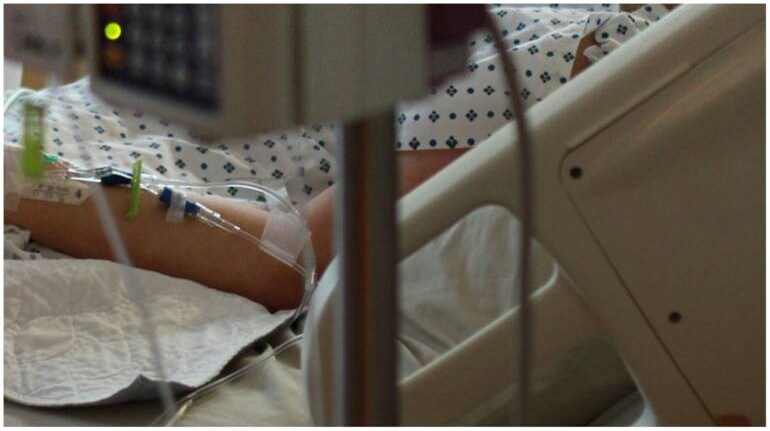
Santosh, an autorickshaw driver in Karnataka's capital Bengaluru, is still in mourning for his father, who suffered kidney-related ailments and died in 2021. The 20-year-old holds “the government responsible for his tragedy.”
Santosh's family could not avail the Ayushman Bharat Arogya Karnataka, the state's flagship health insurance scheme, because their application for a below-poverty-line (BPL) ration card was pending with the Food, Civil Supplies and Consumer Affairs Department during the pandemic. Only a BPL cardholder family is entitled to free treatment – up to Rs 5 lakh – in designated private and public hospitals.
“If the government had supported the medical expenses of my father, he would probably have survived," Santosh said.
Santosh, who is a school dropout, is all set to vote for the first time in the upcoming Karnataka elections. The polls for the state legislative assembly with 224 members are scheduled on May 10.
As he runs into campaign cavalcades of political parties while ferrying passengers in India's IT hub, Santosh has a question: "Why are poll campaigns not raising health issues?"
The pleas and plight of the likes of Santosh hardly find a mention in an election where campaigns are mostly fuelled by allegations and counter-allegations by political parties of all hues. Health issues have been relegated to the background as people across the country are yet to fully recover from the blows of the coronavirus pandemic.
Health manifestosTo be sure, both the ruling Bharatiya Janata Party (BJP) and the main opposition party, Congress, in their respective manifestos released recently, have promised to improve healthcare systems.
The key points in the BJP’s vision document are to strengthen the public healthcare infrastructure through Mission Swasthya Karnataka, set up one namma clinic equipped with diagnostic facilities in every ward of municipal corporations, and provide free annual health check-ups for senior citizens.
The Congress said it will provide mobile healthcare centres to reach remote areas during emergencies, fill vacancies in government hospitals, and upgrade primary healthcare centres and equip them with labour wards and mini-operation theatres.
Karnataka lags behindSantosh's lament is also a reflection of Karnataka's health indicators – said to be the worst among the south Indian states. Karnataka's health status is in a "coma and needs resurrection," experts said.
According to the latest Sample Registration System report (2018-2020) by the Registrar General of India, the state's maternal mortality ratio (MMR) is 69. The rates in the four other southern states – Kerala (19), Andhra Pradesh (45), Telangana (43) and Tamil Nadu (54) – are better. MMR is defined as the number of maternal deaths per 100,000 live births during a specific period.
When it comes to the infant mortality rate – the number of infant deaths for every 1,000 live births – Karnataka scores 24 compared with 10 for Kerala, the best in south India, according to Niti Aayog data and the Indian Academy of Paediatrics. Andhra Pradesh has an IMR of 34, Telangana 31 and Tamil Nadu 17.
This election season, as politicians throw barbs at each other, collectives such as Sarvatrika Arogya Andolana, Karnataka, and Bahutva Karnataka have prepared "reports to expose the failure of the ruling Bharatiya Janata Party in providing healthcare benefits to all."
These collectives consist of doctors, researchers, community health workers, members of LGBT+ communities, persons with disabilities, and activists.
What ails KarnatakaSome of the key findings of the collectives are shortages of nurses and doctors and a lack of free medicines, equipment and diagnostic facilities in local primary health centres.
The problems of poor and rural populations are exacerbated due to the emphasis on showing documentary evidence such as Aadhaar and BPL cards to avail of health services, discriminatory behaviour towards migrant workers, increased privatisation of hospitals at the district level, and lack of mental healthcare provisions, to name a few.
"The biggest indicator of the failure of healthcare services is the breakdown of the core functions of primary healthcare centres (PHCs) across Karnataka,” said Sylvia Karpagam, a public health researcher and a doctor from Karnataka. “Most of these local health centres built for the rural and urban poor are lying in a shambles. They have been turned into referral centres for private and corporate hospitals."
The "missing doctors" add to the misery of the people. According to reports, the number of doctors in primary health centres has reduced by 11.7 percent from 2005 to 2021.
"Many don't even have qualified MBBS doctors. Patients are treated by AYUSH (Ayurveda, Yoga, Unani, Siddha, and Homeopathy) doctors who underwent a six-month course. Thus people have to travel – some even more than 100 km – to get treated for non-communicable diseases and maternal and child health services," Karpagam added.
PPP modelAkhila Vasan from the Karnataka Janarogya Chaluvali, an organisation fighting for health rights, alleged: "People at a village and a taluk (a group of villages) level are denied their right to healthcare facilities as private entities are taking over hospitals and PHCs (through the public-private partnership model)."
"Karnataka has been the flagbearer of indiscriminate privatisation of healthcare facilities. It has been going on for several decades. This has resulted in the destruction of many well-functional hospitals and PHCs," she added.
Vasan cited the example of the Rajiv Gandhi Super Speciality Hospital in Raichur, which was handed to a private entity in 2002. The government itself said in a report: "In the 10 years of its functioning, only 25 percent of the in-patient and 15 percent of the out-patient services had been employed by BPL patients over the decade."
The Arogya Bandhu scheme, the private-public partnership for primary healthcare, was scrapped by the Karnataka government in January 2016 following a series of complaints of non-compliance with rules, misuse of funds, lack of accountability, poor availability of qualified human resources and failure to provide quality service to patients by NGOs running the PHCs.
Prescription to recuperateTejaswini (who goes by her first name only), a researcher with Sarvatrika Arogya Andolana, said, "Political parties need to enact a right to health legislation in Karnataka."
Other important recommendations of health experts are to increase the expenditure on health to 2.5 percent of Karnataka’s GDP from the existing 0.8 percent, as recommended by the Karnataka health vision committee, and to fill up staff vacancies at all levels.
As the model code of conduct is in force in the run-up to the election, D Randeep, commissioner of health and family welfare services in Karnataka, said he can't speak on the government’s achievements. He denied that the state's PHCs are short-staffed and lack facilities.
"The government is doing its best to upgrade PHCs and people from the BPL are availing the services. If anybody is facing problems, they should reach out to the authorities. We regularly address their concerns," Randeep said.
Karnataka BJP leader and orthopaedic surgeon Narendra Rangappa said, “The party has worked tirelessly to provide healthcare to people even during the pandemic.”
He cited the setting up of 438 namma clinics in cities, issuance of health cards to 13.8 million people under Ayushman Bharat Arogya Karnataka, new medical colleges in Chikkamagalaru, Haveri, Yadgiri and Chikkaballapura, the establishment of 8,618 health and wellness centres, and the successful administration of over 122 million COVID vaccines in the state.
Congress leader Ashok Maridas disagreed with Rangappa. He said the BJP failed to fulfil its past promises, including the setting up of medical colleges in all 31 districts, and never invested in the public health sector.
“All its health policies are anti-poor. We all witnessed the sufferings of the poor during the pandemic. Be it the MMR or the IMR, the state's statistics have worsened. The ASHA workers (community health workers) had to protest as the incumbent government denied them their right compensation," he added.
Discover the latest Business News, Sensex, and Nifty updates. Obtain Personal Finance insights, tax queries, and expert opinions on Moneycontrol or download the Moneycontrol App to stay updated!
Find the best of Al News in one place, specially curated for you every weekend.
Stay on top of the latest tech trends and biggest startup news.