






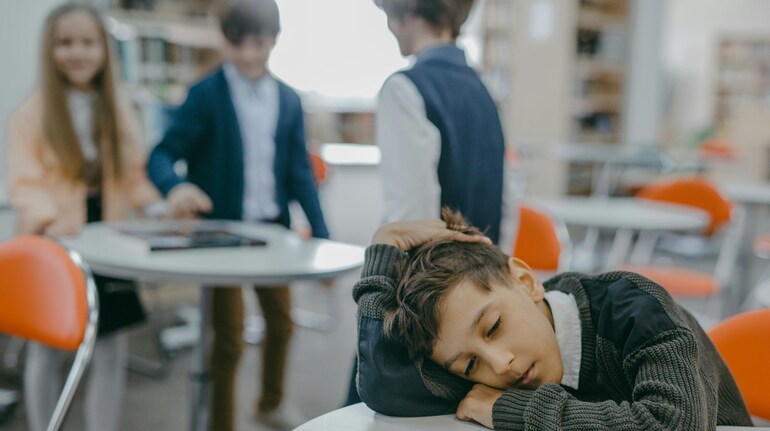

International Women’s Day shouldn’t only be about empowering girls; it should also focus on building an equitable future through education. This leads to the question: Are boys being prepared for the world that is emerging?
According to Raaji Naveen, co-founder of Beyond 8, while equality assumes everyone needs the same thing, equity recognises that individuals need different kinds of support to thrive. It also pushes us beyond rigid binaries. “Gender is increasingly understood as a spectrum, and schools are therefore not preparing ‘boys versus girls,’ but human beings who must learn to live, lead, and work with difference.”
In that scenario, leadership and responsibility will be more widely shared. As women step into positions of authority across public life, boys must grow into adults who can collaborate, respect leadership across gender, and participate in more balanced power structures. This doesn’t emerge on its own, but needs to be cultivated.
Also Read: Parenting Gen Alpha: Expert on why kids born after 2013 need boundaries, not pressure
Self-worth is the foundation. When learners feel secure in who they are, they are less threatened by the voice, success, or leadership of others. Insecurity often fuels dominance and hostility. Self-worth softens that impulse.
A simple truth applies: you do differently in the company of those who act differently. In inclusive cultures, learners encounter differences daily and learn that it is normal, not threatening. Culture itself becomes the teacher.
When adults listen to a child’s strengths, aspirations, passions, hobbies, and concerns, the child feels acknowledged. That acknowledgement builds emotional steadiness. Listening does not weaken authority. It strengthens trust, and trust supports growth.
Many children lack language for feelings. Help them name emotions such as frustration, embarrassment, disappointment, or pride. Naming is not softness, it is self-awareness, the first step toward self-management.
Empathy cannot be a poster on the wall. Schools must practice it through inclusive classrooms, safe spaces to fail, room for difficult conversations, and structured reflection. The aim is not only to understand another’s feelings, but to act in ways that support repair and dignity.
Also Read: Why your teen rolls their eyes: Understanding the teenage brain
Social psychologist Jonathan Haidt offers a useful metaphor: the mind is like a rider on an elephant. The rider is our reasoning, conscious mind; the elephant is our automatic, emotional system, and in a direct clash the elephant almost always wins.
That is why schools must teach self-regulation as a skill: pause routines, breathing, reflection, and non-punitive time outs that help learners calm first and think next. Self- regulation is what turns impulse into choice.
Education scholar Hilary Cremin argues that schools need more than peace keeping (rules and consequences) and peace making (resolving conflict when it interrupts). They also need peace building, the proactive work of shaping pro-social attitudes and behaviours so the school becomes a community of care and justice. In other words, do not just stop harm. Build the conditions where harm is less likely to emerge in the first place.
Discover the latest Business News, Sensex, and Nifty updates. Obtain Personal Finance insights, tax queries, and expert opinions on Moneycontrol or download the Moneycontrol App to stay updated!
Find the best of Al News in one place, specially curated for you every weekend.
Stay on top of the latest tech trends and biggest startup news.





