






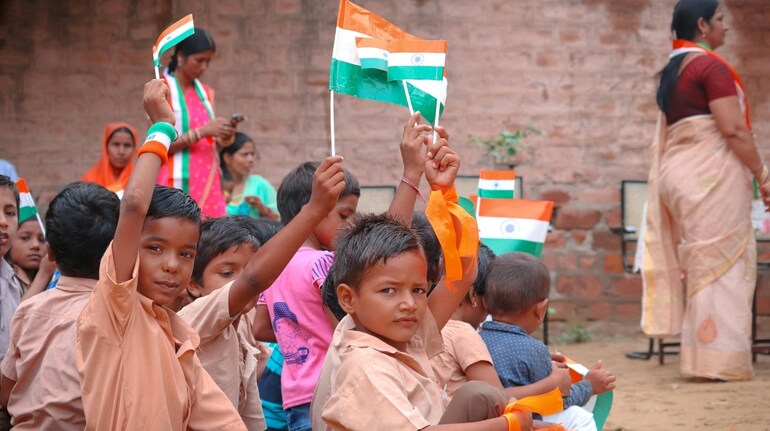

Every Indian is familiar with these words like muscle memory; they can be heard in cinemas, political events, school functions, and national celebrations across the country. "Vande Mataram" is more than just a song. It is a feeling, a memory, and a collective experience. It is especially meaningful this Republic Day as we also commemorate 150 years of "Vande Mataram" in India, as the occasion is appropriate for reframing how a work of literature became a quintessential symbol of the freedom struggle.
Few national songs in the world can compete with such a fascinating history.
It is on record that the novel, "Anandamath," where "Vande Mataram" was first published, was written by the famous writer and civil servant, Bankim Chandra Chattopadhyay, in the 1880s. The author was a major state author in the first half of the 19th century and was inspired by India's socio-cultural.
The song was one of the first literary works to capture the passions of a revolution. And what started as a simple poem in a book rapidly transformed in meaning and value.
Vande Mataram became well-known by the late 19th and early 20th centuries. It was first heard by a larger political audience in 1896 when Rabindranath Tagore performed it at an Indian National Congress meeting.
The song became a rallying cry during the Swadeshi Movement in 1905. Even British authorities could not silence the song at marches. It was banned or censored to show the colonies' disregard for the song. Ironically, this gave the song an even greater significance.
For many freedom fighters, saying "Vande Mataram" was an act of defiance. The song was documented as it was smuggled into jails, sung at protests, and used in underground movements. It became an anthem of defiance in jails and public cells.
"Vande Mataram" literally translates to "I bow to thee, Mother." The Sanskrit word "vande" means "to praise," and "mataram" means "the motherland."
The song celebrates the beauty, prosperity, and nurturing character of India. The India of the first two stanzas appears to offer a sentiment of shared ownership to people of all religions and of all political and social strata.
Subsequent stanzas mention Hindu goddesses, Durga and Lakshmi. These references to cultural imagery and political symbolism became the focus of politically charged discussions.
In 1937, during the freedom struggle, the Indian National Congress officially recognised parts of Vande Mataram as the national song. A committee comprising leaders such as Maulana Abul Kalam Azad, Jawaharlal Nehru, Subhash Chandra Bose, Acharya Deva, and Rabindranath Tagore recommended its adoption.
The religious imagery in the later stanzas, however, alarmed some organizations, including leaders of the All-India Muslim League.
With the backing of Nehru and Mahatma Gandhi, the Congress decided that only the first two stanzas would be used at public events in order to maintain inclusivity.
This approach balanced emotional heritage with constitutional secularism.
On January 24, 1950, the Constituent Assembly formally recognised Vande Mataram as the national song. Assembly records state that while “Jana Gana Mana” would be the national anthem, Vande Mataram would be honoured equally for its historic role in the freedom struggle.
Throughout the early 20th century, leaders such as Bal Gangadhar Tilak, Bipin Chandra Pal, and Aurobindo Ghosh embraced the song as an expression of nationalist pride.
In public meetings and prisons, it was sung to boost morale. Many freedom fighters later recalled how it helped them endure years of hardship and confinement.
Unlike political speeches or manifestos, Vande Mataram spoke directly to emotion. It blended patriotism with spirituality, protest with devotion, and resistance with hope.
It was timeless because of its depth of emotion.
Vande Mataram has kept changing over the years. Film, television, and music albums have all reinterpreted it. A.R. Rahman's 1997 performance, which combined tradition and contemporary sound, introduced the song to a new generation.
These days, it can be seen in social media campaigns, patriotic montages, school plays, and digital tributes. It frequently reappears as a unifying voice during times of national pride or crisis.
For older listeners, it evokes the memories of morning school assemblies and the black and white television broadcasts of the Independent Indian republic. Younger Indians may hear it for the first time in films or in the in the republic’s digital ether. Its emotional impact continues to to be palpable, as ever.
It continues to take the listeners through the emotions and experiences the listeners had 150 years ago, during the first Indian republic, and continues to embody the core values of the Indian Nation: courage, dignity and love for the land.
Vande Mataram still speaks for the period when literature, linguistic and the various art forms were used to express extreme social and political dissent through acts of of song and verse.
In current times of quick news and short attention spans, the song’s lasting relevance is remarkable.
Vande Mataram continues to bridge the past and present. It continues to connect the sacrifices of the freedom fighters to the responsibilities of the present. It does so in contemporary times as India celebrates its Republic Day, and during its journey through the principles of its constitution.

Discover the latest Business News, Sensex, and Nifty updates. Obtain Personal Finance insights, tax queries, and expert opinions on Moneycontrol or download the Moneycontrol App to stay updated!
Find the best of Al News in one place, specially curated for you every weekend.
Stay on top of the latest tech trends and biggest startup news.





