






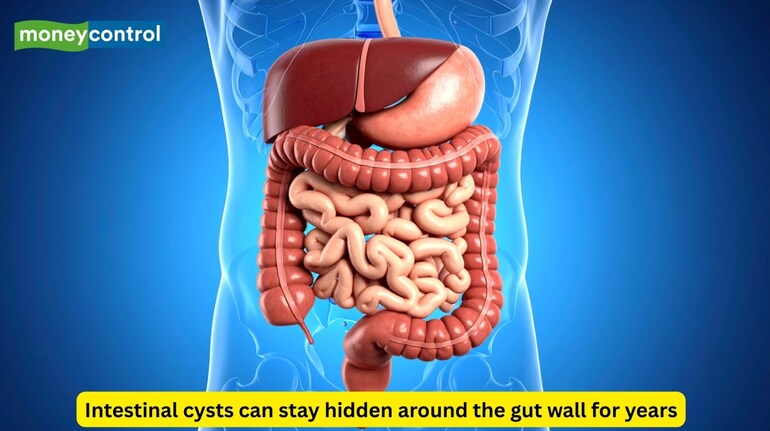

Blaming stomach pain on stress, street food or a skipped meal, is common. Rarely do people imagine a cyst taking up space inside their intestine. Nevertheless, for a small but significant number of people, this is exactly what happens. Intestinal cysts, fluid-filled or tissue-lined sacs, can form in or around the gut wall and stay hidden for years.
The trouble is not always their presence, but their silence. Many are picked up accidentally during scans done for unrelated reasons. Others announce themselves late, with discomfort that slowly escalates into disruption, fear and urgent hospital visits.
An intestinal cyst is an abnormal sac that develops either within the intestinal wall or nearby tissues. Some are present from birth, while others appear later due to inflammation, infections or hormonal influences. Most are benign, but that does not mean they are harmless. “People often hear the word ‘cyst’ and immediately panic,” explains Dr Mannan Gupta, Chairman & HOD, Obstetrics and Gynaecology, Elantis Healthcare, Delhi. “The reality is that many cysts are non-cancerous. The concern arises when they interfere with digestion, blood supply or bowel movement.”
Also read: Doctor says these 3 medicines can save a heart attack patient
Not all cysts cause symptoms, says Dr Vohra, adding, “Buy when they do, the body usually sends signals that should not be ignored.” He shares
Severe cases may cause intestinal blockage, bleeding or infection
“Any digestive symptom that lingers beyond a few weeks deserves medical attention,” says Dr Gupta. “Early investigation can prevent emergencies later.”
Some intestinal cysts are congenital, meaning a person is born with them. Others develop due to chronic gut inflammation, infections or conditions such as endometriosis, where cyst-like tissue can involve the intestine. Previous abdominal surgeries and hormonal factors may also increase risk. Dr Gupta adds, “We see intestinal involvement more often in patients with long-standing inflammatory conditions or a history of pelvic surgery.”
Prevention, detection and peace of mind: While prevention isn’t always possible, gut health plays a protective role. A fibre-rich diet, plenty of water, regular exercise and avoiding smoking help keep the intestines resilient. Treating infections early and not dismissing persistent symptoms is key.
Modern imaging, including ultrasound, CT scans and endoscopy, allows doctors to diagnose cysts early and plan treatment before complications arise.
1. What is a cyst in the intestine?
It is a fluid-filled or tissue-filled sac in or near the intestinal wall. Most are benign and found incidentally.
2. What causes intestinal cysts?
They may be congenital or due to infection, inflammation, or blockage. Sometimes the exact cause is unknown.
3. What symptoms can occur?
Many cause no symptoms at all. Others may cause abdominal pain, bloating, or bowel problems.
4. How are intestinal cysts diagnosed?
Imaging tests like ultrasound, CT, or MRI are commonly used. Endoscopy may be needed in some cases.
5. Are intestinal cysts dangerous?
Most are harmless and slow growing. Complications are rare but possible if the cyst enlarges or infects.
Disclaimer: This article, including health and fitness advice, only provides generic information. Don’t treat it as a substitute for qualified medical opinion. Always consult a specialist for specific health diagnosis.
Discover the latest Business News, Sensex, and Nifty updates. Obtain Personal Finance insights, tax queries, and expert opinions on Moneycontrol or download the Moneycontrol App to stay updated!
Find the best of Al News in one place, specially curated for you every weekend.
Stay on top of the latest tech trends and biggest startup news.





