






Hair thinning is not just a ‘phase’ that you should wait out to pass. It is, in fact, one of the earliest signals that the body sends, indicating nutritional gaps, hormonal shifts, illness, product reactions, or even weather changes. So when your hair feels lighter or your brush looks fuller, your body is trying to tell you something.
Traya’s health expert, Dr. Shiv Singh Shekhawat, MBBS, shared with Moneycontrol six reasons why your hair may be thinning suddenly.
Sometimes hair fall is simply the result of your hair cycle getting temporarily disrupted. This could happen weeks after a fever, viral infection, surgery, drastic dieting, or even a sudden lifestyle shift. Because the shedding appears 8-12 weeks later, it often feels random. The good news? This phase is temporary. With gentle care and steady nutrition, the cycle usually settles on its own.
Hair depends heavily on nutrients like iron, vitamin D, vitamin B12, protein, and essential minerals. Even small dips can weaken strands and slow new growth. Modern diets often miss these basics without us realising it. A quick blood test helps pinpoint gaps, and adding eggs, dairy, leafy greens, lentils, nuts, and seeds makes a big difference, ideally guided by a medical expert.
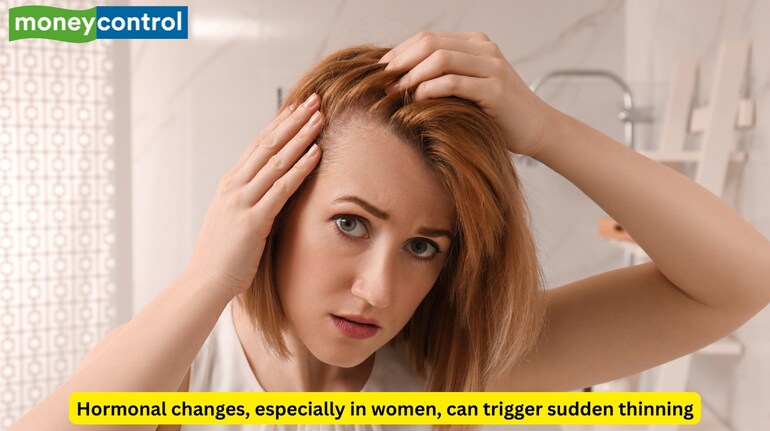
Hormonal changes, especially in women, can trigger sudden thinning. PCOS, thyroid imbalances, postpartum shifts, or heightened DHT sensitivity can all disrupt the hair cycle. These often show up alongside fatigue, acne, irregular periods, or weight fluctuations. Addressing the underlying imbalance helps hair bounce back.
Also read: Are the eggs you eat for breakfast safe? Doctor says beware of this one substance
Sometimes the culprit is sitting right in your bathroom. Heavy conditioners, harsh shampoos, strong fragrances, or ingredients your scalp doesn’t agree with can cause irritation, buildup, or increased shedding. Switching to gentler, scalp-friendly formulas often brings quick relief.
Excess heat, tight hairstyles, frequent colouring, or chemical treatments can weaken the hair shaft over time. Even if you don’t see damage immediately, cumulative stress can lead to sudden shedding. Lightening your routine and giving your strands breathing room can help restore balance.
Seasonal transitions, especially winter dryness, can affect the scalp barrier and hair strength. Cold air, low humidity, and increased indoor heating often lead to more shedding than usual. Hydration, nourishment, and winter-appropriate care keep the cycle steady.
Also read: Doctor says these 3 medicines can save a heart attack patient
Q. What is the most common cause of hair thinning?
Genetics (male or female pattern hair loss) is the most common cause.
Q. Can stress cause hair thinning?
Yes. Physical or emotional stress can trigger temporary hair shedding called telogen effluvium.
Q. Do nutritional deficiencies affect hair thickness?
Yes. Low levels of iron, protein, vitamin D, or B vitamins can lead to hair thinning.
Q. Can hormonal changes cause hair thinning?
Yes. Hormonal imbalances due to thyroid issues, pregnancy, menopause, or PCOS can affect hair growth.
Q. Do hair products or styling cause thinning?
Excessive heat, tight hairstyles, and harsh chemical treatments can damage hair and lead to thinning over time.
Disclaimer: This article, including health and fitness advice, only provides generic information. Don’t treat it as a substitute for qualified medical opinion. Always consult a specialist for specific health diagnosis.
Discover the latest Business News, Sensex, and Nifty updates. Obtain Personal Finance insights, tax queries, and expert opinions on Moneycontrol or download the Moneycontrol App to stay updated!
Find the best of Al News in one place, specially curated for you every weekend.
Stay on top of the latest tech trends and biggest startup news.




