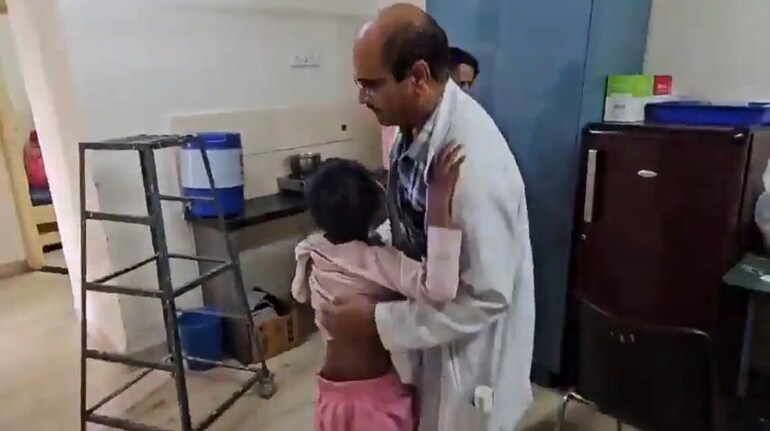

At least nine people have died and more than 200 residents of Bhagirathpura, a densely populated area in Indore, have been hospitalised after consuming contaminated drinking water. The crisis prompted authorities to rush to the area to control the situation and prevent further casualties.
Complaints about water quality had been mounting for several days, but immediate action was not taken, worsening the situation. Initial inquiry reports confirmed the presence of bacteria “generally found in sewer water” in drinking water samples.
Dr Arvind Ghanghoria, dean of Mahatma Gandhi Medical College, said further tests are underway to identify the exact type of bacteria and confirm the cause of illness. More than 27 hospitals in the city have admitted patients from the affected area, with doctors working round the clock to stabilise critical cases.
Early warnings ignored
The first distress signal came on October 15, in the form of a routine complaint on the Indore Mayor’s helpline number. A Bhagirathpura resident, Dinesh Bharati Verma noticed something wrong with the well water near a local temple. “The borewell water is mixing with drain water… clean water is essential for those visiting the temple and ashram,” his complaint warned.
By mid-November, the problem had metastasized. Another resident, Shivani Thakle, filed a more pressing complaint, “There is acid in the dirty water.”
Residents first reported a “foul stench” in the Narmada water supply on December 18. By December 28, nearly 90 percent of Ward 11, which includes Bhagirathpura, was affected by illness. The first deaths were reported on December 29, which finally prompted the administration to take urgent measures.
Municipal records and resident testimonies indicate that the crisis could have been prevented. Complaints about water quality in Zone 4, including Bhagirathpura, had been raised repeatedly since 2024. However, bureaucratic delays, slow responses, and unaddressed warnings contributed significantly to the outbreak, leaving residents vulnerable to contaminated water.
Administrative delays endangered public health
In 2025, Indore recorded a total of 266 water-related complaints citywide. Zone 4 alone, which covers Bhagirathpura, had 23 formal complaints. Out of 16 cases assigned to Assistant Engineer Yogesh Joshi, only five were resolved, while seven were closed and marked “completed” without any corrective action.
Plans for a new water pipeline were prepared in November 2024, but the tender was floated only in July 2025. The work order for the final leg of the project was issued on December 26, coinciding with the first deaths in Bhagirathpura. Corporator Kamal Waghela alleged that officials unnecessarily delayed the process for months, calling the incident “grave criminal negligence” that endangered public health, The Indian Express reported.
On-ground challenges
Bablu Parshad, water works in-charge of Bhagirathpura, described the area as “an infrastructural nightmare,” with old, unplanned water and sewage pipelines and narrow roads barely 10 to 12 feet wide. While approximately 60 percent of the pipelines had been repaired in recent years, repeated warnings about replacing the remaining lines were ignored.
Joshi, now suspended, said he was managing three zones and struggled to address all complaints. “I manage three zones, which is impossible to handle alone. Local staff had already informed me about this situation. In fact, the head office was aware that the water pipelines in this area had been damaged at least a year ago. Although a tender for repairs had been floated, the work order was issued only two or three days ago,” he was quoted by The Indian Express as saying.
What did the officials say?
Additional Commissioner Rohit Sisonia defended the administration, saying that repair work was already in progress under the AMRUT 2.0 scheme, a government initiative for water security and sewerage management.
Sisonia said that in this particular area, around 80 per cent of work on the two major lines had already been completed. “On December 26, we began work on the third line. The DPR was sanctioned, tenders were issued, and contractors were identified,” he said.
“I have been in charge for just two months… This is a 30-year-old line on which work was already underway,” he said.
He confirmed that contamination had occurred due to a pit storing waste above a broken main water line near a police chowki, which allowed bacteria to enter the drinking supply.
“Our investigation has identified that a small police chowki had been constructed over the main line. There was a bathroom without a safety tank, so all the contaminated waste was being stored in a pit. Below that pit, the main water line had broken, leading to contamination. We have tested samples from the site and confirmed that the samples were contaminated and could cause diarrhoea,” he said.
Authorities have now established a control room to handle complaints and monitor water supply. Teams have been deployed to repair pipelines, flush contaminated lines, and prevent similar incidents in the future.
Discover the latest Business News, Sensex, and Nifty updates. Obtain Personal Finance insights, tax queries, and expert opinions on Moneycontrol or download the Moneycontrol App to stay updated!
Find the best of Al News in one place, specially curated for you every weekend.
Stay on top of the latest tech trends and biggest startup news.